Covered Outdoor Kitchen Ideas: Pergolas, Pavilions & Roof Designs That Last
Covered outdoor kitchen ideas range from $1,500 retractable pergolas to $60,000 pavilions. Compare roofs, ventilation, sun blocking, and code requirements.
By Sukie
Editor · compiles manufacturer specs and building-code references into the measurement guides on this site
Covered outdoor kitchen ideas transform a weather-dependent grilling station into a year-round cooking and entertaining space that shrugs off rain, blocks scorching afternoon sun, and protects your $5,000 to $30,000 appliance investment from the UV degradation, moisture damage, and debris accumulation that destroys uncovered kitchens within 5 to 7 years. The difference between an outdoor kitchen you use 60 days a year and one you use 200 days a year almost always comes down to overhead protection. A well-designed cover extends your cooking season through spring showers, summer thunderstorms, and crisp fall evenings, and in mild climates it can even make winter grilling comfortable when combined with radiant heaters. The options range from budget-friendly pergolas with retractable fabric canopies starting around $1,500 to fully enclosed pavilion structures with solid roofing, integrated lighting, ceiling fans, and weatherproof entertainment systems costing $25,000 to $60,000 or more. Each cover type offers a different balance of sun protection, rain resistance, airflow, aesthetic style, and building code complexity. This guide breaks down every major covered outdoor kitchen option, from simple shade solutions to permanent roofing structures, with real costs, material specifications, ventilation requirements, and the building code considerations that determine what you can legally build in your backyard. Whether you want a rustic cedar pergola draped with climbing vines or a modern aluminum pavilion with a standing-seam metal roof, you will find the detailed information you need to make a smart decision and avoid the mistakes that leave homeowners with leaking roofs, insufficient ventilation, and code violation notices.
Top Picks: Best Covered Outdoor Kitchen Ideas: Pergolas, Pavilions & Roof Designs That Last in 2026
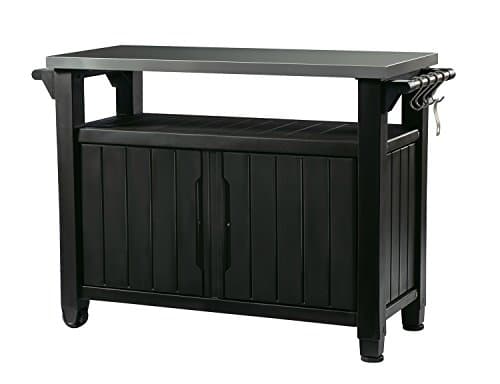
Keter Unity XL Portable Outdoor Table with Stainless Steel Top for Kitchen Prep and Outdoor Storage Cabinet for Grilling Accessories, Dark Grey
$220.99
Shop Now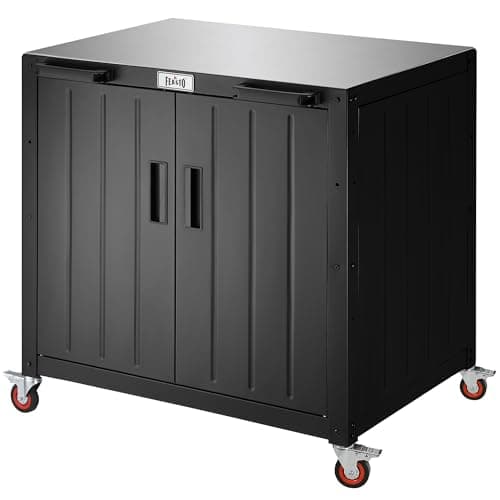
Feasto Outdoor Grill Cart with Storage Cabinet and Stainless Steel Top, 35-Inch Outdoor Grill Station with Door, Modular Kitchen Island for Food Prep and BBQ, Black & Silver
$219.99
Shop Now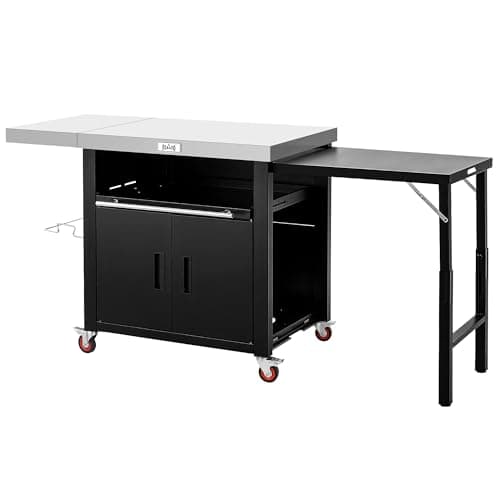
Feasto Outdoor Kitchen Island with Cabinet, Outdoor Grill Table with Stainless Steel Top for Pizza Oven& Griddles, Movable Bar Cart with Pull-Out Plate for Parties& Gathering, Heavy-Duty, L74”x W24”
$259.99
Shop Now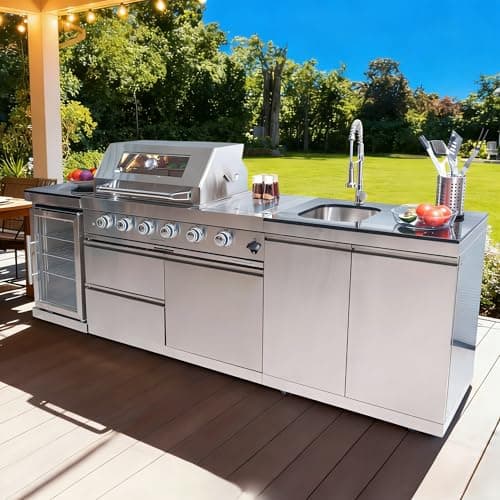
98 Inches Outdoor Kitchen Island, 4-Burner 72000 BTU Propane Stainless Steel BBQ with Side/Rear Burners, With Refrigerator and Sink, Rotisserie, Granite Countertops, Storage, For Backyard BBQ, Silver
$3,652.00
Shop Now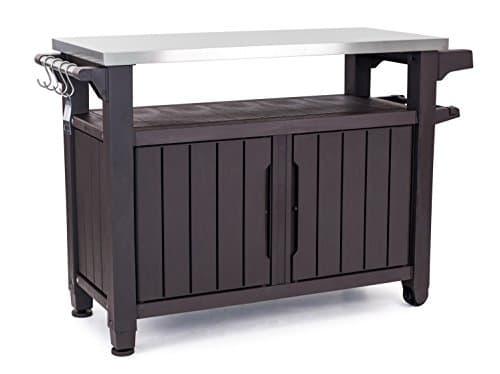
Keter Outdoor Rolling Table Cart for Food Prep, Storage, Bar & Grill, Dark Brown - Portable Kitchen Island Tabletop with Wheels for Drinks, Snacks, and Cooking
$265.99
Shop NowKeter Unity XL Portable Outdoor Table with Stainless Steel Top for Kitchen Prep and Outdoor Storage Cabinet for Grilling Accessories, Dark Grey
$220.99
Shop NowFeasto Outdoor Grill Cart with Storage Cabinet and Stainless Steel Top, 35-Inch Outdoor Grill Station with Door, Modular Kitchen Island for Food Prep and BBQ, Black & Silver
$219.99
Shop NowFeasto Outdoor Kitchen Island with Cabinet, Outdoor Grill Table with Stainless Steel Top for Pizza Oven& Griddles, Movable Bar Cart with Pull-Out Plate for Parties& Gathering, Heavy-Duty, L74”x W24”
$259.99
Shop Now98 Inches Outdoor Kitchen Island, 4-Burner 72000 BTU Propane Stainless Steel BBQ with Side/Rear Burners, With Refrigerator and Sink, Rotisserie, Granite Countertops, Storage, For Backyard BBQ, Silver
$3,652.00
Shop NowKeter Outdoor Rolling Table Cart for Food Prep, Storage, Bar & Grill, Dark Brown - Portable Kitchen Island Tabletop with Wheels for Drinks, Snacks, and Cooking
$265.99
Shop NowWhy Every Outdoor Kitchen Needs a Cover: Protection and Year-Round Use
An uncovered outdoor kitchen faces constant assault from the elements that dramatically shortens the lifespan of every component. UV radiation from direct sunlight degrades stainless steel finishes, causing discoloration and surface pitting within 2 to 3 seasons, especially on lower-grade 430 stainless steel used in budget appliances. Rain exposure accelerates corrosion on gas valves, ignition systems, and electrical connections even when appliances are covered individually. Granite and concrete countertops absorb water through unsealed pores, and in freeze-thaw climates this moisture expands during winter, creating surface spalling and cracks that require costly repair or full replacement at $40 to $100 per square foot. A covered structure eliminates or dramatically reduces all of these damage vectors while making the space usable across far more of the year, which is where most of its real value sits.
Beyond protection, a cover fundamentally changes how you use your outdoor kitchen. Studies from the Hearth, Patio, and Barbecue Association show that homeowners with covered outdoor kitchens use them 3.2 times more frequently than those with uncovered setups. Rain is the number one reason people cancel outdoor cooking plans, and a solid roof eliminates that obstacle entirely. Shade from a cover reduces ambient temperature at the countertop by 15 to 25 degrees Fahrenheit on summer afternoons, which matters not just for cook comfort but for food safety, because perishable ingredients left on an uncovered counter in 95-degree sun can enter the danger zone above 40 degrees Fahrenheit within 20 minutes. A cover also enables installation of amenities that are impossible in open-air kitchens, including ceiling-mounted vent hoods for smoke management, recessed lighting for evening cooking, ceiling fans for air circulation, and weatherproof televisions and audio systems for entertainment. The ROI on a cover structure is arguably the best investment in any outdoor kitchen project because it multiplies the usability of every other dollar you spend. If you are still exploring different setups, our main outdoor kitchen setup guide walks through every category and layout type.
Pergola Covers for Outdoor Kitchens: Styles, Materials, and Costs
Pergolas are the most popular covered outdoor kitchen option, chosen by approximately 35 percent of homeowners building covered outdoor cooking spaces, because they provide partial shade and architectural character at a moderate price point. A traditional pergola features parallel rafters supported by posts, creating a pattern of shade and sunlight that filters about 50 to 70 percent of direct sun depending on rafter width and spacing. Standard pergola dimensions for an outdoor kitchen are 12 to 16 feet wide by 10 to 14 feet deep, providing coverage for the cooking zone plus a seating or dining area. Cedar is the classic pergola material, naturally rot-resistant with a warm reddish tone that weathers to silver-gray over 3 to 5 years if left unstained. A professionally built cedar pergola sized 14 by 12 feet costs $4,000 to $8,000 for materials and labor, using 6-by-6-inch posts and 2-by-8-inch rafters at 16-inch spacing.
Pressure-treated pine is the budget alternative at $2,000 to $4,500 for the same size, but it requires staining or painting every 2 to 3 years to prevent the greenish tint from showing and to maintain weather resistance. Aluminum pergolas from companies like StruXure ($8,000 to $20,000 for a 14-by-12-foot unit) offer a maintenance-free option with powder-coated finishes available in dozens of colors. The StruXure Pergola X features motorized louvered rafters that pivot from fully open to fully closed at the press of a button, giving you instant control over sun and rain protection. For enhanced rain coverage, add a retractable fabric canopy system from a brand like ShadeFX ($1,200 to $3,000) or Shade Sails ($200 to $600 for DIY installation) that mounts beneath the rafters and provides on-demand waterproof coverage. Polycarbonate roofing panels are another popular pergola upgrade, with clear or tinted panels from brands like Palram Sunlite ($3 to $6 per square foot) screwed directly to the rafter tops, creating full rain protection while allowing 90 percent light transmission. This hybrid approach, pergola structure plus polycarbonate panels, delivers the architectural beauty of a pergola with the weather protection of a solid roof at 40 to 60 percent less cost than a full pavilion build.
Pavilion Structures: Full-Coverage Roofing for Serious Outdoor Kitchens
A pavilion provides complete overhead protection with a solid roof structure, making it the premium choice for outdoor kitchens where year-round use and maximum appliance protection are priorities. Unlike a pergola, a pavilion has a fully enclosed roof that blocks 100 percent of rain, snow, and direct sunlight, creating a room-like environment that supports ceiling fans, recessed lighting, vent hoods, and even mounted televisions. The most common pavilion roof styles for outdoor kitchens are the gable roof, which features two sloping sides meeting at a central ridge, and the hip roof, which slopes on all four sides for superior wind resistance. A standard 16-by-14-foot pavilion with a gable roof costs $12,000 to $25,000 for a wood-framed structure with asphalt shingle roofing, or $18,000 to $35,000 with cedar or timber-frame construction and standing-seam metal roofing.
Structural requirements for pavilions are significantly more demanding than pergolas. Posts must be a minimum of 6-by-6 inches for spans up to 14 feet, upgrading to 8-by-8 inches for wider spans or in areas with high wind loads. The roof structure requires engineered trusses or rafters sized by a structural engineer based on your local snow load, which ranges from 20 PSF in southern states to 60 PSF or more in northern mountain regions, and wind load, which ranges from 90 MPH in sheltered inland areas to 150 MPH or more in coastal hurricane zones. Posts must be anchored to concrete footings that extend below the frost line, typically 36 to 48 inches deep in northern climates, using Simpson Strong-Tie post bases rated for the calculated uplift force. Pre-engineered pavilion kits from companies like Yardistry ($3,000 to $7,000 for 12-by-14-foot kits), Western Timber Frame ($10,000 to $25,000), and Baldwin Pergolas ($8,000 to $18,000) simplify the engineering by providing pre-calculated structural components, detailed assembly instructions, and in some cases engineering stamps accepted by building departments. These kits reduce construction time from 2 to 3 weeks for a custom build to 3 to 5 days for kit assembly, making them an excellent value for the quality of structure you receive.
Roof Extensions and Attached Covers for Outdoor Kitchens
Extending your home's existing roofline over an outdoor kitchen is often the most architecturally cohesive covered solution because it creates a seamless visual transition from interior to exterior living space. A roof extension, sometimes called a patio cover or lean-to, attaches to your home's fascia board or wall framing using a structural ledger board, then slopes away from the house at a minimum 1/4-inch-per-foot pitch for drainage. This approach works particularly well when your outdoor kitchen is positioned directly against or near the house, which is the most common configuration since it minimizes utility run distances. The ledger board is the critical connection point and must be bolted through the home's exterior sheathing into the rim joist or wall studs using 1/2-inch galvanized lag bolts at 16-inch intervals, with flashing installed above the ledger to prevent water intrusion into the wall cavity.
Roofing material should match your home's existing roof for visual harmony. If your home has asphalt shingles, extend with matching shingles ($3 to $7 per square foot installed). If you have tile, match the tile profile and color ($10 to $25 per square foot). Standing-seam metal roofing ($8 to $14 per square foot) works with any home style and offers superior longevity of 40 to 60 years compared to 20 to 30 years for asphalt shingles. A standard roof extension covering a 12-by-10-foot outdoor kitchen costs $5,000 to $12,000 depending on roofing material, structural complexity, and whether the home's existing roof structure can support the extension or requires additional engineering. The primary advantage of a roof extension is cost efficiency, since one wall of the structure is your existing house and the roofing ties directly into your existing system. The disadvantage is that building code requirements are more stringent for attached structures because they affect the home's structural integrity, fire separation ratings, and sometimes even the home's insurance classification. Always obtain an engineering review and building permit before attaching any structure to your home, and verify with your homeowner's insurance that the addition does not void coverage or require a policy update.
Retractable Awnings and Shade Systems for Flexible Outdoor Kitchen Coverage
Retractable awnings provide on-demand sun and light-rain protection that can be extended when needed and retracted when you want full open-air cooking. This flexibility makes them ideal for homeowners who enjoy uncovered cooking on pleasant days but want protection available during unexpected showers or harsh afternoon sun. Manual retractable awnings with a hand-crank mechanism start at $800 to $1,500 for a 12-foot-wide unit, while motorized versions with remote control and optional sun and wind sensors run $1,500 to $4,000. Premium brands like SunSetter (starting at $1,100 for a 12-foot motorized model), Advaning ($1,800 to $3,500), and Markilux ($3,000 to $8,000 for their high-end models) offer 10 to 15-year frame warranties and 5 to 8-year fabric warranties. The most durable awning fabrics are solution-dyed acrylic from Sunbrella, which resists UV fading for 10 years and carries a limited fabric warranty, or polyester with PVC coating for full waterproof protection.
For outdoor kitchens, awning projection, meaning how far the awning extends from the wall, is critical. You need a minimum 10-foot projection to cover a standard 3-foot-deep counter plus 7 feet of standing and circulation space in front of it. Many standard residential awnings only project 8 feet, which leaves the cook partially exposed. Verify projection depth before purchasing and consider models specifically designed for deeper coverage like the SunSetter Platinum Series (up to 11.5-foot projection) or commercial-grade units from Awntech or Eastern Awning that project 12 to 14 feet. Mounting location matters as well; the awning cassette should be mounted at least 8 feet above the patio surface and ideally 9 to 10 feet for comfortable headroom. Awnings are not suitable as primary rain protection for heavy storms because they can pool water and fail under wind loads exceeding 25 MPH, but they excel as supplemental shade solutions paired with a fixed overhead structure like a pergola or as the sole cover for mild-climate outdoor kitchens where heavy rain is infrequent. Shade sails are a less expensive alternative at $100 to $400 each, installed in overlapping configurations on steel posts to create angular, modern-looking coverage over outdoor kitchens, though they provide no rain protection and require re-tensioning every season.
Materials for Covered Outdoor Kitchen Structures: Wood, Aluminum, and Steel
The structural material you choose for your covered outdoor kitchen determines its longevity, maintenance burden, aesthetic character, and cost. Western red cedar is the traditional premium choice, prized for its natural resistance to rot, insects, and decay without chemical treatment. Cedar contains natural oils called thujaplicins that repel fungi and wood-boring insects, giving it a 15 to 25-year lifespan for outdoor structural applications when properly maintained with an annual UV-protective oil or stain. Expect to pay $4 to $8 per linear foot for 6-by-6 cedar posts and $2 to $5 per linear foot for 2-by-8 or 2-by-10 cedar rafters. Douglas fir is stronger than cedar and costs 20 to 30 percent less, but it lacks natural decay resistance and must be treated with a preservative stain or wrapped in aluminum cladding for outdoor longevity. Pressure-treated southern yellow pine is the budget option at $1 to $3 per linear foot, offering excellent structural strength and chemical protection against rot and insects, but it requires staining every 2 to 3 years and has a greenish tint that many homeowners find unattractive.
Extruded aluminum is the fastest-growing material category for outdoor kitchen covers, offering zero maintenance, no rotting or warping, powder-coated finishes in any color, and structural strength comparable to wood at roughly the same cost. Companies like StruXure, Equinox, and Azenco specialize in aluminum outdoor structures with integrated features like motorized louvers, LED lighting channels, and rain gutters built into the post profiles. An aluminum pavilion costs $15,000 to $30,000 for a 14-by-12-foot structure, comparable to a custom wood pavilion but with a 25-year or longer lifespan and virtually no maintenance beyond annual washing. Steel is used primarily for heavy-duty commercial-style outdoor kitchens or when extreme wind loads require maximum structural capacity. Steel I-beams and columns provide unmatched strength for large spans and heavy roof loads, but they require professional welding, hot-dip galvanizing or regular repainting to prevent rust, and professional engineering calculations. Expect steel structures to cost 30 to 50 percent more than equivalent wood structures. Vinyl and fiberglass composite posts and pergola components from companies like Walpole Outdoors ($5,000 to $10,000 for pergola kits) offer another low-maintenance option, though they lack the structural capacity for large spans and cannot support heavy roof loads like solid shingle or tile roofing.
Ventilation and Smoke Management Under Covered Outdoor Kitchen Structures
Ventilation is the single most overlooked aspect of covered outdoor kitchen design, and getting it wrong creates a smoke-filled cooking environment that stains your beautiful new ceiling, triggers smoke detectors in your house, and makes cooking miserable for everyone nearby. Any outdoor kitchen positioned under a solid roof must address smoke and heat evacuation, because without wind to carry it away, smoke from grills, smokers, and even high-heat searing rises straight up and gets trapped under the roof structure, pooling along the ceiling and eventually descending back to face level. The primary solution is a commercial-grade outdoor vent hood installed directly above the grill or primary cooking surface. For covered outdoor kitchens, size the hood to extend at least 6 inches beyond the cooking surface on all sides and rate it at a minimum of 1,200 CFM for a standard 36-inch grill, scaling up to 1,800 CFM or more for 42-inch grills or dual cooking stations.
Premium outdoor vent hood brands include Blaze (the 42-inch outdoor hood at $2,499), Vent-A-Hood (custom outdoor models starting at $3,200), and Proline Range Hoods (outdoor models from $1,400 to $3,500). The hood must vent to the exterior of the covered structure through a roof penetration with proper flashing, not simply recirculate air under the same roof. If a vent hood is not feasible due to budget or structural limitations, design the roof with passive ventilation features. A cupola or ridge vent at the peak of a gable or hip roof allows hot air and smoke to escape naturally through convection. Size the ridge vent opening at 1 square foot of net free area for every 150 square feet of covered space. Alternatively, leave an 8 to 12-inch gap between the top of the back wall and the roof edge to create a natural draft path that pulls air and smoke up and out. Ceiling fans set to downdraft mode at low speed can help distribute fresh air and push smoke toward the perimeter, but they are a supplement to, not a replacement for, proper ventilation design. For pergolas with spaced rafters, smoke management is naturally handled by the open structure, which is one reason many homeowners prefer pergolas over solid roofs despite the reduced rain protection.
Building Codes and Permits for Covered Outdoor Kitchen Structures
Covered outdoor kitchen structures are subject to building codes and permit requirements that are significantly more stringent than those for the kitchen base alone, because overhead structures involve wind uplift calculations, snow load engineering, setback compliance, and in many cases fire separation requirements. Nearly every municipality in the United States requires a building permit for any permanent covered structure, whether attached to the home or freestanding. Permit applications require detailed structural drawings showing post sizes, rafter or truss specifications, connection hardware, foundation footing depth and dimensions, and roofing material specifications. For attached structures like roof extensions, you also need to show the ledger board connection detail and demonstrate that the existing home structure can support the additional load without modification.
Key code requirements vary by jurisdiction but commonly include the following. Minimum post setback from property lines is typically 5 to 10 feet for a covered structure, and some municipalities apply the same setback as the primary residence, which can be 15 to 25 feet. Maximum lot coverage percentages, the total footprint of all structures including the home, garage, and covered patio, must not exceed the zoned allowance, typically 40 to 60 percent for residential lots. Wind load design per ASCE 7 standards requires structures to withstand the basic wind speed for your location, ranging from 90 MPH in sheltered inland areas to 180 MPH in coastal Florida. Snow load design varies from 0 PSF in southern states to 30 to 80 PSF in northern and mountainous regions. If your covered outdoor kitchen includes a fireplace, fire pit, or any open-flame feature, fire codes require specific clearances from the overhead structure, typically a minimum of 8 feet from the top of the flame to the underside of a non-combustible ceiling, or 10 to 12 feet for combustible wood ceilings. Use non-combustible ceiling materials like fiber cement panels or metal directly above any cooking or fire feature. HOA architectural review adds another 30 to 90-day approval period in planned communities, and many HOAs restrict cover styles, materials, colors, and maximum heights. Submit your covered outdoor kitchen plans to the HOA before finalizing designs to avoid costly revisions after construction begins.
Points worth settling before you commit:
Do I need a vent hood under a covered outdoor kitchen?
A vent hood is strongly recommended under any solid-roof outdoor kitchen cover. Without one, smoke from grilling and cooking accumulates under the ceiling, stains surfaces, and creates an unpleasant cooking environment. Size the hood at minimum 1,200 CFM for standard grills and 1,800 CFM for large or dual cooking stations. If a vent hood is not feasible, incorporate passive ventilation through ridge vents, cupolas, or gaps between the roof and back wall.
Can I attach a covered outdoor kitchen structure to my house?
Yes, attaching a covered structure to your house using a ledger board is a common and cost-effective approach that eliminates one row of support posts. The ledger must bolt through exterior sheathing into the rim joist or wall studs with 1/2-inch galvanized lag bolts at 16-inch spacing. Proper flashing above the ledger is critical to prevent water intrusion. Attached structures require engineering review to verify your home's framing can support the additional load.
How do I prevent smoke buildup under a covered outdoor kitchen?
Install a commercial outdoor vent hood rated at 1,200 to 1,800 CFM directly above the grill, venting through the roof. For budget solutions, design the roof with a cupola or ridge vent at the peak for natural convection ventilation. Leave an 8 to 12-inch gap between the back wall and roof edge for passive airflow. Position the grill where prevailing winds push smoke toward an open side of the structure. Ceiling fans on low speed help circulate air and move smoke toward the perimeter.
What is the best covered outdoor kitchen design for windy areas?
For windy locations, choose a hip roof design that slopes on all four sides, reducing wind uplift compared to gable roofs. Use a minimum of 6-by-6 posts anchored to concrete footings with Simpson Strong-Tie hurricane-rated connectors. Specify roofing materials rated for your local wind speed, typically 110 to 150 MPH in wind-prone areas. Retractable elements like awnings and shade sails should have automatic wind sensors that retract the fabric when gusts exceed 25 MPH to prevent damage.
Treat the structural and weather requirements here as a planning starting point and the residential code requirements maintained by the International Code Council as the authority, since local amendments are common.
Frequently Asked Questions
01What is the cheapest way to cover an outdoor kitchen?
02How much does a covered outdoor kitchen cost?
03Do I need a permit to build a covered outdoor kitchen?
04What is better for an outdoor kitchen, a pergola or pavilion?
05How far should a covered outdoor kitchen be from the house?
06What roofing material is best for an outdoor kitchen cover?
This guide is part of Outdoor Kitchen Weather Protection: Covers, Roofs, and Winterising — the hub covering every covers & protection guide on Outdoor Kitchen Setup.
Related Guides
Written and edited by Sukie
Sukie is the editor behind Outdoor Kitchen Setup. They compile manufacturer specification sheets, published building codes, and industry sizing standards into the measurement and planning guides on this site, and check every figure against its original source before it goes live. Where a number varies by brand or by local code, the guides say so rather than presenting a single figure as universal.