Outdoor Kitchen Smoker: Built-In Smoker Types, Top Brands & Integration Guide for 2026
Outdoor kitchen smoker selection comes down to four very different fuel philosophies — offset stick burners, pellet hoppers, ceramic kamados, and electric drums — each with distinct firebox dimensions, fuel storage needs, and island integration requirements.
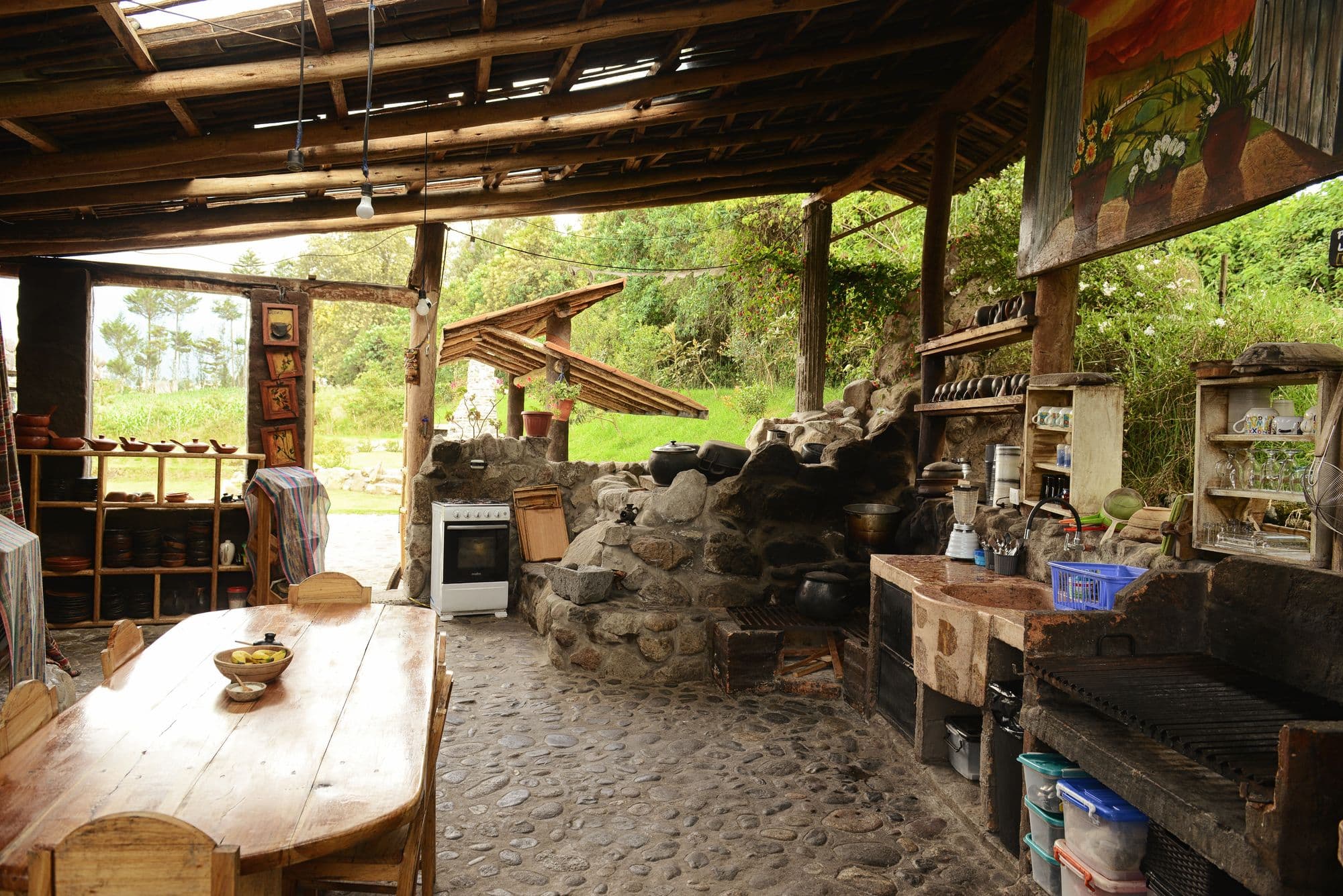
Photo: rubn nava / Pexels (Pexels License)
An outdoor kitchen smoker elevates your backyard cooking station from a simple grilling setup into a serious low-and-slow barbecue operation capable of producing restaurant-quality brisket, pulled pork, smoked ribs, and whole turkeys right outside your back door. While a standard gas grill handles steaks and burgers admirably, only a dedicated smoker delivers the deep, penetrating smoke flavor and fall-off-the-bone tenderness that come from cooking proteins at 225 to 275 degrees Fahrenheit for eight to sixteen hours. The outdoor kitchen smoker market has expanded dramatically over the past three years, and 2026 brings more built-in options than ever before, from Wi-Fi-enabled pellet smokers that you control from your phone to traditional offset stick burners that reward hands-on craft. Prices range from $800 for a compact built-in pellet unit to $5,000 or more for a commercial-grade offset smoker integrated into a custom island. Brands like Traeger, Weber SmokeFire, Kamado Joe, Memphis Grills, and Yoder have all developed models specifically designed for permanent installation in outdoor kitchen islands, complete with insulated fireboxes, stainless steel trim kits, and ventilation specifications that make integration straightforward. This guide walks you through every decision involved in choosing, sizing, and installing an outdoor kitchen smoker, including the fundamental differences between pellet, offset, kamado, and electric smoker types, the construction requirements for safe island integration, fuel costs, temperature control methods, and the top models worth your investment in 2026. Whether you are a competition-level pit master or a first-time smoker buyer, you will find the expert-level detail you need to make the right choice.
Top picks for this build
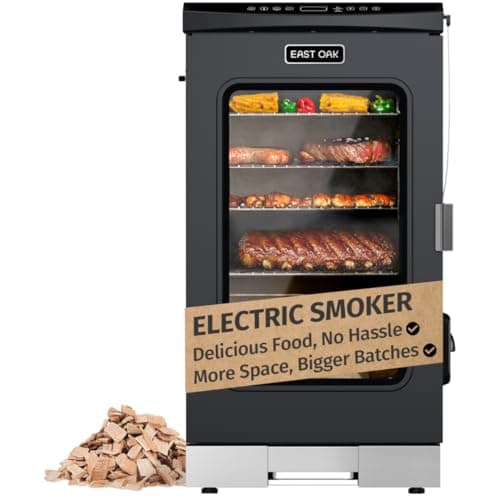
EAST OAK 30" Electric Smoker for Outdoors | Built-in Meat Probe & Clear Viewing Window | Side Chip Loader for 6x Longer Uninterrupted Smoking | 725 sq in Cooking Area for Bigger Batches, Night Blue
$299.99
Check price on Amazon: EAST OAK 30" Electric Smoker for Outdoors | Built-in Meat Probe & Clear Viewing Window | Side Chip Loader for 6x Longer Uninterrupted Smoking | 725 sq in Cooking Area for Bigger Batches, Night Blue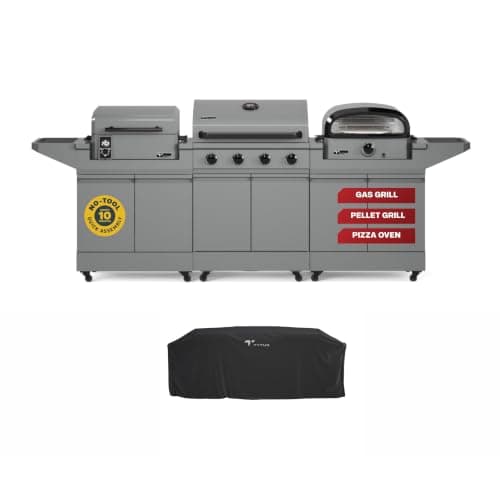
Tytus Anaheim 4-Burner Gas Grill with Two Prep Carts, Pellet Smoker, and Pizza Oven with Cover - Modular Outdoor Kitchen, Quick Assembly, Grill for Outdoor Cooking, Kitchen Island for BBQ
$2,599.99
Check price on Amazon: Tytus Anaheim 4-Burner Gas Grill with Two Prep Carts, Pellet Smoker, and Pizza Oven with Cover - Modular Outdoor Kitchen, Quick Assembly, Grill for Outdoor Cooking, Kitchen Island for BBQ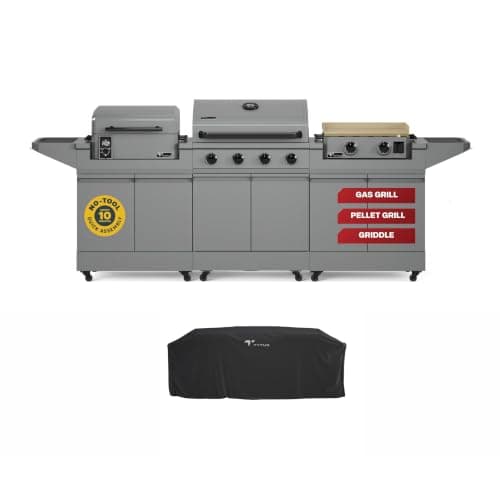
Tytus Anaheim 4-Burner Gas Grill with Two Prep Carts, Pellet Smoker, and Gas Griddle with Cover - Modular Outdoor Kitchen, Quick Assembly, Grill for Outdoor Cooking, Kitchen Island for BBQ
$2,449.99
Check price on Amazon: Tytus Anaheim 4-Burner Gas Grill with Two Prep Carts, Pellet Smoker, and Gas Griddle with Cover - Modular Outdoor Kitchen, Quick Assembly, Grill for Outdoor Cooking, Kitchen Island for BBQEAST OAK 30" Electric Smoker for Outdoors | Built-in Meat Probe & Clear Viewing Window | Side Chip Loader for 6x Longer Uninterrupted Smoking | 725 sq in Cooking Area for Bigger Batches, Night Blue
$299.99
Check price on Amazon: EAST OAK 30" Electric Smoker for Outdoors | Built-in Meat Probe & Clear Viewing Window | Side Chip Loader for 6x Longer Uninterrupted Smoking | 725 sq in Cooking Area for Bigger Batches, Night BlueTytus Anaheim 4-Burner Gas Grill with Two Prep Carts, Pellet Smoker, and Pizza Oven with Cover - Modular Outdoor Kitchen, Quick Assembly, Grill for Outdoor Cooking, Kitchen Island for BBQ
$2,599.99
Check price on Amazon: Tytus Anaheim 4-Burner Gas Grill with Two Prep Carts, Pellet Smoker, and Pizza Oven with Cover - Modular Outdoor Kitchen, Quick Assembly, Grill for Outdoor Cooking, Kitchen Island for BBQTytus Anaheim 4-Burner Gas Grill with Two Prep Carts, Pellet Smoker, and Gas Griddle with Cover - Modular Outdoor Kitchen, Quick Assembly, Grill for Outdoor Cooking, Kitchen Island for BBQ
$2,449.99
Check price on Amazon: Tytus Anaheim 4-Burner Gas Grill with Two Prep Carts, Pellet Smoker, and Gas Griddle with Cover - Modular Outdoor Kitchen, Quick Assembly, Grill for Outdoor Cooking, Kitchen Island for BBQPrices and availability are accurate as of October 22, 2026, 11:45 AM UTC and are subject to change.
Why a Built-In Outdoor Kitchen Smoker Changes the Game
Adding a built-in smoker to your outdoor kitchen delivers benefits that a standalone smoker sitting on the patio simply cannot match. When a smoker is integrated into your kitchen island, the cooking surface sits at the same ergonomic 36-inch height as your grill and prep counters, reducing the bending, stooping, and awkward lifting that portable smokers demand during twelve-hour cook sessions. The surrounding countertop provides immediate workspace for seasoning, wrapping, resting, and slicing meat without carrying dripping, 200-degree briskets across the patio to a folding table. Storage drawers beneath the smoker keep wood chips, pellets, rubs, thermometers, and injectors within arm's reach, and a built-in trash pullout makes cleanup efficient.
From a design perspective, a built-in outdoor kitchen smoker anchors your setup with a visual statement of serious cooking capability. It tells guests and potential home buyers alike that this is not a casual grilling patio but a purpose-built outdoor cooking station. The real estate implications are tangible: homes with dedicated outdoor kitchen smoker setups consistently appraise higher than those with portable units, because the permanence signals quality construction and intentional design. Built-in smokers also perform better thermally because the insulated island walls surrounding the firebox act as additional thermal mass, stabilizing temperatures against wind and ambient temperature swings. On a cold, windy evening, a built-in smoker can hold 250 degrees with noticeably less fuel consumption than the same unit sitting freestanding and exposed on all sides. This improved thermal efficiency translates directly into more consistent cook results, lower pellet or charcoal consumption, and less babysitting during overnight smokes. If you are still exploring different setups, our main outdoor kitchen setup guide walks through every category and layout type.
Pellet Smokers for Outdoor Kitchens: How They Work and Top Models
Pellet smokers are the fastest-growing category of outdoor kitchen smoker in 2026, and for good reason. They combine genuine wood-fired smoke flavor with the set-it-and-forget-it convenience of digital temperature control. A pellet smoker feeds compressed hardwood pellets from a hopper into a fire pot via an electrically driven auger. A hot rod igniter lights the pellets, an induction fan controls airflow, and an onboard controller maintains your target temperature within five to ten degrees for hours on end. The result is consistent, predictable smoking without the constant vent adjustments that offset and kamado smokers require.
Traeger Ironwood XL is one of the most popular built-in pellet smokers for outdoor kitchens in 2026, offering 880 square inches of cooking space, Traeger's WiFIRE technology for remote monitoring and control via the Traeger app, a downdraft exhaust system that produces cleaner smoke, and Super Smoke mode that maximizes smoke output at temperatures between 165 and 225 degrees. The Ironwood XL retails around $1,999 and fits a standard 40-inch island cutout with the optional built-in trim kit priced at $149. Weber SmokeFire EX6 brings the Weber brand's reliability to the pellet category with 1,008 square inches of cooking space, a porcelain-enameled steel body, flavorizer bars that vaporize drippings for added flavor, and Weber Connect smart technology. It retails near $1,499 and offers a built-in conversion kit. Memphis Grills Pro targets the premium segment at approximately $4,499, featuring dual-wall insulated construction with 304 stainless steel inside and out, an 834-square-inch cooking area, and intelligent temperature control accurate to within two degrees. Memphis Grills' built-in models are widely considered the most refined pellet smokers available for permanent outdoor kitchen installation.
Offset Smokers for Outdoor Kitchens: Traditional Flavor and Hands-On Control
Offset smokers represent the purist's choice for an outdoor kitchen smoker, delivering a smoke profile that pellet and electric units cannot replicate. In an offset design, the fire burns in a separate firebox attached to the side of the main cooking chamber. Hot smoke flows from the firebox across the cooking grate and exits through a chimney on the opposite end, bathing the meat in a continuous stream of clean, thin blue smoke. This horizontal flow pattern produces the quintessential barbecue bark and smoke ring that competition judges and barbecue enthusiasts prize above all other cooking methods.
Integrating an offset smoker into an outdoor kitchen island requires more planning than a pellet unit because the firebox protrudes to one side and must remain accessible for loading wood and managing the fire. Yoder Smokers is the leading name in built-in offset smokers, with their Loaded Wichita model offering quarter-inch steel construction, 1,480 square inches of cooking space, and a counterweighted lid that opens smoothly despite weighing over 100 pounds. The Loaded Wichita runs approximately $2,999 and requires a custom island cutout roughly 60 inches wide to accommodate the firebox extension. Lang BBQ Smokers out of Nahunta, Georgia, builds reverse-flow offset smokers where the smoke travels underneath a steel plate before rising through the cooking grate, producing exceptionally even heat distribution. Their 48-inch Deluxe model costs around $3,200 and weighs over 500 pounds, making island structural reinforcement essential. The trade-off with offset smokers is labor: they require active fire management every 30 to 60 minutes, splitting and adding wood, adjusting intake and exhaust dampers, and monitoring temperatures with a quality leave-in thermometer. For pit masters who view this as a rewarding craft rather than a chore, an offset smoker built into an outdoor kitchen island is the ultimate smoking setup.
Kamado Smokers in Outdoor Kitchens: Ceramic Versatility Built In
Kamado-style cookers are among the most versatile outdoor kitchen smoker options available, functioning as a smoker, grill, oven, and even a pizza oven within a single ceramic vessel. The thick ceramic walls of a kamado provide exceptional insulation, allowing the cooker to maintain low smoking temperatures of 225 degrees for 18 hours on a single load of lump charcoal, then ramp up to 750 degrees for pizza or searing in minutes. This thermal efficiency means a kamado uses roughly half the fuel of a comparable steel smoker over a full cook cycle.
Kamado Joe Big Joe III is the flagship model most commonly integrated into outdoor kitchen islands. With a 24-inch cooking diameter providing 400 square inches of primary cooking space, plus expandable multi-level cooking inserts that push usable space past 700 square inches, the Big Joe III handles everything from a single pork butt to a full competition load of four brisket flats. It retails around $2,499 and offers a purpose-built built-in kit with a stainless steel cradle and surrounding table frame for approximately $699 additional. Primo Oval XL is another popular choice for built-in applications because its oval shape fits island cutouts more naturally than round kamados, and its patented oval design creates distinct direct and indirect cooking zones side by side. The Primo XL runs about $1,699 with built-in cradle kits starting at $599. When installing a kamado into an outdoor kitchen island, critical considerations include weight support (a loaded Big Joe III exceeds 400 pounds), ventilation clearance around the ceramic body, and a hinge-side clearance of at least 24 inches above the countertop for the lid to open fully. The countertop material surrounding the kamado must be heat-resistant, as surface temperatures on the ceramic exterior can reach 300 degrees during high-heat cooks.
Choosing the Right Outdoor Kitchen Smoker Type for Your Cooking Style
Selecting between pellet, offset, kamado, and electric smoker types depends on how you cook, how much hands-on involvement you want, and how the smoker fits into your broader outdoor kitchen design. If convenience is your top priority and you want excellent smoked results with minimal effort, a pellet smoker is the clear winner. You load the hopper, set your target temperature on the app, insert a probe into the meat, and walk away. Pellet smokers excel at brisket, pork shoulder, ribs, and poultry, producing consistently good results even for beginners. Their main limitation is that the smoke flavor, while genuine, is milder than what offset or kamado cookers produce because pellets burn more completely than split wood or lump charcoal.
If deep, authentic smoke flavor is non-negotiable and you enjoy the hands-on process of tending a fire, an offset smoker is your match. Offset smokers reward skill and attention with a flavor profile that no other cooker type can replicate. They are the overwhelming choice among competition barbecue teams for a reason. However, they demand a learning curve of at least five to ten cooks before you can reliably manage temperature and smoke quality, and they require your presence every 30 to 60 minutes during a cook. A kamado offers the best versatility because it smokes, grills, bakes, and roasts with equal competence. If your outdoor kitchen has room for only one additional cooker beyond a gas grill, a kamado delivers the widest range of cooking capabilities. Finally, electric smokers from brands like Masterbuilt offer the simplest operation at the lowest price point, typically $400 to $800, but they produce the mildest smoke flavor and are generally not available in true built-in configurations, making them less suitable for integrated outdoor kitchen installations.
Outdoor Kitchen Island Integration: Construction and Ventilation Requirements
Properly integrating a smoker into an outdoor kitchen island requires attention to structural support, heat management, ventilation, and fire safety that go beyond what a standard grill installation demands. Smokers operate for far longer cook sessions than grills, often eight to sixteen hours at a stretch, which means the surrounding island materials are exposed to sustained heat rather than the intermittent bursts a 30-minute grilling session produces. Your island frame must be constructed from non-combustible materials: galvanized steel studs with cement board sheathing or concrete block are the only acceptable framing methods. Never use wood framing near a smoker installation, even with cement board sheathing, because the prolonged heat exposure can dry the wood to dangerously low moisture levels over time.
Ventilation is the single most critical safety factor in a built-in outdoor kitchen smoker installation. Every smoker installation requires at minimum two ventilation openings in the island: one low intake vent and one high exhaust vent, each measuring at least 20 square inches of free airflow area. These vents prevent heat buildup inside the enclosed island cavity, which could damage gas lines, melt wiring, or in extreme cases cause a fire. Many smoker manufacturers specify exact ventilation requirements in their built-in installation guides, and deviating from these specifications voids the warranty. For offset smokers, the firebox side of the island requires additional heat shielding, typically a double layer of cement board with an air gap, to prevent the exterior finish material from scorching or cracking. Countertop materials around the smoker opening should be heat-resistant: granite, concrete, porcelain slab, and natural stone all perform well. Avoid solid surface materials like Corian or laminate within 12 inches of the smoker opening, as they can warp, discolor, or delaminate under sustained heat.
Fuel Types, Costs, and Wood Selection for Outdoor Kitchen Smokers
The fuel your outdoor kitchen smoker burns directly affects flavor, operating cost, convenience, and the type of cooker you can use. Wood pellets for pellet smokers cost $15 to $25 for a 20-pound bag, and a typical 12-hour smoke at 250 degrees consumes 20 to 40 pounds depending on outside temperature and the smoker's insulation quality. Annual pellet costs for a homeowner who smokes twice a month average $350 to $700. Pellets come in species-specific options: hickory and mesquite deliver the strongest, most traditional barbecue flavor, while apple, cherry, and pecan produce milder, sweeter smoke profiles ideal for poultry and pork. Blended pellets combine cooking wood with a filler wood like alder or oak and are typically less expensive but deliver a less pronounced smoke character.
Split wood for offset smokers costs $150 to $300 per cord locally, and a typical 12-hour cook uses one-quarter to one-half cord depending on firebox size and efficiency. Post oak is the gold standard for Texas-style brisket, hickory dominates in the Carolinas and Memphis, and fruitwoods like apple and cherry are favored in the Midwest and Northwest. Always use seasoned wood with a moisture content below 20 percent, as green or wet wood produces acrid, creosote-laden smoke that gives meat a bitter taste. A moisture meter costing $20 to $40 is an invaluable tool for verifying wood quality. Lump charcoal for kamado smokers runs $20 to $35 for a 20-pound bag of premium brands like Jealous Devil, FOGO, or Kamado Joe Big Block. A single load fills the kamado's firebox and sustains a 250-degree cook for 14 to 18 hours, making lump charcoal the most fuel-efficient option for long smokes. The annual fuel cost for a kamado user smoking twice monthly is approximately $250 to $450, the lowest among the three main smoker types.
Maintenance, Cleaning, and Winterization for Built-In Outdoor Kitchen Smokers
Keeping your outdoor kitchen smoker in peak condition requires regular maintenance tailored to the specific smoker type. For pellet smokers, vacuum the fire pot and ash trap after every three to four cooks to prevent ash buildup from restricting airflow and causing temperature fluctuations. Inspect the auger mechanism monthly for pellet dust compaction, which can jam the feed system. Wipe the temperature probe with a damp cloth after each cook to ensure accurate readings, and check the hopper for moisture contamination, especially in humid climates where pellets can swell and bridge in the hopper. Every six months, remove the drip tray and heat baffle for a thorough degreasing with a grill-safe degreaser.
For offset smokers, scrape the cooking grates with a stainless steel brush after each cook while the metal is still warm, then apply a light coat of cooking oil to prevent rust. After every five to ten cooks, remove the ash from the firebox completely and inspect the firebox seams, welds, and hinges for any warping or cracking caused by thermal stress. Season the interior of a new offset smoker by running a low fire for four to six hours with a coating of cooking oil on all interior surfaces before your first cook. Kamado smokers require the least physical maintenance thanks to their ceramic construction, which does not rust or corrode. However, ceramic is vulnerable to thermal shock, so never open the lid quickly after a long cook without first burping it, which means lifting the lid just one inch for five seconds to release built-up heat before opening fully. For all smoker types, winterize by emptying fuel storage, covering all openings to prevent nesting animals, and applying a fitted weather cover. In freeze-thaw climates, ensure the ceramic body of a kamado is on a covered patio or protected by a breathable, waterproof cover rated for your temperature range, as water trapped in hairline ceramic cracks can freeze and cause spalling.
A few specifics that come up repeatedly:
Can you put a Traeger pellet grill in an outdoor kitchen island?
Yes, several Traeger models are designed for built-in installation. The Traeger Ironwood XL and Ironwood 650 both offer optional built-in trim kits that allow flush mounting into an outdoor kitchen island. You need a properly sized cutout, an electrical outlet within the island cavity for the controller and auger motor, and adequate ventilation panels to dissipate heat from the enclosed space.
How much ventilation does a built-in smoker need in an outdoor kitchen island?
Every built-in outdoor kitchen smoker requires at minimum two ventilation openings in the island enclosure: one low intake vent and one high exhaust vent, each providing at least 20 square inches of free airflow area. Offset smokers require additional heat shielding on the firebox side. Always follow the specific ventilation requirements in your smoker manufacturer's built-in installation guide.
What is the difference between a pellet smoker and an offset smoker?
A pellet smoker feeds compressed wood pellets via an electric auger into a fire pot and uses digital controls to maintain temperature automatically. An offset smoker burns split wood logs in a separate firebox, requiring manual fire management every 30 to 60 minutes. Offset smokers produce deeper, more complex smoke flavor but demand significantly more skill and attention than pellet smokers.
Is a kamado grill good for smoking in an outdoor kitchen?
Kamado grills are excellent smokers thanks to their thick ceramic insulation, which maintains stable low temperatures for 14 to 18 hours on a single load of lump charcoal. They produce outstanding smoked meats with minimal fuel consumption. The Kamado Joe Big Joe III and Primo Oval XL both offer built-in kits specifically designed for outdoor kitchen island integration.
How long does a bag of pellets last in a pellet smoker?
A 20-pound bag of wood pellets typically lasts 10 to 20 hours at smoking temperatures of 225 to 250 degrees Fahrenheit, depending on outside temperature, wind conditions, and the smoker's insulation quality. Higher cooking temperatures consume pellets faster. For a standard 12-hour brisket smoke, plan on using 20 to 40 pounds of pellets.
Can you install an offset smoker in an outdoor kitchen island?
Yes, but offset smokers require more complex island integration than pellet or kamado units. The firebox protrudes to one side and must remain accessible for loading wood, so your island design needs to accommodate the additional width. You also need heavy-duty structural support because offset smokers weigh 300 to 600 pounds, plus enhanced heat shielding on the firebox side of the island.
What wood flavors are best for smoking meat in an outdoor kitchen?
Hickory is the most versatile smoking wood, delivering classic barbecue flavor for ribs, pork, and brisket. Post oak is the traditional choice for Texas-style brisket. Apple and cherry produce milder, sweeter smoke ideal for poultry and pork. Mesquite is the strongest option, best used sparingly or for shorter cooks. Pecan offers a nutty, medium-strength flavor that works well with nearly all proteins.
Do outdoor kitchen smokers need electricity?
Pellet smokers and electric smokers both require a 110-volt electrical outlet for their auger motors, controllers, and ignition systems. Plan for a dedicated 20-amp GFCI-protected circuit within your island cavity. Offset smokers and kamado smokers do not require electricity for their core operation, though many owners add electrical outlets nearby for accessories like meat probes, fans, and lighting.
Treat the gas appliance clearances here as a planning starting point and the clearance and installation requirements in NFPA 58 as the authority, since local amendments are common.
Frequently Asked Questions
01What is the best type of smoker for an outdoor kitchen?
02How much does it cost to add a built-in smoker to an outdoor kitchen?
This guide is part of Outdoor Kitchen Cooking Equipment: Grills, Griddles, Smokers, and Pizza Ovens — the hub covering every grills & cooking guide on Outdoor Kitchen Setup.
Related Guides
Written and edited by Sukie
Sukie is the editor behind Outdoor Kitchen Setup. They compile manufacturer specification sheets, published building codes, and industry sizing standards into the measurement and planning guides on this site, and check every figure against its original source before it goes live. Where a number varies by brand or by local code, the guides say so rather than presenting a single figure as universal.