Outdoor Kitchen Dimensions: Standard Measurements, Clearances & Sizing Guide
Outdoor kitchen dimensions explained — countertop heights, depths, grill cutouts by brand, walkway clearances, island sizing,
By Sukie
Editor · compiles manufacturer specs and building-code references into the measurement guides on this site
Top Picks: Best Outdoor Kitchen Dimensions: Standard Measurements, Clearances & Sizing Guide in 2026
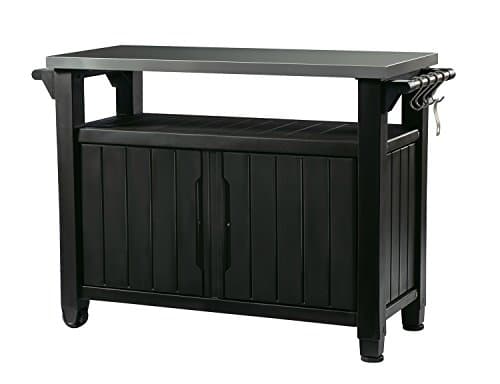
Keter Unity XL Portable Outdoor Table with Stainless Steel Top for Kitchen Prep and Outdoor Storage Cabinet for Grilling Accessories, Dark Grey
$220.99
Shop Now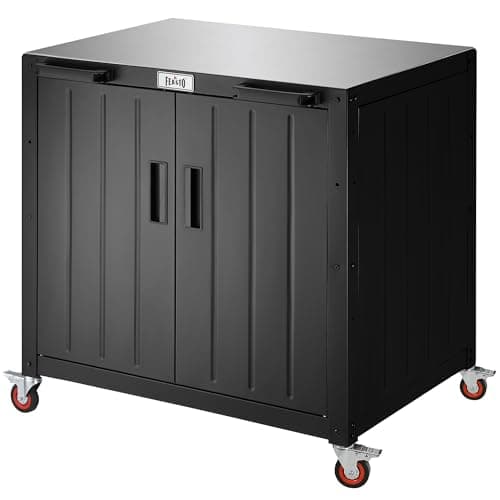
Feasto Outdoor Grill Cart with Storage Cabinet and Stainless Steel Top, 35-Inch Outdoor Grill Station with Door, Modular Kitchen Island for Food Prep and BBQ, Black & Silver
$219.99
Shop Now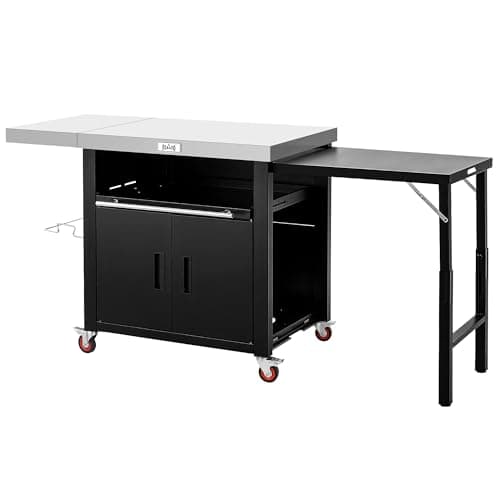
Feasto Outdoor Kitchen Island with Cabinet, Outdoor Grill Table with Stainless Steel Top for Pizza Oven& Griddles, Movable Bar Cart with Pull-Out Plate for Parties& Gathering, Heavy-Duty, L74”x W24”
$259.99
Shop NowKeter Unity XL Portable Outdoor Table with Stainless Steel Top for Kitchen Prep and Outdoor Storage Cabinet for Grilling Accessories, Dark Grey
$220.99
Shop NowFeasto Outdoor Grill Cart with Storage Cabinet and Stainless Steel Top, 35-Inch Outdoor Grill Station with Door, Modular Kitchen Island for Food Prep and BBQ, Black & Silver
$219.99
Shop NowFeasto Outdoor Kitchen Island with Cabinet, Outdoor Grill Table with Stainless Steel Top for Pizza Oven& Griddles, Movable Bar Cart with Pull-Out Plate for Parties& Gathering, Heavy-Duty, L74”x W24”
$259.99
Shop NowStandard Countertop Heights: 36-Inch and 42-Inch Bar
Outdoor kitchen dimensions for countertops follow two industry standards. The working countertop height is 36 inches from finished floor to the top of the stone, identical to indoor kitchens. This is the height every major built-in grill, sink, and refrigerator is engineered around — every brand from Weber Summit to Lynx Professional assumes a 36-inch counter when publishing cutout dimensions. The 36-inch standard accommodates cooks between 5'4" and 6'2" comfortably, with elbows resting roughly 4 inches above the surface for proper knife work and platter handling.
The bar or eating-counter height is 42 inches, designed for 30-inch barstools that produce a seat-to-counter clearance of 12 inches. A two-tier countertop combines both: a 36-inch work surface on the cook side and a 42-inch raised bar on the guest side, separated by a 6-inch riser. The riser hides splatter, hot pans, and prep mess from view. A third option is the 30-inch table-height counter for full dining, paired with 18-inch chairs. Some specialty zones differ: a baking station for kneading dough drops to 32 inches, while a chopping block area for tall cooks rises to 38. Stick to 36 and 42 unless you have a documented ergonomic reason to deviate.
Countertop Depth: 24 to 30 Inches Plus Overhang
Standard outdoor kitchen dimensions for counter depth are 24 inches for the cabinet box, 25.5 to 26 inches for the finished countertop with a 1.5-to-2-inch overhang on the front, and 30 inches deep for islands with raised bars where guests need knee room on the seating side. Twenty-four-inch depth matches the cabinet boxes of every major outdoor kitchen brand — Danver, Werever, Challenger, NatureKast, RTA, and NewAge all build to 24-inch standard.
For a single-sided run against a wall, 25.5 inches of finished depth gives you the perfect 1.5-inch front overhang while leaving enough wall reveal for a tile backsplash. For a double-sided island, plan 30 inches deep with a 6-inch raised bar at the back — the front side gets the 24-inch cabinet plus 1.5-inch overhang for working, and the back side gets a 12-inch deep bar top for plates and elbows. Pizza-oven niches need additional depth: a 32-inch Alfa Forninox cutout requires a 36-inch deep cabinet, and a 40-inch Forno Bravo unit needs 44 inches. Always check appliance spec sheets before committing to a depth — getting this wrong forces an expensive cabinet rework.
Built-In Grill Cutout Dimensions by Brand and Size
Grill cutout outdoor kitchen dimensions vary by brand even at the same nominal width. A '32-inch' Weber Summit S-460 actually requires a cutout of 30-1/8 W x 22 D x 11-1/4 H inches. A 32-inch Napoleon Prestige PRO 500 takes a 30-3/4 W x 22-7/8 D x 9-3/4 H cutout. A 32-inch Bull Outlaw fits 30-3/8 W x 21-3/4 D x 9-1/4 H. Always pull the manufacturer's PDF spec sheet and use the exact dimensions, not the marketing width.
For 36-inch grills the typical cutout runs 34 to 35 inches wide, 22 to 24 inches deep, and 9 to 11 inches tall. The Lynx L36ATR cuts in at 34-1/8 x 22-1/2 x 9-7/8. The DCS Series 9 36 takes 35-3/8 x 23-1/8 x 11. The Blaze Premium LTE 36 needs 34 x 21-1/2 x 8-1/2. For 42-inch grills, plan a 40-to-41-inch wide cutout. For 54-inch grills (Lynx 54, Hestan 54), plan 52 to 53 inches wide. Add a minimum 4-inch combustible clearance from the cutout to any wood, vinyl, or polymer cabinet face — most codes require this and most manufacturer warranties require it as well. Also confirm insulated jackets are required for any grill installed under a flammable structure or with less than 6 inches of clearance to walls.
Walkway and Aisle Clearances: 36 to 48 Inches
NKBA-recommended outdoor kitchen dimensions for walkways are precise. A single-cook aisle is 36 inches minimum, comfortable at 42. A two-cook aisle is 42 inches minimum, comfortable at 48 — this lets two people pass back-to-back without hot platters touching. A perimeter walkway around an island, where guests circulate, should be 44 to 60 inches; below 44 you create a bottleneck.
For doorways from house to outdoor kitchen, plan a 36-inch clear opening, ideally a 60-inch French door or 96-inch sliding panel for serving traffic. The threshold between indoor and outdoor flooring should not exceed 1/2 inch and should be beveled per ADA Section 303.3 to prevent tripping. From the cook's primary workstation to the dining table, plan a 48-inch unobstructed path so plates clear chair backs. Hot zones — anywhere within 24 inches of an open burner or grill lid — should never overlap with seating. The minimum vertical clearance above any open flame is 30 inches to combustibles, 36 inches to non-combustible ceilings; some pizza oven manufacturers require 60 inches above the flue.
Refrigerator, Ice Maker, and Beverage Center Dimensions
Outdoor kitchen dimensions for refrigeration follow tight standards. A built-in 24-inch outdoor refrigerator takes a cutout of 23-7/8 W x 24 D x 34 H inches across most brands — Blaze BLZ-SSRF130, Lynx L24REF, Coyote CBIR-1, and Summit SPR627OS all fit this template, though the Summit needs front venting (the others can vent through the bottom). A 15-inch undercounter ice maker like the Scotsman SCN60GA-1SS or U-Line ULN-CLR1215S-00B needs 14-7/8 W x 24-1/4 D x 33-1/2 H with a dedicated 1/4-inch water line and 5/8-inch gravity drain.
A 15-inch beverage center (Lynx L500BFR, Blaze BLZ-SSRF15) cuts in at the same 14-7/8 x 24-1/4 x 33-1/2. A kegerator needs more headroom — typically 24 W x 24-1/2 D x 34 H — plus 4 inches of overhead clearance for the tap tower (which adds 12 to 14 inches above the counter). Plan 2 inches of side ventilation on each refrigerator and 3 inches of rear venting for compressor airflow. Outdoor-rated fridges typically draw 1.5 to 4 amps and need a dedicated GFCI outlet within 36 inches. For a wine column, the 24-inch True T-24WC takes 23-7/8 W x 23-7/8 D x 33-3/4 H and holds 49 bottles.
Sink, Side Burner, and Specialty Appliance Sizing
Sink outdoor kitchen dimensions cluster around a few standards. A 15-inch bar sink drops in at 14-3/4 x 14-3/4 inches with a 12-inch deep cabinet. A 25-inch single-bowl prep sink takes a 24-3/4 x 18-3/4 cutout. A 33-inch double-bowl sink like a kitchen-grade model needs 32-3/4 x 19-1/4 inches and a 36-inch sink base cabinet. Faucet holes are 1-3/8 inches with 8-inch spread for two-handle deck-mount or 1-1/2 inches for single-hole pull-down units.
Side burners come in 12-inch single (cutout 11-1/4 x 19-3/4), 14-inch double (13-1/4 x 19-3/4), and 30-inch power-burner (28 x 21) sizes. Built-in pizza ovens vary widely — the Alfa Forninox 32-inch needs a 32 x 28 x 14 cutout, the Forno Bravo Vesuvio 100 needs 41 x 36 x 24, the wood-fired Mugnaini 90 needs a custom masonry surround at 48 x 48 x 36. Built-in smokers like the Memphis Pro ITC3 cut in at 24-1/4 x 22-3/4 x 23. Drop-in griddles like the Blaze 30-inch take 28-3/4 x 19-1/2 x 8-1/4. Always confirm the published 'rough-in' versus 'finish' opening — some brands list the rough opening which is 1/4 inch larger than the trim opening.
Island Sizing for 4, 6, and 8 People
Outdoor kitchen dimensions for islands scale with seating capacity. For a 4-person island, plan 8 feet long by 30 inches deep with a 6-inch raised bar — this seats four 24-inch barstools comfortably with one stool per person plus 12 inches of side clearance. The interior cabinet run is 96 inches, accommodating a 30-inch grill, 24 inches of counter, a 24-inch refrigerator, and 18 inches of base storage.
A 6-person island stretches to 12 feet long by 30 inches deep, fitting six 24-inch stools with comfortable elbow room. The interior holds a 36-inch grill, 24-inch side burner, 24-inch fridge, 15-inch ice maker, and 33 inches of prep counter. Total countertop area runs about 30 square feet. An 8-person island jumps to 16 feet long by 30 to 36 inches deep, often arranged in an L-shape so guests can see each other. Interior includes a 42-inch grill, double side burner, 24-inch fridge, 15-inch beverage center, sink, and 48+ inches of prep area. Plan 44 to 48 inches of perimeter walkway on three sides for traffic flow. Total footprint including walkways: a 4-person island consumes about 14 x 12 feet of patio, a 6-person 18 x 14, an 8-person 22 x 16.
ADA-Compliant and Multi-Generational Dimensions
For wheelchair-accessible or multi-generational outdoor kitchen dimensions, follow ADA guidelines. The accessible work surface lowers to 28 to 34 inches off the floor (34 inches is the working maximum) with at least one continuous 30-inch-wide section. Knee clearance under that section is 27 inches high, 30 inches wide, and 19 inches deep so a wheelchair user can pull up to the counter. The countertop overhang increases to 4 inches on the accessible run to keep the user's chest comfortably back from the work surface.
Cooktops and grills designed for wheelchair access place the front controls at 15 to 48 inches off the floor with shallow burner depth — front-controlled units like the Lynx Asado 30-inch flat-top griddle work better than rear-controlled grills. Sinks for accessible use have maximum bowl depth of 6-1/2 inches, insulated drain pipes (to prevent leg burns), and lever-handle faucets reachable from a seated position. Aisles widen to 60 inches minimum for wheelchair turning, with a 30 x 48-inch clear floor space at every appliance. For multi-generational households without specific accessibility needs, consider mixed-height counters: a 36-inch primary work zone, a 30-inch baking/seated-prep zone, and a 42-inch bar — covering kids, seated adults, and standing entertainers in one design.
Before you commit to anything here, check the permit and code requirements against your local adoption of the International Residential Code, and confirm your local jurisdiction has not amended them.
Frequently Asked Questions
01What is the standard outdoor kitchen counter height?
02How deep should an outdoor kitchen countertop be?
03What size cutout does a built-in grill need?
04How wide should the walkway be in an outdoor kitchen?
05How big should an outdoor kitchen island be?
06What is the standard cutout for an outdoor refrigerator?
07What is the landing zone next to the grill?
08What clearance do I need around a built-in grill?
09What are ADA dimensions for accessible outdoor kitchens?
10How do bar-height and counter-height differ?
This guide is part of Outdoor Kitchen Build Guides: Planning, Permits, Cost, and Hiring — the hub covering every guides guide on Outdoor Kitchen Setup.
Related Guides
Written and edited by Sukie
Sukie is the editor behind Outdoor Kitchen Setup. They compile manufacturer specification sheets, published building codes, and industry sizing standards into the measurement and planning guides on this site, and check every figure against its original source before it goes live. Where a number varies by brand or by local code, the guides say so rather than presenting a single figure as universal.