
Outdoor Kitchen Patio: Materials, Drainage, Load-Bearing & Sizing Guide
Outdoor kitchen patio engineering is the silent foundation that holds the entire build together — get the slab thickness, drainage slope, and load distribution wrong and even the most expensive island above will telegraph cracks within a few seasons.
Photo: RDNE Stock project / Pexels (Pexels License)
Top picks for this build
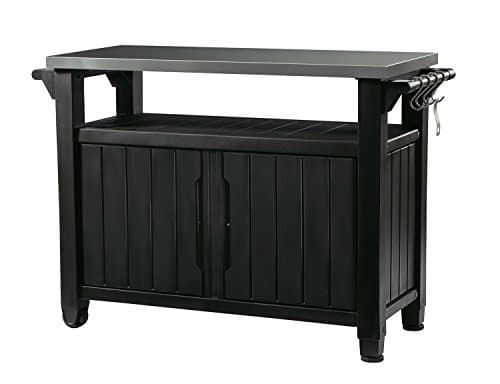
Keter Unity XL Portable Outdoor Table with Stainless Steel Top for Kitchen Prep and Outdoor Storage Cabinet for Grilling Accessories, Dark Grey
$237.99
Check price on Amazon: Keter Unity XL Portable Outdoor Table with Stainless Steel Top for Kitchen Prep and Outdoor Storage Cabinet for Grilling Accessories, Dark Grey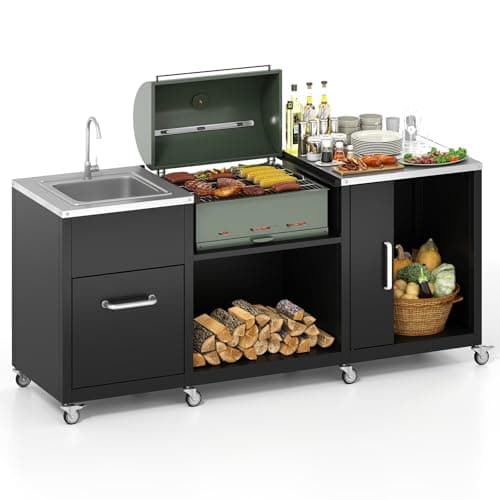
Happygrill 80” Outdoor Grill Table with Sink & Drainage, Heavy Duty Metal Grill Cart w/Cabinet & Removable Stainless Steel Top, Portable Prep Cooking Table w/Wheels for BBQ, Patio, Camping & Backyard
See price on Amazon
Check price on Amazon: Happygrill 80” Outdoor Grill Table with Sink & Drainage, Heavy Duty Metal Grill Cart w/Cabinet & Removable Stainless Steel Top, Portable Prep Cooking Table w/Wheels for BBQ, Patio, Camping & Backyard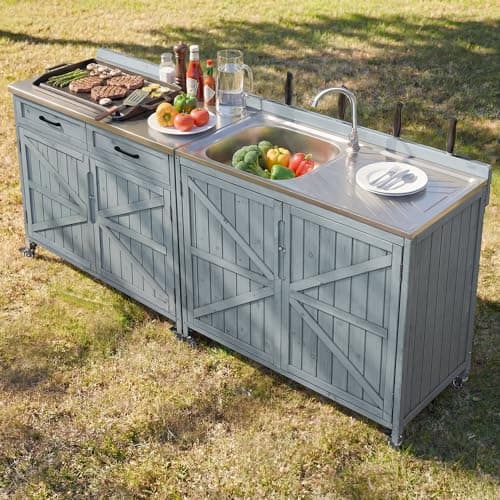
Merax 2 Piece Modular Outdoor Kitchen Series- Kitchen Grill Cart w/Stainless Steel Sink, Wood Rolling BBQ Prep Table w/Stainless Steel Top, Lockable Wheels for Patio & Outdoor Cooking, Grey Blue
See price on Amazon
Check price on Amazon: Merax 2 Piece Modular Outdoor Kitchen Series- Kitchen Grill Cart w/Stainless Steel Sink, Wood Rolling BBQ Prep Table w/Stainless Steel Top, Lockable Wheels for Patio & Outdoor Cooking, Grey Blue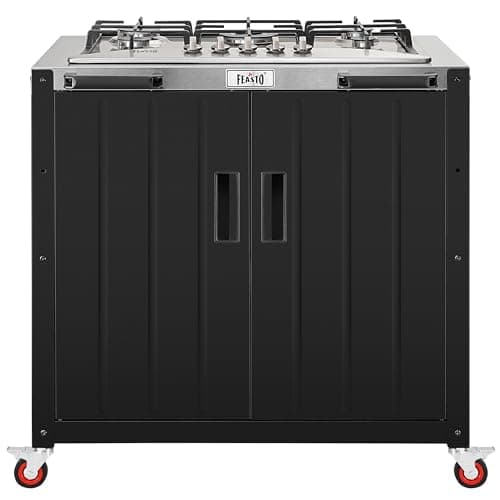
Feasto Gas Grill, Movable Outdoor Gas Stove Stainless Steel Top with Cabinet, 5 Burners with 36,200 BTUs, Outdoor Propane Grill for Outdoor Cooking, Ideal for Lawn & Garden, L35.4 x W24
$539.99
Check price on Amazon: Feasto Gas Grill, Movable Outdoor Gas Stove Stainless Steel Top with Cabinet, 5 Burners with 36,200 BTUs, Outdoor Propane Grill for Outdoor Cooking, Ideal for Lawn & Garden, L35.4 x W24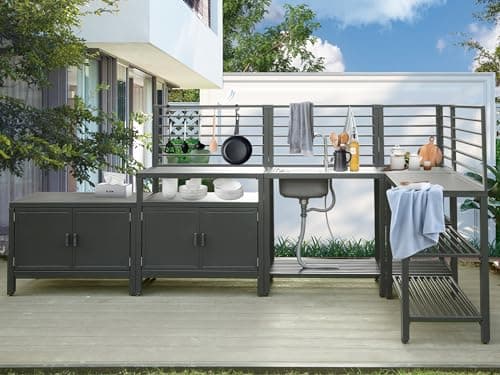
Domi 5-Piece Outdoor Kitchen Island with Storage, Aluminum Kitchen Islands Stainless Steel Sink w/Faucet, Corner Bar Storage Cabinet, Outdoor Kitchen with Protective Cover for Deck, Patio
$1,199.99
Check price on Amazon: Domi 5-Piece Outdoor Kitchen Island with Storage, Aluminum Kitchen Islands Stainless Steel Sink w/Faucet, Corner Bar Storage Cabinet, Outdoor Kitchen with Protective Cover for Deck, Patio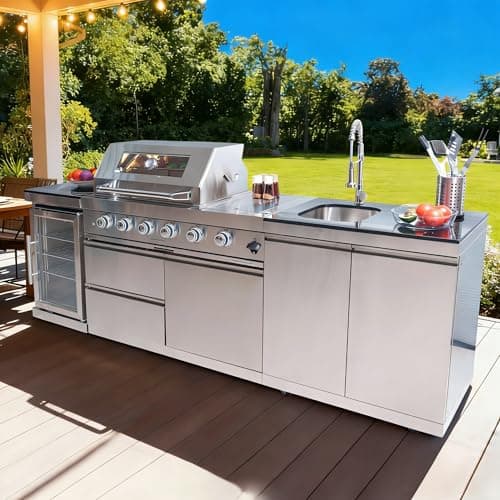
98 Inches Outdoor Kitchen Island, 4-Burner 72000 BTU Propane Stainless Steel BBQ with Side/Rear Burners, With Refrigerator and Sink, Rotisserie, Granite Countertops, Storage, For Backyard BBQ, Silver
$3,652.00
Check price on Amazon: 98 Inches Outdoor Kitchen Island, 4-Burner 72000 BTU Propane Stainless Steel BBQ with Side/Rear Burners, With Refrigerator and Sink, Rotisserie, Granite Countertops, Storage, For Backyard BBQ, Silver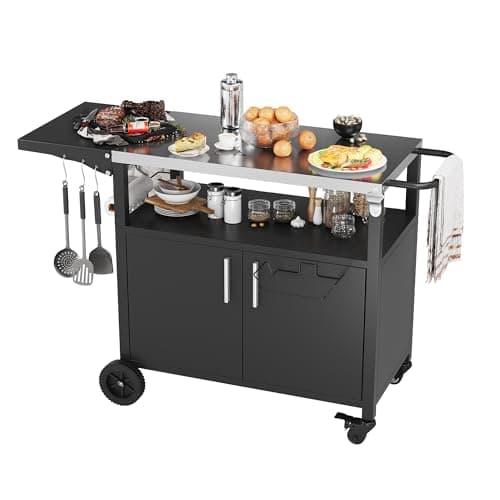
JY QAQA Outdoor Grill Cart with Storage,Patio Kitchen Island Outdoor Grill Table with Wheels,BBQ Cart Movable Pizza Oven Table Stand, Storage Cabinet, Foldable Tabletop, (Black)
$135.98
Check price on Amazon: JY QAQA Outdoor Grill Cart with Storage,Patio Kitchen Island Outdoor Grill Table with Wheels,BBQ Cart Movable Pizza Oven Table Stand, Storage Cabinet, Foldable Tabletop, (Black)Keter Unity XL Portable Outdoor Table with Stainless Steel Top for Kitchen Prep and Outdoor Storage Cabinet for Grilling Accessories, Dark Grey
$237.99
Check price on Amazon: Keter Unity XL Portable Outdoor Table with Stainless Steel Top for Kitchen Prep and Outdoor Storage Cabinet for Grilling Accessories, Dark GreyHappygrill 80” Outdoor Grill Table with Sink & Drainage, Heavy Duty Metal Grill Cart w/Cabinet & Removable Stainless Steel Top, Portable Prep Cooking Table w/Wheels for BBQ, Patio, Camping & Backyard
See price on Amazon
Check price on Amazon: Happygrill 80” Outdoor Grill Table with Sink & Drainage, Heavy Duty Metal Grill Cart w/Cabinet & Removable Stainless Steel Top, Portable Prep Cooking Table w/Wheels for BBQ, Patio, Camping & BackyardMerax 2 Piece Modular Outdoor Kitchen Series- Kitchen Grill Cart w/Stainless Steel Sink, Wood Rolling BBQ Prep Table w/Stainless Steel Top, Lockable Wheels for Patio & Outdoor Cooking, Grey Blue
See price on Amazon
Check price on Amazon: Merax 2 Piece Modular Outdoor Kitchen Series- Kitchen Grill Cart w/Stainless Steel Sink, Wood Rolling BBQ Prep Table w/Stainless Steel Top, Lockable Wheels for Patio & Outdoor Cooking, Grey BlueFeasto Gas Grill, Movable Outdoor Gas Stove Stainless Steel Top with Cabinet, 5 Burners with 36,200 BTUs, Outdoor Propane Grill for Outdoor Cooking, Ideal for Lawn & Garden, L35.4 x W24
$539.99
Check price on Amazon: Feasto Gas Grill, Movable Outdoor Gas Stove Stainless Steel Top with Cabinet, 5 Burners with 36,200 BTUs, Outdoor Propane Grill for Outdoor Cooking, Ideal for Lawn & Garden, L35.4 x W24Domi 5-Piece Outdoor Kitchen Island with Storage, Aluminum Kitchen Islands Stainless Steel Sink w/Faucet, Corner Bar Storage Cabinet, Outdoor Kitchen with Protective Cover for Deck, Patio
$1,199.99
Check price on Amazon: Domi 5-Piece Outdoor Kitchen Island with Storage, Aluminum Kitchen Islands Stainless Steel Sink w/Faucet, Corner Bar Storage Cabinet, Outdoor Kitchen with Protective Cover for Deck, Patio98 Inches Outdoor Kitchen Island, 4-Burner 72000 BTU Propane Stainless Steel BBQ with Side/Rear Burners, With Refrigerator and Sink, Rotisserie, Granite Countertops, Storage, For Backyard BBQ, Silver
$3,652.00
Check price on Amazon: 98 Inches Outdoor Kitchen Island, 4-Burner 72000 BTU Propane Stainless Steel BBQ with Side/Rear Burners, With Refrigerator and Sink, Rotisserie, Granite Countertops, Storage, For Backyard BBQ, SilverJY QAQA Outdoor Grill Cart with Storage,Patio Kitchen Island Outdoor Grill Table with Wheels,BBQ Cart Movable Pizza Oven Table Stand, Storage Cabinet, Foldable Tabletop, (Black)
$135.98
Check price on Amazon: JY QAQA Outdoor Grill Cart with Storage,Patio Kitchen Island Outdoor Grill Table with Wheels,BBQ Cart Movable Pizza Oven Table Stand, Storage Cabinet, Foldable Tabletop, (Black)Prices and availability are accurate as of October 22, 2026, 11:45 AM UTC and are subject to change.
Concrete Paver Patios for Outdoor Kitchens: The Most Popular Choice
Interlocking concrete pavers are the most widely chosen surface for the patios, and for good reason — they combine durability, design flexibility, repairability, and reasonable cost in a way no other material matches. Modern concrete pavers from manufacturers like Belgard, Techo-Bloc, Unilock, and Tremron are available in dozens of shapes, sizes, colors, and textures that replicate the look of natural stone, brick, or slate at a fraction of the cost.
For outdoor kitchen applications, choose pavers with a minimum compressive strength of 8,000 PSI (pounds per square inch) — the standard for most commercial-grade pavers. This strength rating ensures the pavers can handle the concentrated point loads from kitchen island legs and heavy appliances without cracking. Standard residential pavers at 4,000 to 6,000 PSI may crack under the sustained weight of a 4,000-pound stone island bearing down on four small footpads.
The typical the patio paver installation involves excavating 8 to 10 inches of soil, compacting the subgrade with a plate compactor, laying 6 inches of compacted crushed stone aggregate (applied in 2-inch lifts), topping with 1 inch of leveling sand, and then setting the pavers in your chosen pattern. Edge restraints — either concrete curbing or heavy-duty plastic edging from brands like Snap-Edge — contain the pavers and prevent shifting. This full-depth base is critical for outdoor kitchens because the heavier loads demand a more robust foundation than a simple patio furniture setup. Material costs run $4 to $12 per square foot for the pavers themselves, with total installed costs of $12 to $25 per square foot including base preparation and labor. Pair this guide with our broader outdoor kitchen setup overview for a complete picture of how this fits into a full backyard build.
Poured Concrete and Stamped Concrete Outdoor Kitchen Patios
Poured concrete remains one of the most cost-effective and structurally sound options for an patio. A properly poured and reinforced concrete slab provides a monolithic surface that distributes heavy loads evenly, resists shifting, and requires minimal maintenance. For outdoor kitchens, the concrete slab should be a minimum of 4 inches thick (6 inches is preferred for heavy island loads) and reinforced with #4 rebar on 18-inch centers in both directions or 6x6 welded wire mesh. The slab should incorporate a minimum slope of 1/8 inch per linear foot away from the house for drainage and should be poured on a compacted gravel sub-base of 4 to 6 inches.
Basic broom-finished concrete costs $6 to $10 per square foot installed and provides a non-slip, functional surface. However, many homeowners prefer the visual appeal of stamped concrete, which uses textured stamps pressed into wet concrete to create patterns that mimic flagstone, slate, cobblestone, brick, or wood plank. Stamped concrete costs $12 to $25 per square foot installed and is available in a wide range of colors achieved through integral color pigments and surface-applied release agents.
The primary drawback of stamped concrete for outdoor kitchens is its susceptibility to cracking. Unlike pavers, which can flex independently at each joint, a concrete slab transmits stress across its entire surface. Control joints cut at 8-to-10-foot intervals help manage where cracks occur, but some cracking is inevitable over time, especially in regions with significant freeze-thaw cycles. Resealing stamped concrete every two to three years with an acrylic or polyurethane sealer ($0.50 to $1.50 per square foot) maintains the color and protects against grease stains from outdoor cooking. For high-traffic the patios, consider adding a non-slip additive to the sealer to maintain traction when the surface is wet.

Natural Stone Patios: Flagstone, Bluestone, Travertine, and Granite
Natural stone is the premium choice for an patio, offering unmatched beauty, timeless appeal, and exceptional durability that improves with age. Each stone type brings a distinct aesthetic and set of performance characteristics.
Flagstone is an irregular-shaped flat stone available in sandstone, limestone, quartzite, and slate varieties. It creates a naturalistic, organic look with its random shapes and varied earth tones. Flagstone is typically dry-laid on a compacted gravel and sand base for informal patios or wet-set on a concrete slab with mortar joints for outdoor kitchens that need maximum stability under heavy loads. Material costs range from $4 to $12 per square foot, with installed costs of $15 to $30 per square foot.
Bluestone (a type of sandstone quarried primarily in Pennsylvania and New York) is one of the most sought-after natural stones for the patios. Its subtle blue-gray color with occasional brown and purple tones creates a sophisticated, classic appearance. Bluestone is available in both irregular and thermal-finished (sawn-edge) varieties. Thermal-finished bluestone at $8 to $15 per square foot per piece offers clean lines perfect for modern outdoor kitchen designs. Its natural cleft surface provides excellent traction even when wet, making it ideal for areas around sinks and ice bins where water spills are common.
Travertine pavers offer a Mediterranean elegance with their warm cream, gold, and walnut tones. Travertine naturally stays cooler underfoot than most other stones — a significant advantage in Sun Belt states where dark stone surfaces can reach 150 degrees Fahrenheit in direct summer sun. However, travertine is a sofite limestone that is more porous than bluestone or granite, requiring periodic sealing (every one to two years) to prevent staining from grease and food. Material costs run $6 to $15 per square foot.
Granite pavers are the most durable natural stone option, with compressive strengths exceeding 19,000 PSI — more than double most concrete pavers. Granite is virtually stain-proof when sealed, resists scratching and chipping, and handles freeze-thaw cycles without deterioration. It is also the most expensive option at $10 to $25 per square foot for material alone.
Drainage Design for Outdoor Kitchen Patios: Preventing Water Damage
Proper drainage is arguably the most critical technical element of an patio because standing water causes a cascade of problems: it erodes the paver base, undermines concrete slabs, promotes mold and algae growth on surfaces, rusts kitchen cabinet bases, and creates slip hazards. Every patio must incorporate a comprehensive drainage strategy that handles both rainwater and water from kitchen use (sink runoff, ice melt, cleaning spray).
Surface grading is the first line of defense. The patio surface must slope away from the house at a minimum rate of 1/8 inch per linear foot — meaning a 20-foot-deep patio drops 2.5 inches from the house wall to the far edge. For outdoor kitchens, many designers increase this to 1/4 inch per foot for faster water evacuation, particularly in high-rainfall regions. The slope should be imperceptible when standing on the patio but effective at moving water.
Channel drains (also called trench drains) are essential when the patio abuts the house or a retaining wall where water cannot run off naturally. A channel drain consists of a narrow trench (3 to 6 inches wide) cut into the patio surface with a slotted metal or plastic grate on top, connected to a solid drain pipe that carries water to a discharge point — typically a dry well, storm drain, or rain garden. Brands like NDS, Dura Slope, and ACO offer residential channel drain systems starting at $8 to $15 per linear foot. Position the channel drain at the low point of your patio grade, typically along the house-side edge or between the kitchen island and the house wall.
Permeable paver systems offer an innovative drainage solution where water passes directly through the paver joints into an aggregate reservoir base beneath. This eliminates surface runoff entirely and can reduce or eliminate the need for channel drains. Permeable systems from Belgard (Aqua Roc) and Unilock (Eco-Priora) use wider joints filled with open-graded aggregate instead of traditional sand. They cost 10 to 20 percent more than standard paver installations but may reduce stormwater management costs and satisfy local green infrastructure requirements.
Load-Bearing Requirements: Engineering Your Patio for Heavy Kitchen Islands
The most common failure point in the patios is inadequate load-bearing capacity beneath the kitchen island, which leads to settlement, tilting, cracked countertops, and misaligned appliance cutouts. Understanding the load your outdoor kitchen imposes and engineering the base accordingly prevents these expensive problems.
A typical built-in outdoor kitchen island measuring 8 feet long, 3 feet deep, and 3 feet tall weighs between 2,000 and 6,000 pounds when constructed from concrete block with stone veneer and a granite countertop. Add a built-in grill (150 to 300 pounds), refrigerator (100 to 200 pounds), and other appliances, and the total load can approach 4,000 to 8,000 pounds concentrated on a footprint of just 24 square feet. That translates to 165 to 333 pounds per square foot — far exceeding the 40 to 100 PSF that a standard residential patio base is designed to support.
For paver patios supporting heavy islands, the solution is a reinforced concrete pad beneath the paver field in the island footprint area. Pour a 6-inch-thick reinforced concrete pad (with #4 rebar on 12-inch centers) on top of 8 inches of compacted gravel, extending 6 inches beyond the island footprint in all directions. The pavers then install on top of this pad with a thin sand setting bed. This creates a rigid foundation that distributes the island's weight across a broad area while maintaining the visual continuity of the paver surface.
For poured concrete patios, increase the slab thickness to 6 inches in the island area with additional rebar reinforcement. Some engineers specify isolated footings (called spread footings) at each corner of the island, dug to the frost line depth and measuring 24 by 24 inches or larger, connected by a grade beam. This approach is essential in areas with expansive clay soils that swell and contract with moisture changes, as it anchors the island below the zone of soil movement.
Sizing Your Outdoor Kitchen Patio: How Much Space Do You Really Need?
Undersizing your patio is a mistake that limits functionality and feels cramped during gatherings. Oversizing wastes money on materials and may overwhelm small backyards. The right patio size depends on your kitchen configuration, dining needs, traffic flow requirements, and entertaining ambitions.
Start with the kitchen footprint. Measure or plan the total dimensions of your island, counters, and appliance stations. A standard linear outdoor kitchen island runs 8 to 12 feet long and 3 to 4 feet deep. An L-shaped configuration adds a perpendicular wing, typically bringing the total footprint to 10 by 10 feet or 12 by 8 feet. Add a minimum of 36 to 42 inches of clearance on all working sides of the kitchen — this is the cook's circulation zone, and anything less feels restrictive when you are holding hot pans or opening refrigerator doors. For the island back side (non-working side), 24 inches is sufficient if it faces a wall or fence.
Next, add the dining area. A standard 6-person outdoor dining table requires a zone of approximately 6 by 10 feet, including chair pullback space. An 8-person table needs 8 by 10 feet. If your outdoor kitchen includes a bar-height counter with stools, allocate 24 inches of counter width per stool and 36 inches of clearance behind the stools for walk-through traffic.
Finally, include transition and buffer zones. Allow 4 to 6 feet between the dining area and the cooking zone so that foot traffic does not interfere with the cook. If you plan to add a fireplace, fire pit, or lounge seating area, budget 10 by 10 feet minimum for each zone. Adding these components together, a typical outdoor kitchen patio with cooking, dining, and a small lounge area measures approximately 16 by 20 feet (320 square feet) at minimum. Larger entertainer-focused patios run 20 by 24 feet (480 square feet) to 20 by 30 feet (600 square feet), and some premium installations exceed 800 square feet.
Grease, Heat, and Stain Resistance: Choosing Patio Surfaces That Handle Kitchen Abuse
An outdoor kitchen patio takes abuse that a standard backyard patio never faces. Grease drips from grills and smokers, hot embers fall from charcoal baskets, red wine and barbecue sauce spill during dinner service, and heavy cast-iron skillets occasionally get dropped. Your patio surface material must handle these specific kitchen-related stressors without permanent damage.
Grease resistance varies dramatically by material. Unsealed concrete and porous natural stones like travertine and sandstone absorb grease on contact, creating dark stains that are extremely difficult to remove once they penetrate the surface. The solution is sealing: apply a penetrating sealer (not a topical film-forming sealer) to all porous patio surfaces before using the outdoor kitchen. Brands like TechniSoil, StoneTech BulletProof, and Miracle Sealants 511 Impregnator Sealer penetrate the stone pores and repel oil and water from within. Sealed surfaces allow grease to bead on the surface for easy cleanup. Reapply every one to three years depending on traffic and exposure. Dense natural stones like granite and bluestone are naturally less porous and resist grease penetration even without sealer, though sealing is still recommended.
Heat resistance matters in the zone directly beneath and around the grill. Hot grease splatter, dropped charcoal briquettes (which can exceed 1,000 degrees Fahrenheit), and radiant heat from the firebox can damage heat-sensitive surfaces. Concrete pavers and natural stone handle heat well — concrete pavers are kiln-fired at over 2,000 degrees during manufacturing. Stamped concrete is also heat-resistant but may experience discoloration of the surface sealer in localized hot spots. Rubber and composite decking materials are not suitable for outdoor kitchen patio surfaces due to melting and fire risk.
Stain remediation for common outdoor kitchen spills: treat grease stains immediately with a poultice of baking soda and dish soap left overnight, then rinse. Red wine and berries respond to hydrogen peroxide on light-colored stone. Rust stains from cast iron cookware require an oxalic acid-based cleaner. For stubborn stains on concrete, a pressure washer at 2,500 to 3,000 PSI with a 25-degree nozzle removes most surface contamination without damaging the material.
Patio Installation Timeline, Costs, and DIY vs Professional Considerations
Building an outdoor kitchen patio involves significant earthwork, material transport, and precision grading that makes it one of the more physically demanding hardscape projects. Here is what to expect for timeline and costs in 2026:
Cost summary by material (installed, per square foot):
- Broom-finished poured concrete: $6 to $10
- Stamped and colored concrete: $12 to $25
- Standard concrete pavers (Belgard, Unilock): $12 to $22
- Premium concrete pavers (Techo-Bloc, custom patterns): $18 to $30
- Natural flagstone (dry-laid): $15 to $25
- Natural flagstone (mortar-set on slab): $20 to $35
- Bluestone (thermal-finished): $22 to $35
- Travertine pavers: $15 to $28
- Granite pavers: $25 to $45
Installation timeline for a typical 300-to-400-square-foot outdoor kitchen patio:
- Excavation and sub-base preparation: 1 to 2 days
- Compaction and gravel base: 1 day
- Concrete pad for island (if applicable): 1 day pour, 3 to 7 days cure
- Paver or stone installation: 2 to 4 days
- Edge restraints, drainage, and finish grading: 1 day
- Total: 6 to 15 days including cure time
DIY feasibility: Paver patio installation is within reach of experienced DIYers who have access to a plate compactor (rentable for $80 to $150 per day), a transit level or laser level for grading, and the physical ability to move 3 to 5 tons of aggregate and pavers. The most critical skills are achieving proper sub-base compaction and maintaining consistent grade — errors in either create long-term settlement and drainage problems. Poured concrete is generally not a DIY project due to the narrow working window once the concrete truck arrives and the skill required for proper finishing. Natural stone installation — especially mortar-set work — is best left to experienced masons who understand proper joint spacing, mortar consistency, and pattern layout for irregular stones.
Loose ends worth tying off:
How long does it take to build an outdoor kitchen patio?
A professional crew typically completes a 300-to-400-square-foot paver patio in 5 to 8 working days, including excavation, base preparation, paver installation, and finish work. Poured concrete takes 3 to 5 days for forming, pouring, and finishing but requires 7 to 28 days of curing before heavy loads can be placed. Natural stone installations take 7 to 14 days depending on complexity.
Treat the layout clearances here as a planning starting point and the planning standards published by the National Kitchen & Bath Association as the authority, since local amendments are common.
Frequently Asked Questions
01What is the best patio material for an outdoor kitchen?
02How thick should a patio be for an outdoor kitchen?
03How big should an outdoor kitchen patio be?
04How do I prevent my outdoor kitchen patio from cracking?
05Does an outdoor kitchen patio need drainage?
06Can I build an outdoor kitchen on an existing patio?
07How much does an outdoor kitchen patio cost?
08What patio material is best for grease stains?
09Should I use pavers or poured concrete for my outdoor kitchen patio?
This guide is part of Outdoor Kitchen Layouts: Straight, L-Shape, U-Shape, and Galley Compared — the hub covering every design & layout guide on Outdoor Kitchen Setup.
Related Guides
Written and edited by Sukie
Sukie is the editor behind Outdoor Kitchen Setup. They compile manufacturer specification sheets, published building codes, and industry sizing standards into the measurement and planning guides on this site, and check every figure against its original source before it goes live. Where a number varies by brand or by local code, the guides say so rather than presenting a single figure as universal.