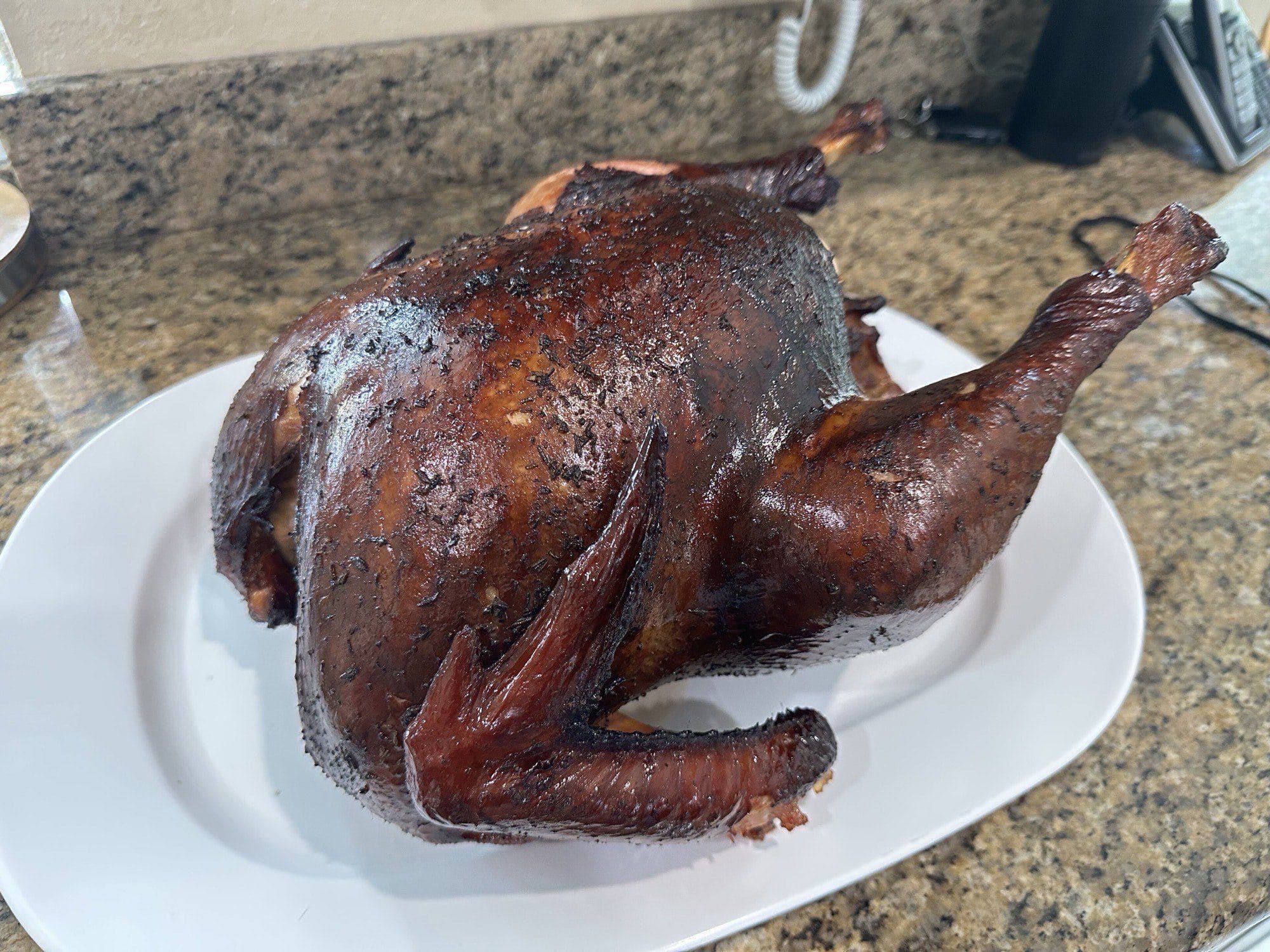
Outdoor Kitchen Counter: Materials, Sealing & Edge Profiles
Outdoor kitchen counter selection requires a different decision framework than indoor countertops because the surface has to withstand UV degradation, freeze-thaw cycles, direct grease contact from grilling, water sheet…
Photo: Gatorfan252525 / Wikimedia Commons (CC BY-SA 4.0)
Top picks for this build
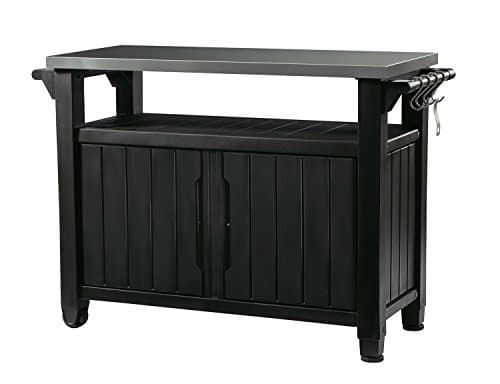
Keter Unity XL Portable Outdoor Table with Stainless Steel Top for Kitchen Prep and Outdoor Storage Cabinet for Grilling Accessories, Dark Grey
$237.99
Check price on Amazon: Keter Unity XL Portable Outdoor Table with Stainless Steel Top for Kitchen Prep and Outdoor Storage Cabinet for Grilling Accessories, Dark Grey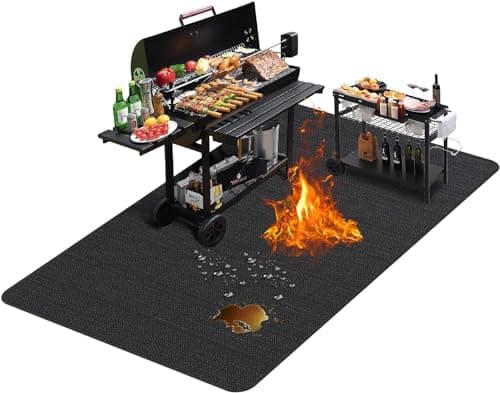
TAOMAND Large 76 x 52 inches Under Grill Mats for Outdoor Grill | Double-Sided Fireproof | Waterproof | Oil-Proof | Easy to Clean | Indoor Fireplace/Fire Pit Mat | Quality BBQ Mat for Deck Patio Lawn
$29.98
Check price on Amazon: TAOMAND Large 76 x 52 inches Under Grill Mats for Outdoor Grill | Double-Sided Fireproof | Waterproof | Oil-Proof | Easy to Clean | Indoor Fireplace/Fire Pit Mat | Quality BBQ Mat for Deck Patio Lawn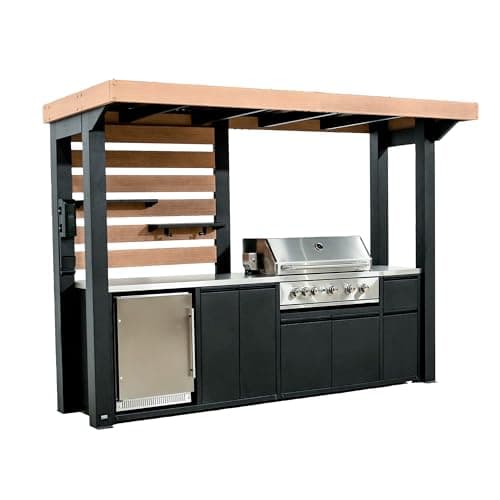
Backyard Discovery Fusion Flame Galvanized Steel Covered Outdoor Kitchen with 5-Burner Stainless, Grill, Refrigerator, Countertop, Storage, and, Roof for All-Season Outdoor Cooking, electric
$4,999.00
Check price on Amazon: Backyard Discovery Fusion Flame Galvanized Steel Covered Outdoor Kitchen with 5-Burner Stainless, Grill, Refrigerator, Countertop, Storage, and, Roof for All-Season Outdoor Cooking, electric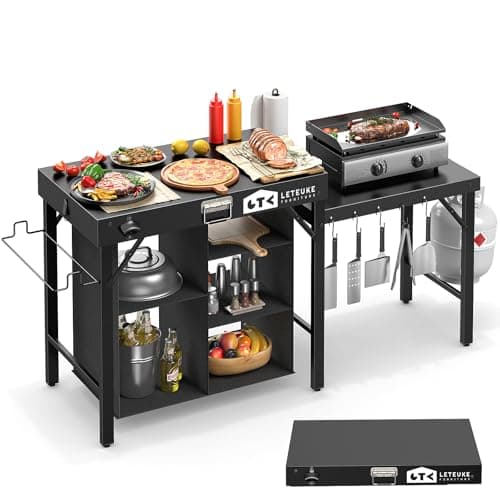
Leteuke Grill Table for Blackstone Griddle, Portable Foldable Grill Table with Storage Fits Ninja, Blackstone Griddle Stand for Outdoor Camping, Picnic, Garden, Patio, Dining, BBQ, Party
$139.99
Check price on Amazon: Leteuke Grill Table for Blackstone Griddle, Portable Foldable Grill Table with Storage Fits Ninja, Blackstone Griddle Stand for Outdoor Camping, Picnic, Garden, Patio, Dining, BBQ, PartyKeter Unity XL Portable Outdoor Table with Stainless Steel Top for Kitchen Prep and Outdoor Storage Cabinet for Grilling Accessories, Dark Grey
$237.99
Check price on Amazon: Keter Unity XL Portable Outdoor Table with Stainless Steel Top for Kitchen Prep and Outdoor Storage Cabinet for Grilling Accessories, Dark GreyTAOMAND Large 76 x 52 inches Under Grill Mats for Outdoor Grill | Double-Sided Fireproof | Waterproof | Oil-Proof | Easy to Clean | Indoor Fireplace/Fire Pit Mat | Quality BBQ Mat for Deck Patio Lawn
$29.98
Check price on Amazon: TAOMAND Large 76 x 52 inches Under Grill Mats for Outdoor Grill | Double-Sided Fireproof | Waterproof | Oil-Proof | Easy to Clean | Indoor Fireplace/Fire Pit Mat | Quality BBQ Mat for Deck Patio LawnBackyard Discovery Fusion Flame Galvanized Steel Covered Outdoor Kitchen with 5-Burner Stainless, Grill, Refrigerator, Countertop, Storage, and, Roof for All-Season Outdoor Cooking, electric
$4,999.00
Check price on Amazon: Backyard Discovery Fusion Flame Galvanized Steel Covered Outdoor Kitchen with 5-Burner Stainless, Grill, Refrigerator, Countertop, Storage, and, Roof for All-Season Outdoor Cooking, electricLeteuke Grill Table for Blackstone Griddle, Portable Foldable Grill Table with Storage Fits Ninja, Blackstone Griddle Stand for Outdoor Camping, Picnic, Garden, Patio, Dining, BBQ, Party
$139.99
Check price on Amazon: Leteuke Grill Table for Blackstone Griddle, Portable Foldable Grill Table with Storage Fits Ninja, Blackstone Griddle Stand for Outdoor Camping, Picnic, Garden, Patio, Dining, BBQ, PartyPrices and availability are accurate as of October 22, 2026, 11:45 AM UTC and are subject to change.
Outdoor Kitchen Counter Material Comparison: Eight Surfaces Tested for UV, Freeze, and Stain
Granite remains the most-installed the counter material because it handles every outdoor stress factor reasonably well at a moderate price point ($60-$95 per square foot installed in 2026). Look for darker granites with tight crystal structures (Absolute Black, Steel Grey, Uba Tuba) — they hide grease stains better than light-colored stones. Quartzite ($80-$140 per square foot) outperforms granite on hardness (rated 7 on Mohs scale versus granite's 6-6.5) but costs more and requires deeper sealing. Avoid quartz countertops outdoors — engineered quartz from Caesarstone, Silestone, and Cambria contains polymer resins that yellow under UV exposure within 18 to 36 months and will void the warranty.
Concrete ($55-$110 per square foot) offers the most design flexibility — custom shapes, integrated drain boards, embedded objects — but requires expert sealing and re-sealing every 12-18 months outdoors. Soapstone ($85-$130) is naturally non-porous and develops a desirable patina over years; it costs more but never needs sealing. Porcelain slab products like Dekton, Neolith, and Lapitec ($110-$180 per square foot) are virtually indestructible — heat-proof to 1,200°F, UV-stable, scratch-resistant, and zero water absorption — making them the engineering top choice for outdoor counters. Porcelain tile ($12-$30 per square foot) is the budget winner that mimics premium stone reasonably well; just specify a minimum 1.2 cm thickness on a cement-board substrate to handle weight loads. Butcher block looks beautiful in photos but fails outdoors within 2-4 years from UV checking and water cupping unless heavily sealed every 4 months.
The counter Depth and Height: The Standard Numbers
Standard the counter depth runs 24 to 28 inches, with 25.5 inches being the most common dimension because it accommodates the cutout depth of nearly all built-in grills, drop-in side burners, and 24-inch refrigerators while leaving 1-2 inches of finished edge in front. Going deeper than 28 inches makes reaching the back of the counter difficult; going shallower than 24 inches eliminates compatibility with most major appliance brands. Bar overhang sections for raised seating add 12 to 16 inches of overhang, bringing total depth to 36 to 44 inches.
Counter height for the work surface is 36 inches above finished grade — same as indoor kitchens. Bar height for raised seating is 42 inches, paired with 30-inch bar stools. Serving counter height drops to 30 inches when paired with standard dining chairs in a U-shape configuration. The transition between work height and bar height should be vertically stepped (not gradual) for a clean architectural look. Toe kick depth at the bottom of the cabinet is 3 to 4 inches deep and 4 inches tall, matching indoor convention. For accessibility considerations, ADA-compliant outdoor kitchens drop one section to 34 inches with 27-inch knee clearance below — useful if a household member uses a wheelchair regularly. These dimensions match the layout principles in our outdoor kitchen setup guide and should be confirmed against your specific appliance cutout sheets before fabrication.
How do I clean grease stains off an counter
Apply a poultice of baking soda mixed with hydrogen peroxide into a thick paste over the stain, cover with plastic wrap for 24 hours, then rinse and reseal the area. The poultice draws oil back out of the stone. Avoid abrasive scrubbing or acidic cleaners — both damage sealer. For routine cleaning, use a pH-neutral stone cleaner like Stone Care International or two tablespoons mild dish soap per gallon of water.
Edge Profiles for The counter: Drip Edges vs. Mitered Waterfalls
Outdoor kitchen counter edge profiles serve two purposes: aesthetic finishing and water management. The five most-used profiles each behave differently in rain. Eased edge (slight 1/8-inch radius) is the most economical, looks contemporary, but allows water to wick under the counter edge along the cabinet face — not ideal in rainy climates. Bullnose (full half-round edge) sheds water cleanly off the front and is the safest choice for unprotected outdoor counters in the Pacific Northwest, Southeast, and Northeast.
Ogee edge (S-curve traditional profile) looks beautiful on granite or marble but creates a small upper channel that collects debris and standing water — best reserved for covered outdoor kitchens. Drip edge (a 1/2-inch undercut groove on the underside) actively breaks the surface tension that lets water creep back toward the cabinet face. This is the technically correct profile for any uncovered outdoor counter and adds about $4-$8 per linear foot to fabrication cost. Mitered waterfall (counter material extends down the side of the cabinet to floor) creates dramatic visual impact and is the signature look of high-end outdoor kitchens. Waterfalls require precise mitering — gaps over 1/16 inch let water enter — and add $400-$1,200 per side depending on material. Combine a drip edge on the work surface with a waterfall side panel for the optimal combination of weather protection and aesthetics.
Sealing Outdoor Kitchen Counter Stone: What Actually Works Outside
Most the counter sealing failures stem from using indoor-rated sealers that degrade under UV exposure within 6-8 months. Reach for outdoor-formulated penetrating sealers based on fluoropolymers or modified silanes, not the topical solvent-based products sold for indoor use. Best-in-class outdoor sealers: Dry-Treat 24/7 ($85 per quart, treats roughly 60 sq ft of granite, lasts 10-15 years on outdoor stone), Tuff Duck Granite Marble Sealer ($35 per pint, food-safe, lasts 3-5 years), and Miracle Sealants 511 Impregnator ($45 per quart, lasts 5-7 years).
Apply on a dry, room-temperature day (60°F-80°F) to clean, fully cured stone. Wait at least 14 days after stone fabrication for natural moisture to evaporate from the slab. Apply two thin coats with a microfiber pad, wiping off excess after 5-10 minutes per coat — leaving sealer to puddle creates streaky residue that mars the finish. Test by dripping water on the stone surface 30 days after sealing; properly sealed stone beads water tightly. Re-test annually and reseal when water no longer beads. Concrete counters need different chemistry: penetrating densifiers like Cheng ConcreteSealer or Trinic NRG Sealer create a chemical reaction with the cement matrix rather than sitting on top, dramatically extending performance. Plan to reseal concrete every 12-18 months outdoors versus 4-6 years for properly sealed granite.
Cantilevered Overhang Support for Outdoor Kitchen Counter Bar Seating
Bar-height overhang sections on an counter need engineered support to prevent cracking, especially in stone over 1.25 inches thick. The general rule: any overhang exceeding one-third of the counter depth requires steel bracket support hidden in the cabinet substructure. A 12-inch overhang on a 25-inch counter needs no additional support; a 14-inch overhang on a 25-inch counter does.
The most reliable hidden bracket is the Federal Brace Centaur in 304 stainless ($45-$120 each depending on size) — a steel L-bracket bolted to the cabinet face plate with a horizontal arm extending into the overhang. Space brackets every 24-30 inches along the overhang length. For larger overhangs (16+ inches), upgrade to the Hidden Counter Support System from Original Granite Bracket ($85-$210 each) which allows bracket arms up to 18 inches without visible support from the seating side. Avoid wood corbels outdoors — they rot, attract carpenter ants, and the wood movement cracks the stone above. Pipe columns are an alternative for very long overhangs (24+ inches): a 2-inch stainless pipe from countertop to slab carries the load cleanly while reading as architectural rather than utilitarian. Always have brackets installed before stone fabrication so the templater can account for bracket position when planning seam placement.
What is the typical cost per square foot for an outdoor kitchen counter
Installed 2026 pricing per square foot: porcelain tile $12-$30, concrete $55-$110, granite $60-$95, quartzite $80-$140, soapstone $85-$130, leathered granite premium $85-$120, porcelain slab (Dekton/Neolith) $110-$180. A typical 36-square-foot outdoor counter runs $432 (porcelain tile) to $6,480 (premium Dekton). Add edge profile upgrades, cutout fees ($75-$200 each), and waterfall side panels ($400-$1,200 per side).
Heat Damage and Thermal Shock on Outdoor Kitchen Counter Surfaces
The counter surfaces near built-in grills face a thermal shock pattern that indoor counters rarely experience: ambient stone temperature can drop to 30°F overnight in winter, then a hot pan or grill grate placed on the surface during cooking creates a 600°F+ thermal differential. Granite handles this well in tested configurations — it has been used in outdoor kitchens for decades without widespread cracking issues, but always order a thickness of 3 cm (1.25 inches) minimum for thermal mass and to resist micro-fracturing.
Marble fails outdoors at thermal shock points — limestone-based stones lack the crystalline density to handle freeze-thaw plus heat cycles. Skip marble outside even if you love the look. Concrete cracks at thermal shock points unless properly fiber-reinforced and sealed; specify GFRC (glass-fiber reinforced concrete) for outdoor builds. Porcelain slab products like Dekton excel at thermal shock — they are tested to 1,200°F with zero deformation. Soapstone is exceptional with the highest thermal shock resistance of any natural stone, used historically for fireplace surrounds and woodstove tops. To minimize thermal shock damage on any material, place trivets under hot cookware (a $25 cast iron trivet pays for itself), avoid placing pans directly off the grill onto stone, and never set frozen items directly onto sun-heated stone in summer — let them temper to ambient first.
Sink Cutouts, Cooktop Cutouts, and Penetrations in Outdoor Kitchen Counter
Every cutout in an counter creates a potential water entry point that must be sealed properly during installation. Sink cutouts for undermount sinks need a 1/4-inch radius at all four interior corners to prevent stress cracks — square-corner cutouts develop hairline cracks at the corners within 6-12 months from countertop flexing during temperature swings. The cutout edge must be sealed with 100 percent silicone (GE Silicone II Window & Door is the contractor standard) — not latex caulk, which fails outdoors within one season.
Cooktop and grill cutouts follow the manufacturer dimension exactly with 1/2-inch margin for thermal expansion. Seal the cut stone edges with the same outdoor sealer used on the surface to prevent water absorption through exposed mineral structures. Faucet penetrations need a deck mount with a stainless steel base plate and silicone gasket; chrome-only fixtures will pit and corrode within 2-3 years outdoors. Always specify 304 stainless steel hardware minimum, with 316 marine-grade for coastal locations. For drainage from the counter surface, install a 1-percent slope (1/8 inch per foot) toward a drain or toward the front edge — flat counters pool water and accelerate sealer breakdown. Plan all cutouts and penetrations during the templating phase before stone fabrication; field-cutting after installation typically cracks the slab.
Outdoor Kitchen Counter Maintenance: Cleaning, Resealing, Stain Removal
Daily and weekly the counter maintenance is simpler than indoor counters because rain handles much of the cleaning. Wipe down after each cooking session with a pH-neutral stone cleaner like Stone Care International ($12 per quart) or DIY with two tablespoons mild dish soap per gallon of water. Avoid acidic cleaners (vinegar, lemon, citrus-based products) on natural stone — they etch the surface within minutes on marble and slowly degrade granite sealer.
For grease stains on light-colored granite, mix baking soda with hydrogen peroxide into a paste, apply over the stain, cover with plastic wrap for 24 hours, then rinse — this poultice draws oil back out of the stone. Wine stains respond to the same treatment with 12 percent hydrogen peroxide. Hard water deposits at faucets need monthly removal with a stone-safe lime remover like Bring It On Cleaner. Annual maintenance: inspect all sealed seams and reseal where any gap appears. Test water beading on stone surfaces — if water no longer beads tightly, schedule a full re-seal within the month. Spring and fall transition maintenance: deep clean with stone-specific degreaser, inspect for hairline cracks at cutout corners (early intervention prevents propagation), and inspect cantilever bracket connections to make sure no movement has occurred. Following this schedule, granite counters last 25+ years outdoors, concrete 15-20 years, and porcelain slab essentially indefinitely with no measurable degradation across decades.
Questions that come up on almost every build:
Can I install an counter on a wood deck?
Yes with structural reinforcement. The deck framing must support the counter weight (granite at 18 lb/sq ft, concrete at 25 lb/sq ft) plus cabinet structure. Add additional joists to halve span, blocking between joists below the counter location, and a vapor barrier under the cabinet base. Many deck builders pour a separate concrete pad through the deck for outdoor kitchen support to avoid loading the deck framing entirely.
What edge profile is best for an counter?
A drip edge (1/2-inch undercut groove on the underside) is the technically optimal profile for any uncovered outdoor counter — it prevents water from creeping under the counter edge. Bullnose is the runner-up and looks slightly more traditional. Avoid ogee profiles outdoors; the upper curve collects debris and standing water.
How do I prevent cracking at sink and grill cutouts on the counters?
Specify 1/4-inch radius corners on all interior cutout corners — square corners develop hairline stress cracks within 6-12 months. Seal cutout edges with the same outdoor-rated stone sealer applied to the surface. Maintain 1/2-inch margin around all appliance cutouts for thermal expansion. Use 100 percent silicone (GE Silicone II) for any sealant — never latex caulk, which fails outdoors within one season.
For the clearance and sizing figures in this guide, the kitchen sizing standards published by the National Kitchen & Bath Association is the primary reference — and your inspector is the one who decides.
Frequently Asked Questions
01What is the best outdoor kitchen counter material for cold climates?
02How thick should an outdoor kitchen counter be?
03Should I use granite or quartz for an outdoor kitchen counter?
04How often should an outdoor kitchen counter be sealed?
05What is the ideal outdoor kitchen counter depth?
This guide is part of Outdoor Kitchen Components: What Goes In, In What Order, and What to Skip — the hub covering every components guide on Outdoor Kitchen Setup.
Related Guides
Written and edited by Sukie
Sukie is the editor behind Outdoor Kitchen Setup. They compile manufacturer specification sheets, published building codes, and industry sizing standards into the measurement and planning guides on this site, and check every figure against its original source before it goes live. Where a number varies by brand or by local code, the guides say so rather than presenting a single figure as universal.