Outdoor Kitchen Covers
Outdoor kitchen covers compared: Sunbrella, polyester, and vinyl materials, top brands like Classic Accessories and Coverstore, plus exact measurement steps.
By Sukie
Editor · compiles manufacturer specs and building-code references into the measurement guides on this site
Top Picks: Best Outdoor Kitchen Covers in 2026
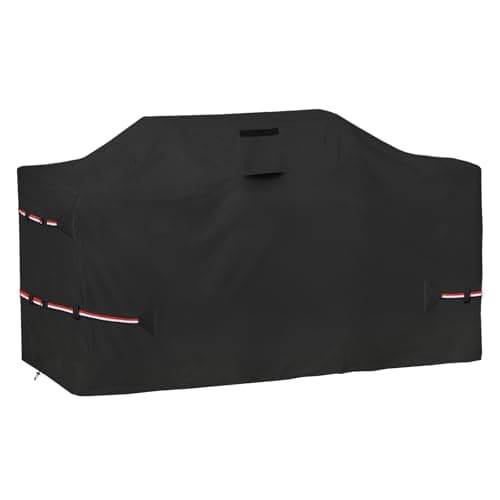
Osileyo 98 Inch Island Grill Cover - 600D Heavy Duty Waterproof All Weather Protection Outdoor Cover,Black
$55.99
Shop Now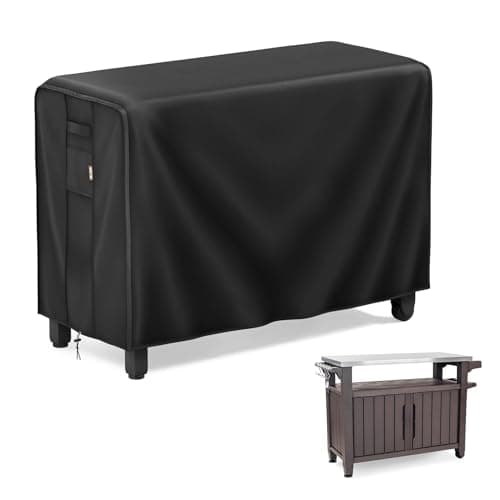
MR. COVER Outdoor prep table cover 52 inch for Keter Unity XL Outdoor Rolling Table Cart, 600D Heavy Duty Waterproof for Grill Dining Kitchen Island cart Protective, Outdoor Storage Cabinet Cover
$31.99
Shop Now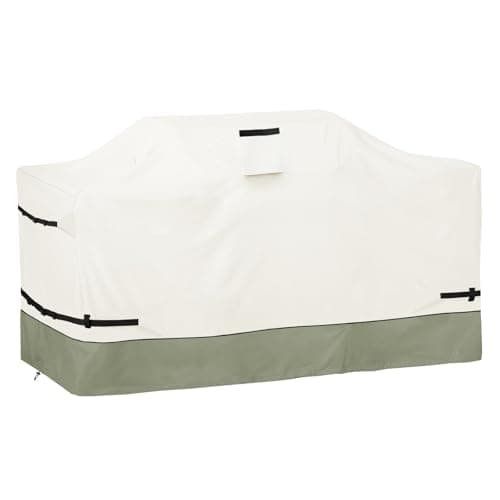
Osileyo 98 Inch Island Grill Cover - 600D Heavy Duty Waterproof All Weather Protection Outdoor Cover,Beige&Grayish Green
$54.99
Shop Now
Sbaqurizz Stone Patio Grill Island Cover Waterproof 132 Inch Outdoor Kitchen Island BBQ Grill Cover for Heavy Duty Stainless Steel Outdoor Kitchen Set
$169.99
Shop Now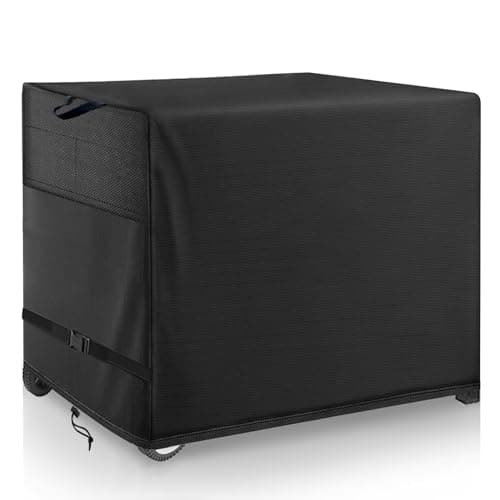
WNANAN Outdoor Prep Table Cover - Heavy Duty Waterproof Cover for Outdoor Stainless Steel Table,Black
$29.99
Shop NowOsileyo 86 Inch Island Grill Cover - 600D Heavy Duty Waterproof All Weather Protection Outdoor Cover,Black
$54.99
Shop NowOsileyo 98 Inch Island Grill Cover - 600D Heavy Duty Waterproof All Weather Protection Outdoor Cover,Black
$55.99
Shop NowMR. COVER Outdoor prep table cover 52 inch for Keter Unity XL Outdoor Rolling Table Cart, 600D Heavy Duty Waterproof for Grill Dining Kitchen Island cart Protective, Outdoor Storage Cabinet Cover
$31.99
Shop NowOsileyo 98 Inch Island Grill Cover - 600D Heavy Duty Waterproof All Weather Protection Outdoor Cover,Beige&Grayish Green
$54.99
Shop NowSbaqurizz Stone Patio Grill Island Cover Waterproof 132 Inch Outdoor Kitchen Island BBQ Grill Cover for Heavy Duty Stainless Steel Outdoor Kitchen Set
$169.99
Shop NowWNANAN Outdoor Prep Table Cover - Heavy Duty Waterproof Cover for Outdoor Stainless Steel Table,Black
$29.99
Shop NowOsileyo 86 Inch Island Grill Cover - 600D Heavy Duty Waterproof All Weather Protection Outdoor Cover,Black
$54.99
Shop NowCover Material Tiers: Polyester, PVC-Backed, and Sunbrella
The denier rating on the back of an outdoor kitchen covers spec sheet is the most important number to read. Denier measures the weight of the polyester or acrylic threads — higher denier means thicker, more abrasion-resistant fabric. Light-duty 300D polyester ($25 to $40) is the dollar-store-grade cover that ships with most freestanding grills. It blocks rain for one season but tears at handle straps within 18 months and fades visibly in direct sun within 8 months. Useful only for occasional, short-term coverage in shaded spots. For an integrated overview of layouts, materials, and brands, our outdoor kitchen central reference for further reading.
The middle tier, 600D to 1200D polyester with a PVC backing ($60 to $130), is where serious protection begins. The PVC layer is what stops water from wicking through the weave, and it should be 0.05 millimeters thick or greater for true waterproofing. Classic Accessories Ravenna at 600D and Cover Tuff at 1200D both fall into this tier. Top tier is solution-dyed acrylic — typically Sunbrella or Outdura branded ($120 to $280) — where the color is built into the fiber rather than printed on top. These covers carry 5- to 10-year color warranties versus the 1-year warranty on PVC-backed polyester. They also breathe better, which prevents the trapped-condensation rust that PVC-backed covers cause on stainless steel surfaces in humid climates.
Top Brands: Classic Accessories, Coverstore, and Covermates
Classic Accessories runs the broadest catalog and is what most homeowners encounter first because every Home Depot, Lowe's, and Amazon listing for outdoor kitchen covers leads with their Ravenna or Veranda models. The Ravenna 71 by 26-inch grill cover ($79) covers a freestanding 4-burner; the Ravenna XL Patio Bar Cover ($129) handles 8-foot bar islands. Quality is consistent — heavy 600D polyester, click-strap closures, and adjustable side hems — and the lifetime warranty is honored in practice. Their weakness is generic sizing; if your kitchen is a custom shape, Classic Accessories will not have a fit.
Coverstore is the custom-fit specialist and the right call for built-in masonry kitchens or oddly shaped islands. You input your exact dimensions on their site, choose between Empire (PVC-backed polyester) and Ultima Ripstop (Sunbrella alternative), and they ship a custom cover in 8 to 12 business days for $145 to $260. The Empire line is rated for 5 years; Ultima Ripstop carries a 7-year warranty. Covermates owns the size-variation crown — they offer 40-plus pre-made sizes ranging from 30-inch grill covers to 156-inch full-island covers. Pricing splits the difference between Classic Accessories and Coverstore.
How to Measure for Outdoor Kitchen Covers Correctly
Most outdoor kitchen covers returns happen because of measurement mistakes. The three numbers you need are width, depth, and height — measured at the widest, deepest, and tallest points respectively. For width, run a tape measure along the longest face of the kitchen, going post-to-post on bar overhangs and including any side burners that protrude beyond the main island. For depth, measure from the front edge of the counter (including any overhang for bar seating) to the very back of the structure, including handles, hinges, and any backsplash extension.
Height is where mistakes cluster. Measure from the ground to the highest point of the kitchen, which is usually either the open grill hood (some homeowners cover open hoods, others close them) or the top of a vent hood if installed. Add 2 to 3 inches of slack to your height measurement so the cover drapes naturally without stretching at the corners. For built-in kitchens with multiple appliances at different heights, measure to the absolute tallest peak — the cover will gather slightly over shorter sections but will not bind. One commonly missed dimension: side overhangs. If your bar counter extends 12 inches beyond the cabinet base on one or both sides, measure across that overhang at its widest point or the cover will pull tight at the underside corners and tear there first.
Vented vs Unvented Cover Designs and Why It Matters
The single most-overlooked spec on outdoor kitchen covers is whether the cover has air vents. An unvented cover traps moisture and humidity against the stainless steel, accelerating corrosion despite the cover's intent. In humid climates (Gulf Coast, Pacific Northwest, Mid-Atlantic summers), unvented covers actually cause more rust than going uncovered. The first time you lift the cover after a hot, humid week and see condensation droplets on the inside is the moment this becomes obvious.
A vented design adds 2 to 4 mesh-screened openings near the top corners or along the seams that allow trapped warm air to escape while preventing rain entry. Classic Accessories Ravenna and Coverstore Ultima both ship vented as standard; many bargain-tier covers omit vents to cut cost. If you already own an unvented cover, you can retrofit by cutting two 4-inch holes near the top, sewing on a fine-mesh patch, and sealing the seams with seam-grip adhesive — but factory-vented is always better. For climates that are dry rather than humid (Arizona, New Mexico, southern California interior), unvented covers are functionally fine. For everywhere else, the vent feature is a non-negotiable.
Strap Systems and Wind-Resistance Features
An outdoor kitchen cover that blows off in a 25-mph gust is worse than no cover, because it ends up in the neighbor's yard or torn on the property line fence. Three strap systems anchor outdoor kitchen covers against wind: integrated click-buckle straps (the most common and best for moderate wind), tie-down loops at corners (basic but only effective if you actually tie them after every cookout), and elastic shock cord with toggle stoppers (the gold standard for high-wind installations).
Look for cover specs that mention click-close or side-closure straps with at least four straps total — two on each long side. Coverstore's Empire line ships six straps for covers over 100 inches wide. For coastal or open-prairie installations where 50-mph gusts are routine, supplement the brand straps with a $25 set of polyester ratchet straps from Harbor Freight wrapped around the kitchen base every 24 inches. Avoid bungee cords across the top of the cover — they sag during rain, pool water, and tear holes at the contact points within a year. Snap closures (the kind found on cheap covers) are the worst system; they pop open in any meaningful wind and the male side rusts within two seasons.
Climate-Specific Cover Recommendations
Outdoor kitchen covers should be matched to your climate, not selected generically. In the desert Southwest (Arizona, Nevada, New Mexico), UV is the dominant failure mode. Choose Sunbrella acrylic with a 7- to 10-year UV warranty; PVC-backed polyester yellows and embrittles within 3 to 4 years of direct sun. The Coverstore Ultima Ripstop or any genuine Sunbrella-fabric cover from Classic Accessories Veranda Pro line are the right calls.
In the humid Southeast (Gulf Coast, Florida, North Carolina), water management trumps UV. Choose vented PVC-backed polyester with click-strap closures so air circulates while still blocking rain. Cover Tuff 1200D and Coverstore Empire are both excellent here. In the freeze-thaw North (New England, Midwest, Pacific Northwest mountains), choose covers with reinforced corners and ice-shed coatings — the Classic Accessories Hickory Heavy Duty has a polyethylene topcoat that prevents ice fusion to the fabric. In coastal salt-spray zones, every cover takes a beating regardless of material; budget for cover replacement every 2 to 3 years and choose mid-tier 600D polyester rather than premium Sunbrella since neither lasts long against salt anyway.
Storage and Care That Doubles Cover Lifespan
Cover lifespan doubles or triples with three habits. First, never put a cover on a wet kitchen. Towel-dry the entire surface, including the underside of the grill hood, before covering. Trapped moisture under a cover causes more rust in 48 hours than a week of direct rain. Second, never put a cover on a hot grill. Even a closed-hood gas grill stays at 200-plus degrees Fahrenheit for 20 to 30 minutes after shut-off, and this transfers to the cover fabric, weakening fibers and melting polyester at contact points. Wait until the grill is fully cold to the touch before covering — typically 45 minutes after shut-off.
Third, take the cover off completely during prolonged rainy stretches and store it dry. Counter-intuitive, I know — but a saturated cover takes 4 to 6 days to fully dry while sitting on the kitchen, during which mildew sets into the inside fabric. If your area is in a 7-day rain pattern, leave the kitchen uncovered (the stainless can handle direct rain) and re-cover only when the weather clears. For winter storage, fold the dry cover loosely (avoid sharp creases that wear the coating) and store inside in a climate-controlled space — basement, heated garage, or interior closet. Storing covers outdoors in storage bins traps residual moisture and ages them as fast as if they were left on the kitchen all winter.
When to Replace and Recognizing Cover Failure
Outdoor kitchen covers fail in predictable patterns, and recognizing the early warning signs prevents the catastrophic failure where you discover it on the morning after a thunderstorm. Watch for fabric stiffening (the PVC backing has cracked even if the topside still looks fine), white powder on the inside (mildew, the cover needs deep cleaning or replacement), broken click-strap buckles (replace the cover — sewing on new buckles never holds), and pin-hole light penetration when held up to sunlight (the waterproof barrier has aged out).
Typical replacement intervals: light-duty polyester 18 to 24 months, PVC-backed polyester 3 to 5 years, Sunbrella acrylic 7 to 10 years (longer if stored well). To clean covers, hose them off (do not pressure-wash — this drives water into the weave and damages PVC backing), apply 303 Fabric Cleaner with a soft brush for stubborn spots, rinse, and air-dry completely flat. Reapply 303 Fabric Guard every 6 to 9 months on Sunbrella covers to maintain the water-shedding finish. A thoughtful $180 Sunbrella cover that gets reproofed annually outlasts three rounds of $40 generic covers and looks better doing it — the lifetime cost math actually favors the premium tier in any climate where the cover stays on more than 6 months a year.
The details people ask about most:
Why does my outdoor kitchen cover have mildew on the inside?
Mildew indicates trapped moisture — either the kitchen was wet when covered, a hot grill caused condensation, or the cover lacks ventilation. Wash with a 1:10 bleach-water solution, dry fully, and switch to a vented design. In persistent rain, take the cover off entirely and let the kitchen air-dry.
Are custom-sized covers worth the price premium?
For built-in masonry kitchens or non-standard L- or U-shapes, yes. A custom Coverstore Empire ($175 to $260) fits exactly versus a generic cover that sags or pulls tight at corners. For freestanding grill carts and standard rectangular islands, off-the-shelf Classic Accessories or Covermates covers fit fine and cost half as much.
Can I use one large cover for an entire built-in outdoor kitchen?
Yes, and that is the recommended approach. Custom covers from Coverstore, Cover Tuff, and others ship in lengths up to 200 inches and widths up to 80 inches, covering full L-shape and U-shape kitchens as a single piece. Multi-piece coverage at appliance seams allows water intrusion at the gaps.
Before you commit to anything here, check the food-safety practice against FoodSafety.gov guidance on safe handling, and confirm your local jurisdiction has not amended them. Much of this connects to Modular Outdoor Kitchen, and to Outdoor Kitchen Pizza Oven.
Frequently Asked Questions
01What material is best for outdoor kitchen covers?
02How do I measure my outdoor kitchen for a cover?
03Are vented outdoor kitchen covers worth the extra cost?
04Will my outdoor kitchen cover blow off in the wind?
05How long do outdoor kitchen covers typically last?
06Can I leave my outdoor kitchen uncovered all winter?
07Should I clean my outdoor kitchen cover with a pressure washer?
This guide is part of Outdoor Kitchen Components: What Goes In, In What Order, and What to Skip — the hub covering every accessories guide on Outdoor Kitchen Setup.
Related Guides
Modular Outdoor Kitchen: Complete Buyer's Guide to Prefab Modular Systems in 2026
Read guide →
GuideOutdoor Kitchen Pizza Oven: Wood-Fired vs Gas, Top Brands & Installation
Read guide →
GuideBuilt-In Outdoor Kitchen: Construction Methods, Materials & Complete Cost Guide
Read guide →
GuideSmall Outdoor Kitchen Ideas: Maximize Your Compact Space in 2026
Read guide →
Written and edited by Sukie
Sukie is the editor behind Outdoor Kitchen Setup. They compile manufacturer specification sheets, published building codes, and industry sizing standards into the measurement and planning guides on this site, and check every figure against its original source before it goes live. Where a number varies by brand or by local code, the guides say so rather than presenting a single figure as universal.