Outdoor Kitchen Designer: Fees, Credentials, and How to Judge a Portfolio
Outdoor kitchen designer fees in 2026 typically run $1,500 to $15,000 depending on scope, breaking into three tiers: a flat-fee single-consultation package ($1,500 to $3,500 for a measured drawing, material…
Photo: Askar Abayev / Pexels (Pexels License)
A note on what this page is: a vetting and pricing guide, not a directory. We do not list, rank, or accept payment from individual firms, and we cannot tell you who is good in your town. What this page does is give you the questions to ask and the numbers to expect before you contact anyone.
Top picks for this build
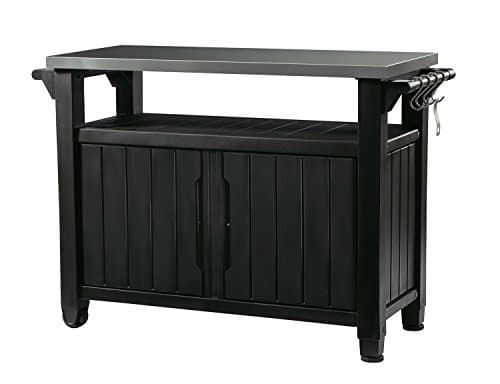
Keter Unity XL Portable Outdoor Table with Stainless Steel Top for Kitchen Prep and Outdoor Storage Cabinet for Grilling Accessories, Dark Grey
$237.99
Check price on Amazon: Keter Unity XL Portable Outdoor Table with Stainless Steel Top for Kitchen Prep and Outdoor Storage Cabinet for Grilling Accessories, Dark Grey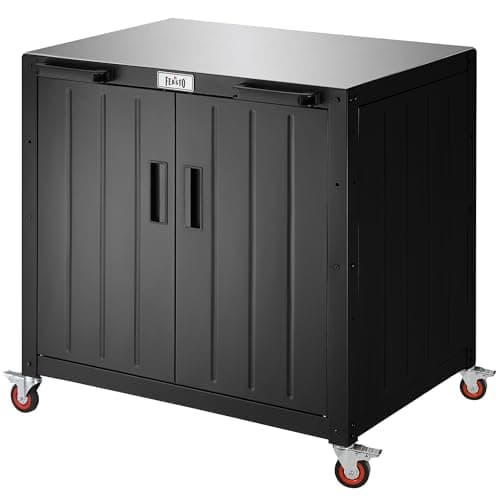
Feasto Outdoor Grill Cart with Storage Cabinet and Stainless Steel Top, 35-Inch Outdoor Grill Station with Door, Modular Kitchen Island for Food Prep and BBQ, Black & Silver
$229.00
Check price on Amazon: Feasto Outdoor Grill Cart with Storage Cabinet and Stainless Steel Top, 35-Inch Outdoor Grill Station with Door, Modular Kitchen Island for Food Prep and BBQ, Black & Silver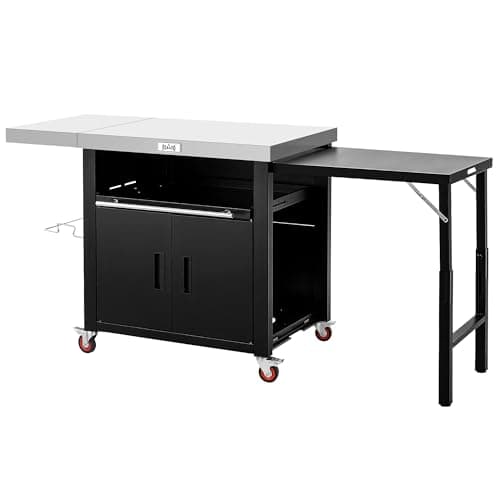
Feasto Outdoor Kitchen Island with Cabinet, Outdoor Grill Table with Stainless Steel Top for Pizza Oven& Griddles, Movable Bar Cart with Pull-Out Plate for Parties& Gathering, Heavy-Duty, L74”x W24”
$259.99
Check price on Amazon: Feasto Outdoor Kitchen Island with Cabinet, Outdoor Grill Table with Stainless Steel Top for Pizza Oven& Griddles, Movable Bar Cart with Pull-Out Plate for Parties& Gathering, Heavy-Duty, L74”x W24”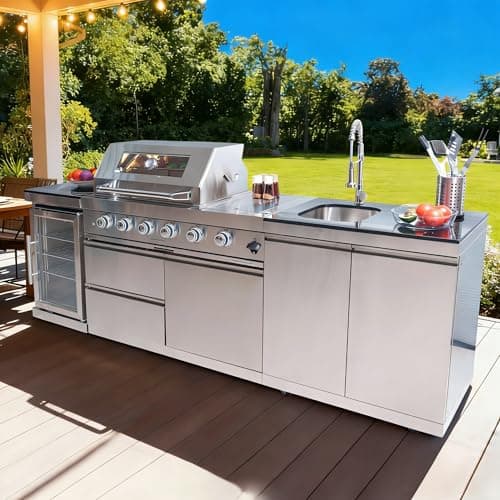
98 Inches Outdoor Kitchen Island, 4-Burner 72000 BTU Propane Stainless Steel BBQ with Side/Rear Burners, With Refrigerator and Sink, Rotisserie, Granite Countertops, Storage, For Backyard BBQ, Silver
$3,652.00
Check price on Amazon: 98 Inches Outdoor Kitchen Island, 4-Burner 72000 BTU Propane Stainless Steel BBQ with Side/Rear Burners, With Refrigerator and Sink, Rotisserie, Granite Countertops, Storage, For Backyard BBQ, Silver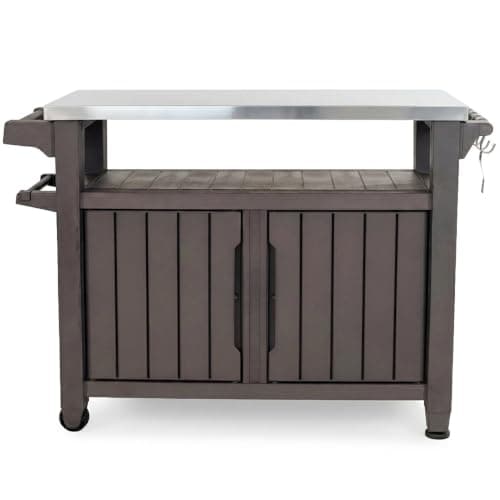
Keter Outdoor Rolling Table Cart for Food Prep, Storage, Bar & Grill, Dark Brown - Portable Kitchen Island Tabletop with Wheels for Drinks, Snacks, and Cooking
See price on Amazon
Check price on Amazon: Keter Outdoor Rolling Table Cart for Food Prep, Storage, Bar & Grill, Dark Brown - Portable Kitchen Island Tabletop with Wheels for Drinks, Snacks, and Cooking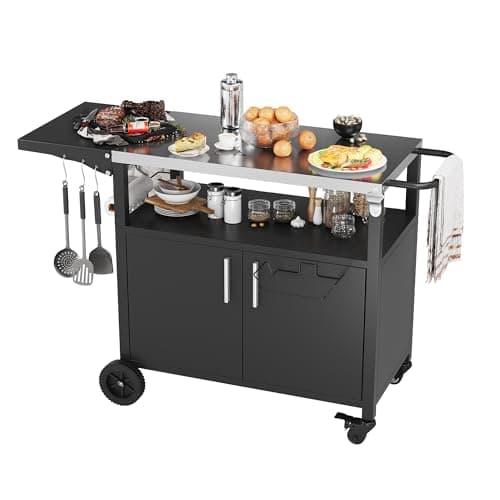
JY QAQA Outdoor Grill Cart with Storage,Patio Kitchen Island Outdoor Grill Table with Wheels,BBQ Cart Movable Pizza Oven Table Stand, Storage Cabinet, Foldable Tabletop, (Black)
$135.98
Check price on Amazon: JY QAQA Outdoor Grill Cart with Storage,Patio Kitchen Island Outdoor Grill Table with Wheels,BBQ Cart Movable Pizza Oven Table Stand, Storage Cabinet, Foldable Tabletop, (Black)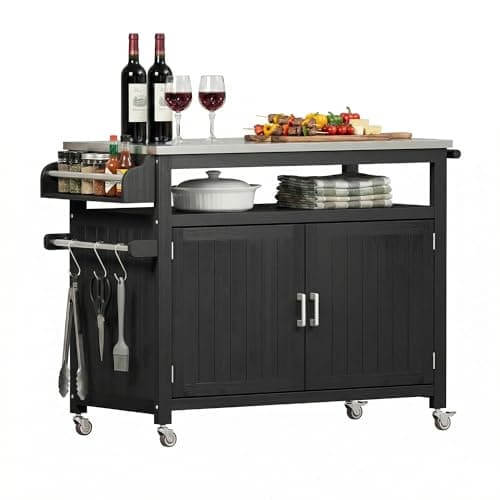
FUQARHY 43.3-Inch Outdoor Kitchen Island with Storage Cabinet and Stainless Steel Top, Solid Wood Prep Station Grill Table with Lockable Wheels for Patio, Backyard, Party (Black)
See price on Amazon
Check price on Amazon: FUQARHY 43.3-Inch Outdoor Kitchen Island with Storage Cabinet and Stainless Steel Top, Solid Wood Prep Station Grill Table with Lockable Wheels for Patio, Backyard, Party (Black)Keter Unity XL Portable Outdoor Table with Stainless Steel Top for Kitchen Prep and Outdoor Storage Cabinet for Grilling Accessories, Dark Grey
$237.99
Check price on Amazon: Keter Unity XL Portable Outdoor Table with Stainless Steel Top for Kitchen Prep and Outdoor Storage Cabinet for Grilling Accessories, Dark GreyFeasto Outdoor Grill Cart with Storage Cabinet and Stainless Steel Top, 35-Inch Outdoor Grill Station with Door, Modular Kitchen Island for Food Prep and BBQ, Black & Silver
$229.00
Check price on Amazon: Feasto Outdoor Grill Cart with Storage Cabinet and Stainless Steel Top, 35-Inch Outdoor Grill Station with Door, Modular Kitchen Island for Food Prep and BBQ, Black & SilverFeasto Outdoor Kitchen Island with Cabinet, Outdoor Grill Table with Stainless Steel Top for Pizza Oven& Griddles, Movable Bar Cart with Pull-Out Plate for Parties& Gathering, Heavy-Duty, L74”x W24”
$259.99
Check price on Amazon: Feasto Outdoor Kitchen Island with Cabinet, Outdoor Grill Table with Stainless Steel Top for Pizza Oven& Griddles, Movable Bar Cart with Pull-Out Plate for Parties& Gathering, Heavy-Duty, L74”x W24”98 Inches Outdoor Kitchen Island, 4-Burner 72000 BTU Propane Stainless Steel BBQ with Side/Rear Burners, With Refrigerator and Sink, Rotisserie, Granite Countertops, Storage, For Backyard BBQ, Silver
$3,652.00
Check price on Amazon: 98 Inches Outdoor Kitchen Island, 4-Burner 72000 BTU Propane Stainless Steel BBQ with Side/Rear Burners, With Refrigerator and Sink, Rotisserie, Granite Countertops, Storage, For Backyard BBQ, SilverKeter Outdoor Rolling Table Cart for Food Prep, Storage, Bar & Grill, Dark Brown - Portable Kitchen Island Tabletop with Wheels for Drinks, Snacks, and Cooking
See price on Amazon
Check price on Amazon: Keter Outdoor Rolling Table Cart for Food Prep, Storage, Bar & Grill, Dark Brown - Portable Kitchen Island Tabletop with Wheels for Drinks, Snacks, and CookingJY QAQA Outdoor Grill Cart with Storage,Patio Kitchen Island Outdoor Grill Table with Wheels,BBQ Cart Movable Pizza Oven Table Stand, Storage Cabinet, Foldable Tabletop, (Black)
$135.98
Check price on Amazon: JY QAQA Outdoor Grill Cart with Storage,Patio Kitchen Island Outdoor Grill Table with Wheels,BBQ Cart Movable Pizza Oven Table Stand, Storage Cabinet, Foldable Tabletop, (Black)FUQARHY 43.3-Inch Outdoor Kitchen Island with Storage Cabinet and Stainless Steel Top, Solid Wood Prep Station Grill Table with Lockable Wheels for Patio, Backyard, Party (Black)
See price on Amazon
Check price on Amazon: FUQARHY 43.3-Inch Outdoor Kitchen Island with Storage Cabinet and Stainless Steel Top, Solid Wood Prep Station Grill Table with Lockable Wheels for Patio, Backyard, Party (Black)Prices and availability are accurate as of October 22, 2026, 11:45 AM UTC and are subject to change.
Outdoor Kitchen Designer Credentials That Matter
Three credentials reliably distinguish a serious outdoor kitchen designer from someone with a Pinterest board and a CAD subscription. The NKBA Certified Outdoor Designer (COD) was launched in 2018 specifically to address the growing demand for trained outdoor specialists; achieving it requires 5 years of professional experience, 60 hours of approved continuing education, and passing a 4-hour exam covering layout, fire safety, ventilation, weather-resistant materials, and code compliance. As of 2026 there are roughly 1,800 active CODs in the United States, primarily clustered in California, Florida, Texas, and Arizona. For a wider lens on this topic, our outdoor kitchen master overview for further reading.
The Certified Kitchen Designer (CKD) is the older NKBA credential covering indoor and outdoor scope. Many top outdoor designers hold both. The third meaningful credential is the LARE-certified Landscape Architect designation, which trains for hardscape integration and grading but provides limited training on appliance and ventilation specifics. For any project over $30,000, I recommend hiring someone with at least two of these three credentials. For under $30,000, an experienced design-build contractor without formal credentials can deliver excellent results — the proof is in their built portfolio, not their letters.
Fee Structures: Flat-Fee vs Hourly vs Percentage of Build
Understanding how outdoor kitchen designer fees work prevents the surprise of receiving a $9,000 bill on a $25,000 project where you expected $2,500 in design fees. Three structures dominate. Flat-fee design packages are the most common for projects under $40,000: typically $1,500 to $3,500 for a measured site survey, conceptual layout, material specification list, and a single round of 3D renderings showing the proposed design. This package usually does not include construction administration — once the design is approved, the designer hands you the drawings and you take it from there.
Hourly billing runs $125 to $275 per hour for established designers in major metros, $85 to $150 in smaller markets. Hourly is common when scope is unclear or when revisions are likely. Always cap hourly engagements at a not-to-exceed number, otherwise the bill grows without warning. Percentage-of-build engagements (8 to 12 percent of construction cost) are the structure used for $50K-plus custom projects where the designer stays involved through bidding, procurement, and installation supervision. Design-build firms bundling design and construction usually charge 18 to 25 percent of total project cost, which feels expensive but eliminates the client-side coordination burden between separate design and construction firms.
How to Vet a Portfolio for Real Versus Rendered Quality
The biggest scam in the outdoor kitchen designer market is portfolios composed entirely of high-quality 3D renderings that were never actually built. Photorealistic rendering tools like Lumion, V-Ray, and SketchUp Vray have made it trivial to produce magazine-quality images of unbuilt projects, and unscrupulous designers stock their portfolios with these. Always demand to see at least 5 actual built projects with photographs, ideally from different homes and at least one or two that are 3+ years old.
For each built project, ask for the original design renderings alongside the as-built photos. The gap between rendered intent and constructed reality is where designers either deliver or disappoint. A skilled designer's renderings and built work look like the same project; a weak designer's built work looks like a downgraded version of the rendering. Also ask for one or two homeowner references — and actually call them. Specific questions to ask: Did the project come in close to the budget the designer estimated? Did the designer respond promptly to questions during construction? Were there any design choices the homeowner wishes had been different in retrospect? The third question often surfaces issues that the designer would not volunteer.
What to Expect in Discovery and First Meeting
The first 15 minutes of a discovery call should answer four questions. First, what is your design philosophy and signature aesthetic? A serious outdoor kitchen designer should be able to articulate this in two or three sentences without consulting notes. Vague answers like "we do whatever the client wants" suggest a service that lacks point of view. Second, how do you handle code and permitting? The right answer references the IRC and IFGC codes by name and discusses how the designer coordinates with local building departments, not whether they think permits are needed.
Third, what is your fee structure and what is included? Walk through the entire flat-fee or hourly package, identifying explicitly what is and is not included — site visits, revisions, construction administration, and procurement assistance. Fourth, what is your timeline from contract signing to delivered design? Typical engagements run 4 to 10 weeks for design-only packages; firms claiming they can complete a custom design in 2 weeks are either cutting corners or running an assembly-line process that will not adapt to your specific site. After this call, expect to schedule a paid site visit (typically $250 to $500) before any design work begins. A designer who skips the site visit is signing up for revision spirals later.
Contract Clauses Every Homeowner Should Insist On
A proper outdoor kitchen designer contract includes four clauses that protect the homeowner's interests. First, a clear deliverables list itemizing every drawing, rendering, specification document, and material schedule with deadlines. Without this, scope creep is inevitable. Second, a fixed not-to-exceed cap on hourly fees plus an explicit revision policy — typically two rounds of design revisions included in the flat fee, with additional rounds billed at the hourly rate.
Third, an intellectual property clause specifying that you own the final approved drawings and may use them with any contractor of your choosing. Some designers retain IP rights, which forces you to use them or their preferred contractors for construction. Fourth, a termination clause that allows either party to end the engagement with 14 days notice, with a clear statement of what fees are owed (typically prorated to work completed). Avoid contracts that require full payment up front or that include non-compete clauses preventing you from hiring other designers later. Reasonable payment schedules are 30 percent on signing, 30 percent on conceptual approval, and 40 percent on final delivery — never 100 percent up front and never 100 percent on completion alone.
Red Flags That Should Kill Any Designer Engagement
Four patterns reliably indicate an outdoor kitchen designer engagement headed for problems. First, unwillingness to provide references or built-project photographs. Any designer who has done good work for 5+ years has happy past clients willing to talk; refusing to connect you with them is a signal something is being hidden. Second, vague or absent licensing — every reputable designer carries professional liability insurance (typically $1 million minimum) and many states require business licenses for design work. Ask for proof; a real designer provides it without hesitation.
Third, pressure to commit during the first meeting. Phrases like "I have one slot available this month" or "my prices go up next week" are sales tactics, not signs of demand. Real demand for top designers does mean booking 4 to 8 weeks out, but the booking happens after a real evaluation period, not under time pressure. Fourth, pushing specific products or brands aggressively early in the process. Some designers receive kickbacks from grill manufacturers or stone fabricators; if a designer is recommending a specific Lynx grill before they have measured your space or asked about your cooking style, the recommendation is product-driven rather than client-driven. The best designers are brand-agnostic until they understand your priorities.
When to Hire a Designer vs Use Free Tools
Not every outdoor kitchen project needs a paid outdoor kitchen designer. For projects under $15,000 — typically modular kits, prefab islands, or simple grill-and-cabinet builds — free design tools like RTA Outdoor Living's online configurator, NewAge Products' design service (free with cabinet purchase), and the Bull Outdoor Products designer (free with grill registration) deliver acceptable results. For these scopes, a paid designer's fee can equal 20 to 30 percent of total project cost, which is rarely justified.
For projects between $15,000 and $35,000, a one-shot flat-fee designer engagement ($2,500 to $4,500) often pays for itself in product selection and layout efficiency — avoiding a single expensive mistake (wrong-size grill cutout, undersized counter overhang, mis-located gas line) more than covers the fee. For projects over $35,000, hiring a designer is the default smart choice, particularly for built-in masonry kitchens, covered structures, or any project requiring permits and inspections. The complexity of coordinating multiple trades, ensuring code compliance, and integrating the kitchen with surrounding hardscape exceeds what any free tool can manage.
Top Outdoor Kitchen Designer Firms to Know in 2026
Several outdoor kitchen designer firms have built national reputations worth knowing. Brown Jordan Outdoor Kitchens (Costa Mesa, CA) operates a hybrid model — they manufacture cabinetry and offer in-house design through a network of dealers. Their designers are typically NKBA-certified and the work tends toward modern and contemporary styles. Danver (Wallingford, CT) operates similarly with their Stainless Steel Outdoor Kitchens line and a dealer network specializing in coastal and Northeast markets.
For independent design-build, Galaxy Outdoor (Las Vegas, NV) and Outdoor Kitchen Design Store (Naples, FL) both operate showrooms and have strong reputations for warm-climate luxury builds. Pacific Outdoor Living (Sun Valley, CA) anchors the Southern California market. Independent designers worth following on Instagram and Houzz include Robert Welsch (Westchester, NY), Janice Parker (Greenwich, CT for traditional and Hamptons-style work), and Kalamazoo Outdoor Gourmet's contracted designer network for ultra-premium bespoke work over $150K. For most projects, an experienced local designer with 10+ built projects in your zip code beats a national name simply because they understand local code, climate, and contractor relationships better than a remote designer ever can.
Treat the cost and value expectations here as a planning starting point and National Association of Realtors research on improvement value as the authority, since local amendments are common.
Frequently Asked Questions
01How much does an outdoor kitchen designer cost?
02What credentials should an outdoor kitchen designer have?
03Do I really need to hire a designer for an outdoor kitchen?
04How long does the design process take with a designer?
05What is included in a typical design package?
06Can I use designer drawings with any contractor?
07Should I hire a local designer or a national firm?
08What questions should I ask a designer in the first meeting?
09What red flags should kill a designer engagement?
10How do I tell rendered portfolio images from real built work?
This guide is part of Outdoor Kitchen Build Guides: Planning, Permits, Cost, and Hiring — the hub covering every services guide on Outdoor Kitchen Setup.
Related Guides
Written and edited by Sukie
Sukie is the editor behind Outdoor Kitchen Setup. They compile manufacturer specification sheets, published building codes, and industry sizing standards into the measurement and planning guides on this site, and check every figure against its original source before it goes live. Where a number varies by brand or by local code, the guides say so rather than presenting a single figure as universal.