Outdoor Kitchen Installers Near Me: Licensing, Permits, and What Install Covers
Searching for outdoor kitchen installers near me is the right first move for any homeowner planning a $15,000 to $80,000 build, because outdoor kitchens cross multiple specialty trades — masonry, gas plumbing,…
Photo: Ævar Arnfjörð Bjarmason / Wikimedia Commons (Public domain)
A note on what this page is: a vetting and pricing guide, not a directory. We do not list, rank, or accept payment from individual firms, and we cannot tell you who is good in your town. What this page does is give you the questions to ask and the numbers to expect before you contact anyone.
Top picks for this build
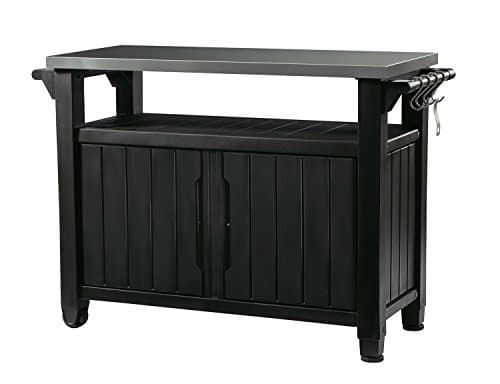
Keter Unity XL Portable Outdoor Table with Stainless Steel Top for Kitchen Prep and Outdoor Storage Cabinet for Grilling Accessories, Dark Grey
$237.99
Check price on Amazon: Keter Unity XL Portable Outdoor Table with Stainless Steel Top for Kitchen Prep and Outdoor Storage Cabinet for Grilling Accessories, Dark Grey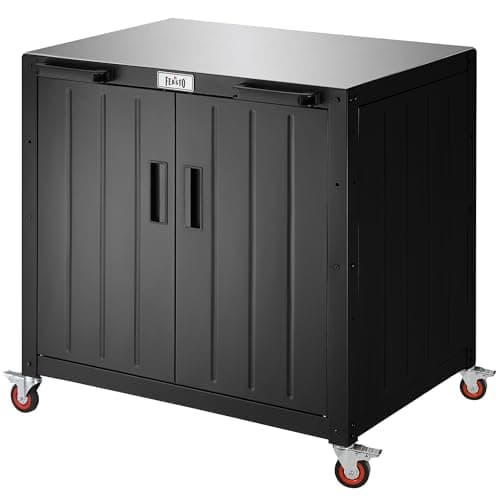
Feasto Outdoor Grill Cart with Storage Cabinet and Stainless Steel Top, 35-Inch Outdoor Grill Station with Door, Modular Kitchen Island for Food Prep and BBQ, Black & Silver
$229.00
Check price on Amazon: Feasto Outdoor Grill Cart with Storage Cabinet and Stainless Steel Top, 35-Inch Outdoor Grill Station with Door, Modular Kitchen Island for Food Prep and BBQ, Black & Silver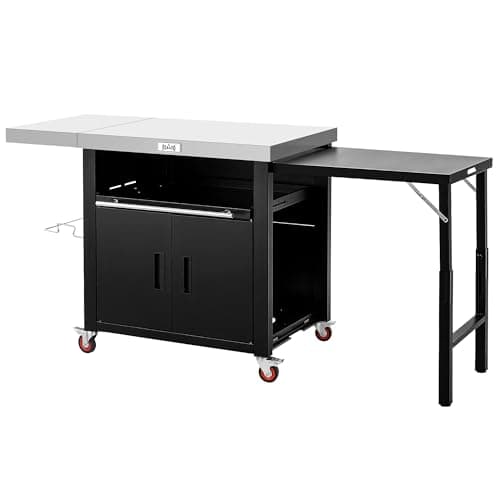
Feasto Outdoor Kitchen Island with Cabinet, Outdoor Grill Table with Stainless Steel Top for Pizza Oven& Griddles, Movable Bar Cart with Pull-Out Plate for Parties& Gathering, Heavy-Duty, L74”x W24”
$259.99
Check price on Amazon: Feasto Outdoor Kitchen Island with Cabinet, Outdoor Grill Table with Stainless Steel Top for Pizza Oven& Griddles, Movable Bar Cart with Pull-Out Plate for Parties& Gathering, Heavy-Duty, L74”x W24”Keter Unity XL Portable Outdoor Table with Stainless Steel Top for Kitchen Prep and Outdoor Storage Cabinet for Grilling Accessories, Dark Grey
$237.99
Check price on Amazon: Keter Unity XL Portable Outdoor Table with Stainless Steel Top for Kitchen Prep and Outdoor Storage Cabinet for Grilling Accessories, Dark GreyFeasto Outdoor Grill Cart with Storage Cabinet and Stainless Steel Top, 35-Inch Outdoor Grill Station with Door, Modular Kitchen Island for Food Prep and BBQ, Black & Silver
$229.00
Check price on Amazon: Feasto Outdoor Grill Cart with Storage Cabinet and Stainless Steel Top, 35-Inch Outdoor Grill Station with Door, Modular Kitchen Island for Food Prep and BBQ, Black & SilverFeasto Outdoor Kitchen Island with Cabinet, Outdoor Grill Table with Stainless Steel Top for Pizza Oven& Griddles, Movable Bar Cart with Pull-Out Plate for Parties& Gathering, Heavy-Duty, L74”x W24”
$259.99
Check price on Amazon: Feasto Outdoor Kitchen Island with Cabinet, Outdoor Grill Table with Stainless Steel Top for Pizza Oven& Griddles, Movable Bar Cart with Pull-Out Plate for Parties& Gathering, Heavy-Duty, L74”x W24”Prices and availability are accurate as of October 22, 2026, 11:45 AM UTC and are subject to change.
Where to Find Qualified Outdoor Kitchen Installers Near Me
The best outdoor kitchen installers near me are not necessarily the ones at the top of Google or Yelp — those positions are often paid placements or aggressive lead-buyers who outsource the actual work. Five better sources: (1) the National Association of the Remodeling Industry (NARI) directory, which only lists members who carry insurance and pass background checks, (2) the Hardscape North America (HNA) certified installer directory at hardscape.org, (3) local high-end appliance dealers (Ferguson, Grills Direct, BBQ Galore) which keep referral lists of installers who buy through them, (4) Houzz Pro filtered to your zip code with the "verified license and insurance" filter applied, and (5) builder referrals from local custom-home builders who have working relationships with proven outdoor kitchen specialists.
Avoid Angi (formerly Angie's List), HomeAdvisor, and Thumbtack as primary sources — these are lead-aggregation platforms that sell your contact info to multiple contractors regardless of qualification, and the resulting cold calls often come from generalists. Reverse-image search any portfolio photo before believing it; some installers steal images from manufacturer websites or competitors. Drive past three to five completed projects from any installer you are seriously considering — the photos always look better than the real work.
How to Vet Outdoor Kitchen Installers Near Me Before Hiring
Once you have a shortlist of three to five potential outdoor kitchen installers near me, run each through a 10-point vetting checklist before signing any contract. (1) Verify the state contractor license directly with your state's licensing board — do not trust a license number printed on a business card without checking. (2) Confirm general liability coverage of at least $1 million by asking for a Certificate of Insurance (COI) showing your name as additional insured. (3) Verify workers' compensation coverage — if a worker is injured on your property and the contractor lacks comp insurance, you can be liable. (4) Check the BBB profile and Yelp/Google reviews for patterns of unresolved complaints, especially around delays and change-order disputes.
Continue with: (5) Search court records for civil suits filed against the contractor (most counties have free online portals). (6) Ask for three references from projects completed 1 to 3 years ago — recent references are too easy to cherry-pick. (7) Confirm the gas line work will be done by a licensed plumber and electrical by a licensed electrician with permits pulled in your name. (8) Request a sample contract to review before the bid meeting. (9) Ask which manufacturers' products they install most — a good installer has deep expertise with 2 to 4 brand lines, not 25. (10) Get the bid in writing with line-item detail — vague "design and install outdoor kitchen, $42,000" contracts are red flags. The full process is detailed in our outdoor kitchen setup guide.

Average Cost from Outdoor Kitchen Installers Near Me by Region
Local installer pricing for outdoor kitchen builds varies dramatically by region. Sun Belt markets (Phoenix, Las Vegas, Dallas, Houston, Tampa, Orlando, Miami) run $180 to $260 per square foot for fully built outdoor kitchens including appliances, with average project totals of $22,000 to $48,000. Higher demand and longer building seasons keep installer schedules tight; expect 4-to-8-week lead times in spring. California (Bay Area, LA, San Diego) hits $250 to $380 per square foot due to higher labor costs, stricter code requirements, and earthquake bracing requirements for masonry. Average projects run $30,000 to $65,000.
Northeast (Boston, NYC suburbs, DC, Philadelphia) averages $260 to $400 per square foot with shorter building windows (May through October), pushing average projects to $32,000 to $70,000. Midwest (Chicago, Minneapolis, Detroit) runs $200 to $300 per square foot with average builds at $25,000 to $50,000. Southeast (Atlanta, Charlotte, Nashville) sits at $190 to $280 per square foot, $24,000 to $50,000 average. Pacific Northwest (Seattle, Portland) hits $230 to $340 due to required covered structures and stricter rain detailing. Get bids from three installers minimum; spreads of 30 to 50 percent are common, and the lowest bid usually omits something. Mid-range bids tend to most accurately reflect the real scope.
Red Flags When Evaluating Outdoor Kitchen Installers Near Me
Six warning signs identify the installers near me you should reject before signing anything. (1) Demands more than 30 percent down payment — industry standard is 10 to 25 percent at signing, with progress payments tied to completed milestones. Anyone asking for 50 percent or more is either undercapitalized or planning to disappear with your deposit. (2) No physical business address or only a P.O. box — fly-by-night operators avoid creating a paper trail. (3) Pushes you to skip permits to "save time and money" — this protects them, not you. Unpermitted work fails resale disclosures and gets red-tagged by neighbors who report it.
(4) Cannot produce a Certificate of Insurance on demand — they probably do not carry coverage. (5) Vague written estimates with line items like "materials and labor" instead of specific brands, model numbers, and quantities — these are designed to enable change-order pricing later. (6) High-pressure sales tactics — "this price is only good if you sign today" or "I have crews available next week if we lock it in now" are manipulative. A legitimate contractor's price is good for at least 30 days, and good crews are booked 4 to 12 weeks out anyway. Walk away from anyone showing two or more of these signs, regardless of how persuasive they seem in person.
How to Get Bids From Outdoor Kitchen Installers Near Me
The bidding process determines whether you get apples-to-apples comparisons or three documents that cannot be evaluated against each other. Provide every installer the exact same scope document: a one-page brief listing your target footprint (12 by 4 feet linear, for example), the specific appliances you want (Blaze BLZ-4LTE 32-inch grill, Coyote 24-inch fridge, Hestan 30-inch warming drawer), the countertop material (Dekton Trillium), the cabinet base material (powder-coated stainless or stacked-stone veneer), and the utility connections required (1/2-inch natural gas line, dedicated 20-amp GFCI circuit, 1/2-inch potable water with frost-proof drain).
Without this brief, contractors will substitute cheaper appliances and materials, then claim their bid is lower. Request line-item bids showing materials, labor, permits, and a 10 to 15 percent contingency separately. Compare not just total price but the change-order rate (typical: $80 to $140 per labor hour above bid scope), the warranty terms (one-year labor minimum, two-year on installation), and the milestone payment schedule. The best installers give you a written 4-to-8-week project timeline with milestones — site prep, foundation pour, cabinet construction, appliance install, countertop install, final inspection. If a contractor cannot produce that schedule before signing, they probably cannot meet it after signing either.
When is the best time to hire an outdoor kitchen installer
Off-season hiring (November through February in northern climates, August through September in Sun Belt) gets you 5 to 15 percent better pricing because installers have open schedules. Avoid March through June when peak demand pushes pricing up and quality crews are booked solid. Sign contracts in winter for spring construction starts; this also lets you make material decisions without time pressure.
Permits, Inspections and Code Compliance
The installers near me must pull permits in your name (the homeowner) — not theirs. This protects you in two ways: it ensures the inspector has authority to red-tag any non-compliant work, and it creates a public record that the work was done by a licensed contractor. Typical permits required include a building permit ($200 to $1,500), a gas permit ($150 to $400), and an electrical permit ($150 to $400). Plumbing permits ($150 to $300) apply if you install a sink with potable water connection.
Inspections happen at three points: rough-in (before walls or veneer cover the gas, electrical, and plumbing rough), pre-pour (before concrete countertop pour or stone slab installation), and final (everything operational with appliances connected). Each inspection takes 30 to 60 minutes and the inspector signs off in person. Common code requirements include 36-inch minimum clearance from combustibles for built-in gas grills, GFCI protection on every outdoor receptacle, sediment traps on gas drops, and proper ventilation for any sealed cabinet containing fuel. Failed inspections delay the project by 1 to 3 weeks each. A good installer schedules inspections proactively and has a 95-plus percent first-pass rate; a bad installer fails 30 to 50 percent of inspections, doubling project timelines.
Timeline: How Long Outdoor Kitchen Installers Need to Build
Outdoor kitchen project timelines from local installers fall into three brackets based on scope. Modular kit installations (RTA Outdoor Living, Sunstone, NewAge prefab cabinets with drop-in appliances) take 3 to 7 days of on-site work, but you should plan 4 to 8 weeks total because of permit pull (1 to 3 weeks), site prep (2 to 5 days), and final inspection scheduling (1 to 2 weeks). Cost: $8,000 to $18,000 installed.
Custom masonry builds with stone veneer or stucco take 4 to 8 weeks of on-site work plus the same permit and inspection lag, totaling 8 to 14 weeks. The masonry alone takes 2 to 4 weeks because mortar must cure between courses, then the cabinet must cure another week before veneer goes on. Cost: $25,000 to $55,000 installed. Full luxury builds with custom pavilion structures, integrated lighting, and high-end appliances run 12 to 24 weeks. Cost: $55,000 to $150,000-plus. Be wary of any installer promising a custom build in under 6 weeks — either they are using shortcuts that fail inspection, or they are quoting modular work at custom prices. The best installers schedule 2 to 6 months out in spring and summer; if a contractor has immediate availability in peak season, ask why.
Contract Terms to Demand From Local Installers
The contract you sign with the installers near me is the single document that protects you when problems arise — and problems arise on roughly 40 percent of outdoor kitchen projects, usually around delays or scope creep. Demand these eight clauses minimum. (1) Specific completion date with $100 to $250 per day liquidated damages for late completion (negotiable, but ask). (2) Milestone-based payments tied to completed inspections, not calendar dates. (3) Material specifications by exact brand and model number, not generic descriptions. (4) Change order procedure requiring written homeowner approval for any cost change.
Continue with: (5) Warranty terms of at least 1 year on labor and 2 years on installation workmanship. (6) Lien waiver requirements from all subcontractors before final payment (protects you from mechanic's liens if the contractor fails to pay subs). (7) Cleanup and protection clause requiring daily site cleanup and protection of adjacent landscape, hardscape, and home exterior. (8) Termination clause allowing you to fire the contractor for cause (failure to make progress, code violations, abandonment) and recover the unused portion of your deposit. Have an attorney review any contract over $25,000 before signing — a $400 contract review prevents $40,000 disputes. Many states also have 3-day right-of-rescission laws on home improvement contracts; know your state's specifics before signing.
A few specifics that come up repeatedly:
Do outdoor kitchen installers handle permits?
Reputable installers will pull permits in your name (the homeowner), not theirs, and include permit fees in the bid. Permits typically include building ($200 to $1,500), gas ($150 to $400), and electrical ($150 to $400). Avoid any installer who suggests skipping permits to save money — unpermitted work fails resale disclosures and can be red-tagged by neighbors.
What are red flags when choosing an outdoor kitchen installer?
Six warning signs: (1) demands more than 30 percent down payment, (2) no physical business address (only P.O. box), (3) pushes you to skip permits, (4) cannot produce a Certificate of Insurance on demand, (5) vague written estimates without specific brands and model numbers, (6) high-pressure sales tactics like "this price is only good today." Walk away from anyone showing two or more of these.
Can I hire separate trades instead of a single outdoor kitchen installer?
Yes, owner-managed builds save 15 to 25 percent versus hiring a general contractor, but require coordinating mason, gas plumber, electrician, countertop fabricator, and appliance installer yourself. This works best if you have prior renovation experience. For first-timers, the GC fee is worth it because they coordinate the inspection sequence and absorb subcontractor errors.
What warranty should outdoor kitchen installers provide?
Industry standard is 1 year on labor and 2 years on installation workmanship. Some premium installers offer 5 to 10 years on masonry workmanship. Appliance warranties come from the manufacturer separately (1 to 7 years depending on brand). Get warranty terms in writing with specifics on what's covered (workmanship, leaks, settling, finish defects) and the claim procedure.
For the cost and value expectations in this guide, National Association of Realtors research on improvement value is the primary reference — and your inspector is the one who decides.
Frequently Asked Questions
01How do I find legitimate outdoor kitchen installers near me?
02What should I check before hiring an outdoor kitchen installer?
03How much do local outdoor kitchen installers charge?
04How long does an outdoor kitchen installation take?
05What payment schedule should an outdoor kitchen installer use?
This guide is part of Outdoor Kitchen Build Guides: Planning, Permits, Cost, and Hiring — the hub covering every services guide on Outdoor Kitchen Setup.
Related Guides
Written and edited by Sukie
Sukie is the editor behind Outdoor Kitchen Setup. They compile manufacturer specification sheets, published building codes, and industry sizing standards into the measurement and planning guides on this site, and check every figure against its original source before it goes live. Where a number varies by brand or by local code, the guides say so rather than presenting a single figure as universal.