Outdoor Kitchen Plumbing: Supply Lines, Drain, Vent & Winterization Guide
Outdoor kitchen plumbing guide covers supply line sizing, drain rough-in, venting options, freeze protection, and whether you need a permit for an outdoor kitchen sink.
By Sukie
Editor · compiles manufacturer specs and building-code references into the measurement guides on this site
Outdoor kitchen plumbing is one of the last things homeowners think about and one of the first things that determines where the sink can go and how much the build costs. A sink positioned near the home's exterior wall on the same side as the kitchen plumbing stack is a half-day extension job. A sink positioned at the far end of a detached island on the opposite side of the patio can require trenching, a separate waste line to daylight, and its own venting — easily a $2,000–$4,000 difference in plumbing cost alone.
The four components of outdoor kitchen plumbing are: supply lines (hot and cold water delivery), drain line (waste removal), vent (air admittance to prevent p-trap siphoning), and freeze protection (the part most people don't think about until they're facing a burst pipe in February). Get all four right before the countertop goes down and you'll have a kitchen that works reliably for 20 years. Miss any one of them and you're cutting open concrete or hiring a plumber at emergency rates.
This guide walks through each component with specific measurements, code requirements, material choices, and the key decision points that affect cost. We also cover the question of whether an outdoor kitchen sink requires a permit (the answer varies significantly by municipality and by what utilities you're tying into), and we walk through the winterization process step by step so you're never dealing with freeze damage in a climate that dips below 32°F.
Top Picks: Best Outdoor Kitchen Plumbing: Supply Lines, Drain, Vent & Winterization Guide in 2026
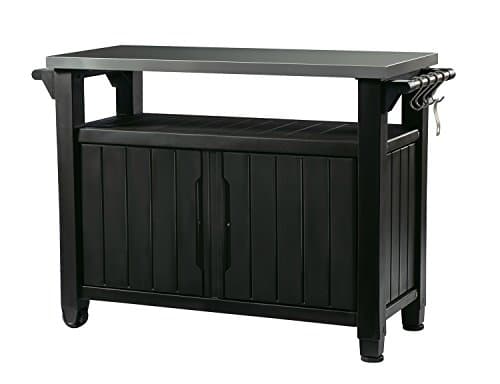
Keter Unity XL Portable Outdoor Table with Stainless Steel Top for Kitchen Prep and Outdoor Storage Cabinet for Grilling Accessories, Dark Grey
$220.99
Shop Now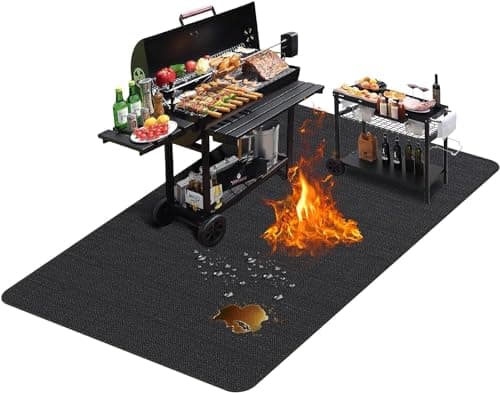
TAOMAND Large 76 x 52 inches Under Grill Mats for Outdoor Grill | Double-Sided Fireproof | Waterproof | Oil-Proof | Easy to Clean | Indoor Fireplace/Fire Pit Mat | Quality BBQ Mat for Deck Patio Lawn
$33.99
Shop Now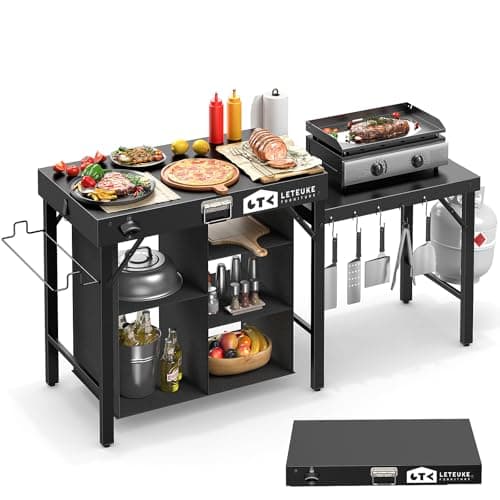
Leteuke Grill Table for Blackstone Griddle, Portable Foldable Grill Table with Storage Fits Ninja, Blackstone Griddle Stand for Outdoor Camping, Picnic, Garden, Patio, Dining, BBQ, Party
$159.99
Shop Now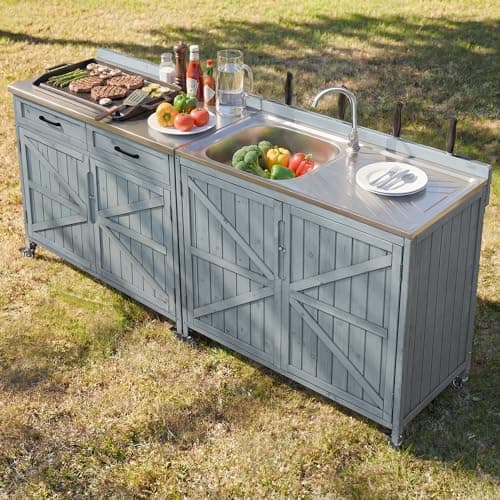
Merax 2 Piece Modular Outdoor Kitchen Series- Kitchen Grill Cart w/Stainless Steel Sink, Wood Rolling BBQ Prep Table w/Stainless Steel Top, Lockable Wheels for Patio & Outdoor Cooking, Grey Blue
$529.99
Shop NowKeter Unity XL Portable Outdoor Table with Stainless Steel Top for Kitchen Prep and Outdoor Storage Cabinet for Grilling Accessories, Dark Grey
$220.99
Shop NowTAOMAND Large 76 x 52 inches Under Grill Mats for Outdoor Grill | Double-Sided Fireproof | Waterproof | Oil-Proof | Easy to Clean | Indoor Fireplace/Fire Pit Mat | Quality BBQ Mat for Deck Patio Lawn
$33.99
Shop NowLeteuke Grill Table for Blackstone Griddle, Portable Foldable Grill Table with Storage Fits Ninja, Blackstone Griddle Stand for Outdoor Camping, Picnic, Garden, Patio, Dining, BBQ, Party
$159.99
Shop NowMerax 2 Piece Modular Outdoor Kitchen Series- Kitchen Grill Cart w/Stainless Steel Sink, Wood Rolling BBQ Prep Table w/Stainless Steel Top, Lockable Wheels for Patio & Outdoor Cooking, Grey Blue
$529.99
Shop NowSupply Line Plumbing: Hot, Cold, and Sizing
Outdoor kitchen supply lines connect to your home's existing water system, typically from an exterior hose bib tap or a dedicated stub-out on the home's exterior wall. The routing, sizing, and material of the supply lines affect both flow rate and freeze resistance.
Line size: The standard supply line for an outdoor kitchen sink is ½-inch. This provides adequate flow for a single faucet — typical kitchen faucet flow rates are 1.5–2.2 GPM, and ½-inch line has a capacity of 4–5 GPM at normal residential pressure (45–60 PSI), so there's no flow restriction at a single faucet. If you're also supplying a refrigerator ice maker and a second hose bib from the same line run, upgrade to ¾-inch for the main run and reduce to ½-inch at each takeoff.
Material: PEX-A is the preferred material for outdoor kitchen supply lines in most climates because it expands (rather than bursting) when water inside it freezes and can self-heal minor freeze events. PEX-B is also acceptable and more widely available. Rigid copper is the traditional choice and works well in mild climates, but copper has no freeze tolerance and is more expensive. CPVC is not recommended for outdoor applications due to UV degradation and brittleness in cold temperatures.
Hot water considerations: Many outdoor kitchen sinks only have cold supply — hot water requires a dedicated hot water line from the home's water heater, which can run 20–60+ feet depending on your patio layout. At those distances, you'll wait 30–90 seconds for hot water to arrive (standard hot water line purge time for ½-inch copper at that length). Options: (1) cold-only supply (most outdoor kitchens), (2) full hot/cold supply with the wait time accepted, (3) a small under-counter point-of-use water heater inside the island cabinet for near-instant hot water.
Shutoff valves: Install a full-port ball valve on each supply line inside the cabinet, accessible without moving anything. This is your seasonal shutoff for winterization and your repair isolation valve if the faucet needs replacing. A ¼-turn ball valve on ½-inch supply line takes 5 seconds to operate and requires no tools.
How far can an outdoor kitchen be from the house for plumbing
There is no absolute maximum, but cost increases with distance. For every 10 feet of supply and drain line run, add $100–$200 in materials and $150–$350 in labor. At distances beyond 30 feet, a separate drain pump (sewage ejector or gray water pump) may be needed if the drain cannot achieve ¼-inch-per-foot gravity fall to the sewer connection. Supply line pressure drops minimally at residential distances — ½-inch PEX at 100 feet still provides adequate flow for a single faucet.
Drain Line Plumbing: Routing, Slope, and Waste Disposal
The drain line is often more complex than the supply side because drain lines are gravity-fed — they need a continuous downward slope of ¼ inch per foot from the p-trap to the final waste outlet. Any flat or uphill section creates a standing water zone that smells and breeds bacteria.
Drain routing options:
1. Tie into the home's sewer system (best for permanent builds): A licensed plumber extends a drain line from the home's DWV (drain-waste-vent) system to the outdoor kitchen, usually through the exterior wall or under the slab. This is the cleanest, most code-compliant solution. Requires a permit in most jurisdictions. Cost: $500–$2,500 depending on distance and routing complexity.
2. Gray water drain to a dry well (common for detached kitchens): A dry well is a perforated chamber buried in the yard that disperses gray water into the surrounding soil. Appropriate for outdoor kitchen sinks because the waste is gray water (no sewage), but regulated by local codes — some jurisdictions prohibit residential dry wells or require minimum distances from property lines, wells, or water features. Do not connect a garbage disposal outlet to a dry well — food waste will clog it within months.
3. Gray water to a lawn or garden (simplest, not for all areas): In some western US states with reclaimed water programs, gray water from outdoor sinks can be dispersed to landscaping via a simple drain outlet. Check local regulations — misapplication can result in code violations and drainage issues.
Drain slope: The standard minimum slope for 1.5-inch drain pipe is ¼ inch per foot. For a 20-foot run from the outdoor kitchen sink to the sewer connection, you need 5 inches of drop. If the terrain is flat, this often means the drain pipe goes below the patio surface — either through a chase in a concrete slab or in a conduit buried at least 6 inches below grade per IPC requirements.
Venting an Outdoor Kitchen Sink
Every p-trap requires a vent. Without a vent, the water in the p-trap gets siphoned out when the sink drains quickly, leaving a dry p-trap that allows sewer gases (or outdoor pests in the case of a dry-well system) to enter through the drain opening. Venting is not optional — it's required by the International Plumbing Code and enforced in permit inspections.
Venting options for outdoor kitchens:
1. Tie into existing vent stack: If the outdoor kitchen is against the home's exterior wall, a plumber can extend a vent branch from the existing DWV vent stack through the wall to serve the outdoor sink. This is the most code-universally-accepted solution. It adds labor cost but no ongoing maintenance.
2. Air Admittance Valve (AAV): An AAV is a one-way mechanical vent that opens when negative pressure in the drain line (during drainage) allows air in, then closes to prevent sewer gas escape. It's installed inside the island cabinet, above the trap arm, in an accessible location. Cost: $15–$40 for the valve. The installation is simple. The restriction: not all jurisdictions permit AAVs, and some permit them indoors but not in exterior applications. Verify with your local building department before specifying an AAV — this is a common permit inspection failure point.
3. Studor mini-vent or similar proprietary AAV: These are smaller AAV formats designed for tight cabinet installations. Function identically to standard AAVs. Same permitting restrictions apply.
4. Island venting (loop vent): For sinks on an island far from the home's vent stack, a loop vent runs the vent pipe horizontally inside the cabinet to a height of at least 6 inches above the flood level rim of the sink, then connects back to the main drain downstream of the trap arm. This is code-compliant in all jurisdictions but requires more pipe and a connection point downstream.
Can I use an air admittance valve for an outdoor kitchen sink
In many jurisdictions, yes — but not all. Air admittance valves (AAVs) are permitted under the International Plumbing Code but some states and municipalities have restrictions on outdoor AAV use. Verify with your local building department before specifying an AAV. If permitted, install the AAV inside the cabinet above the trap arm in an accessible location (don't bury it behind fixed panels).
Freeze Protection for Outdoor Kitchen Plumbing
Freeze protection is the most commonly skipped element of outdoor kitchen plumbing and the most expensive to repair after the fact. A burst supply line in an outdoor kitchen island can spray water into the cabinet, damage electrical components, and (if unnoticed over winter) rot structural framing. The repair involves cutting open countertops or frames to access the burst section — expensive both in material and labor.
Minimum freeze protection system:
Step 1 — Shutoff valve with integral drain: Install a ball valve on each supply line inside the home or at the point where supply leaves the heated structure, with a drain cap or hose drain fitting immediately downstream of the valve. This lets you close the valve, open the drain, and dump the water from the exposed portion of the supply line. Cost: $25–$60 per valve assembly.
Step 2 — Blow-out port: A ¼-inch threaded fitting on the supply line at the outdoor kitchen cabinet (or at the home exterior) accepts a standard compressor air chuck. After shutting off supply and draining, connect the compressor and blow compressed air through the supply line until no water exits the open faucet. This removes residual water from any horizontal sections of pipe that don't drain by gravity. 30–60 seconds of compressed air per line is sufficient.
Step 3 — Open faucet and leave it cracked: After blowing out, leave the faucet in the open position so any remaining vapor can escape and any pressure buildup from temperature changes doesn't stress the valve seats.
Step 4 — Drain trap additive: After winterizing, pour 1–2 cups of automotive RV antifreeze (propylene glycol-based, non-toxic) into the p-trap through the drain opening. This prevents the small amount of water that remains in the trap from freezing and cracking the trap body. Do not use ethylene glycol (regular automotive antifreeze) — it's toxic and not appropriate for drain applications.
Heated enclosure option: For climates with long freezing winters, an insulated, heated outdoor kitchen cabinet space (low-wattage heat tape on supply lines inside the cabinet, insulated doors) is more convenient than annual blow-out. Heat tape rated for potable water systems is available from most plumbing suppliers. A thermostat that activates below 35°F keeps the power draw minimal — typically 5–10 watts per foot of pipe during freeze events only.
Do You Need a Permit for Outdoor Kitchen Plumbing?
The permit question is the one most homeowners avoid asking until they're selling their home and the home inspector flags the unpermitted work. The answer varies significantly by jurisdiction but follows a consistent pattern:
Permit required for: Any work that ties into the home's DWV system. Any work that adds a new branch off the main water supply line inside the home. Any gas line work. Any electrical work (GFCI outlets, new circuits). In most US jurisdictions, all four of these require a permit, regardless of whether the work is inside the home or on the patio.
Permit typically not required for: Connecting to an existing exterior hose bib with a flexible supply line for a cold-water-only outdoor sink that drains to a bucket or above-ground dry well. This is the DIY approach that avoids permitting entirely, though it limits functionality and isn't compliant in all areas.
What to ask your local building department: Call your city or county building department and ask: (1) Does an outdoor kitchen with a sink require a plumbing permit? (2) Is an air admittance valve permitted for outdoor drain venting in this jurisdiction? (3) Is gray water disposal to a dry well permitted and what are the setback requirements? These three questions take 10 minutes and save months of potential code violation resolution.
Inspector access consideration: If you're pulling permits, design the island with inspection access in mind. An inspector needs to see the p-trap, drain connection, supply line connections, and vent installation before the cabinet doors go on and before any countertop covers access panels. Rough-in inspections happen before finish installation — schedule them correctly to avoid having to open finished work for a re-inspection.
DIY vs. Licensed Plumber: What You Can and Cannot Do
Understanding the DIY boundary in outdoor kitchen plumbing saves money and avoids permit complications.
DIY-appropriate tasks: Connecting flexible supply hoses to shutoff valves and faucet supply inlets. Installing the p-trap below the sink. Connecting drain pipes between the p-trap and the stub-out (if the stub-out is already in place). Winterizing the system. Installing an AAV in jurisdictions where it's permitted. Cutting supply lines to length and installing compression or push-fit fittings on PEX.
Licensed plumber required: Tying into the home's DWV system (cutting into existing drain or vent stack). Running a new water supply branch inside the home. Installing new shutoff valves on pressurized supply lines. Any work requiring a plumbing permit — permits are issued to licensed contractors in most jurisdictions. The gas line to the grill is always a licensed contractor job (gas and plumbing licenses are separate in most states).
Cost benchmarks: A plumber stubbing out a cold-water supply and drain for an adjacent outdoor kitchen (within 10 feet of the exterior wall): $400–$900. Full hot/cold supply with drain, vent, and sewer connection tie-in for a mid-island outdoor kitchen (20–30 foot run): $1,500–$3,500. These are labor-only estimates for straightforward residential installations — complex patio layouts or permit-required inspections add cost and timeline.
Questions that come up on almost every build:
How do you winterize outdoor kitchen plumbing?
Winterize in four steps: (1) shut off supply at the isolation valve inside the home, (2) open the outdoor faucet to release pressure, (3) connect a compressor to the blow-out port and blow compressed air through the lines until no water exits the open faucet, (4) pour 1–2 cups of RV antifreeze (propylene glycol) into the drain to protect the p-trap. Leave the faucet in the open position. Do this before the first freeze of the season.
The permit and code requirements on this page are compiled from manufacturer documentation and your local adoption of the International Residential Code; your local building department has the final word.
Frequently Asked Questions
01Does an outdoor kitchen sink need a drain?
02Does an outdoor kitchen need plumbing?
03How do I plumb an outdoor kitchen sink?
04What pipe is best for outdoor kitchen plumbing?
05Do outdoor kitchen sinks need a permit?
This guide is part of Outdoor Kitchen Build Guides: Planning, Permits, Cost, and Hiring — the hub covering every planning & guides guide on Outdoor Kitchen Setup.
Related Guides
Written and edited by Sukie
Sukie is the editor behind Outdoor Kitchen Setup. They compile manufacturer specification sheets, published building codes, and industry sizing standards into the measurement and planning guides on this site, and check every figure against its original source before it goes live. Where a number varies by brand or by local code, the guides say so rather than presenting a single figure as universal.