Outdoor Kitchen With Offset Smoker: Integration, Clearance & Design Guide
Outdoor kitchen with offset smoker: clearance requirements, built-in versus freestanding placement, firebox access, and the smoke path that decides where it goes.
By Sukie
Editor · compiles manufacturer specs and building-code references into the measurement guides on this site
An outdoor kitchen with offset smoker capability gives you real wood-fired barbecue, and it makes demands on space and clearance that a gas grill does not.
An outdoor kitchen with an offset smoker gives you the most authentic wood-fired barbecue result available in a backyard setting. Unlike pellet smokers that automate temperature and fuel feed, or kamado-style charcoal cookers that rely on restricted airflow, an offset smoker operates on direct fire management: you control the fire in the offset firebox, the heat and smoke travel through the cooking chamber, and you manage the flow with dampers and fuel additions. This hands-on approach produces the bark, smoke ring, and flavor profile that competition-level barbecue judges recognize — and that pellet grills approximate but rarely replicate.
The integration challenge is that offset smokers are among the most difficult appliances to incorporate into a permanent outdoor kitchen structure. Traditional offsets like the Oklahoma Joe's Longhorn or a custom Lang or Lone Star Grillz weigh 300–800 lbs and generate significant radiant heat from the cooking chamber and firebox. They produce sustained smoke output (not the manageable smoke wisps of a pellet grill) and require direct access to the firebox from the side — which most island layouts don't accommodate. They also produce ash and grease byproducts that require cleaning access under the cooking chamber and at the firebox drain.
Despite these challenges, a well-planned outdoor kitchen with an offset smoker is one of the most functional setups available for serious backyard pitmasters. This guide covers the four practical integration approaches, the clearance requirements that determine safe placement, the structural considerations for a 400+ lb appliance, and how to design the rest of the outdoor kitchen around the smoker's workflow — because when the smoker is running, everything else in the kitchen supports it.
Top Picks: Best Outdoor Kitchen With Offset Smoker: Integration, Clearance & Design Guide in 2026
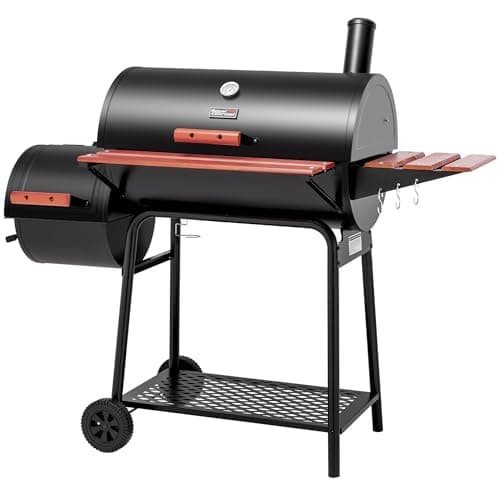
Royal Gourmet CC1830W 30-Inch Charcoal Grill with Offset Smoker and Wood-Painted Side Table, Outdoor Smoker Grill with 811 Sq. In. Cooking Area for Outdoor Barbecue Event, Black
$147.77
Shop Now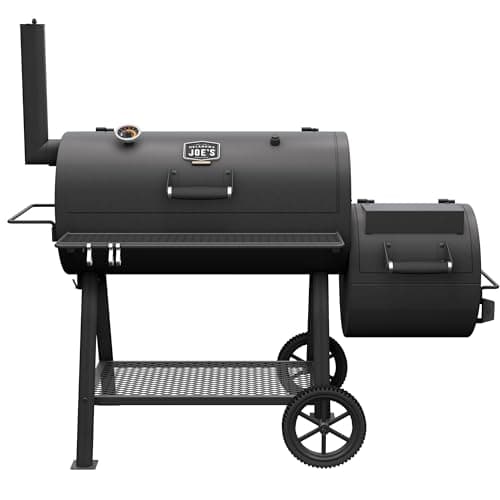
Oklahoma Joe's Highland Offset Charcoal Smoker and Grill with 900 sq. in. Cooking Area in Black
$374.85
Shop Now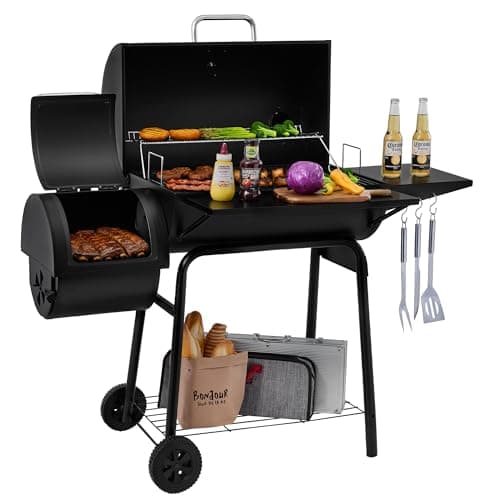
Royal Gourmet CC1830S BBQ Charcoal Grill and Offset Smoker | 823 Square Inch cooking surface, Outdoor for Camping | Black
$143.75
Shop Now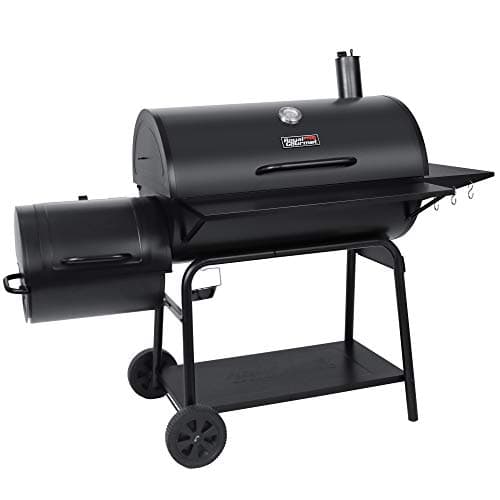
Royal Gourmet CC2036F Barrel Charcoal Grill with Offset Smoker, Outdoor BBQ Grill with 1200 Sq. In. Grilling Area for Large Event Gathering, Black
$207.31
Shop NowRoyal Gourmet CC1830W 30-Inch Charcoal Grill with Offset Smoker and Wood-Painted Side Table, Outdoor Smoker Grill with 811 Sq. In. Cooking Area for Outdoor Barbecue Event, Black
$147.77
Shop NowOklahoma Joe's Highland Offset Charcoal Smoker and Grill with 900 sq. in. Cooking Area in Black
$374.85
Shop NowRoyal Gourmet CC1830S BBQ Charcoal Grill and Offset Smoker | 823 Square Inch cooking surface, Outdoor for Camping | Black
$143.75
Shop NowRoyal Gourmet CC2036F Barrel Charcoal Grill with Offset Smoker, Outdoor BBQ Grill with 1200 Sq. In. Grilling Area for Large Event Gathering, Black
$207.31
Shop NowFreestanding vs. Built-In: The Core Decision
Before planning any outdoor kitchen layout around an offset smoker, make the fundamental decision: freestanding unit adjacent to the island, or a custom-built smoker integrated into the island structure. This decision drives every other design choice.
Freestanding offset smoker adjacent to the island: This is the most common and practical approach for residential outdoor kitchens. The smoker sits on its own legs (or a reinforced concrete pad) within 4–6 feet of the outdoor kitchen island. The island provides prep surface, refrigeration, sink, and storage; the smoker handles the low-and-slow cooking independently. Benefits: you can replace or upgrade the smoker without modifying the island; the smoker can be repositioned for smoke management; cleaning the firebox and ash pan is unrestricted. This approach works with any offset smoker, including large-format units (Oklahoma Joe's Highland, Yoder YS640, Lang 36-inch).
Custom built-in offset smoker: A permanent masonry or steel-frame smoker built into the outdoor kitchen structure, usually as an end section of the island or as a standalone masonry structure adjacent to the island. This approach is more visually integrated and protects the smoker from weather, but the design and construction must account for ash cleanout access, grease drainage, fuel door clearance, and the thermal expansion of the cooking chamber. Custom built-in smokers are typically fabricated by welding shops or masonry contractors — not off-the-shelf appliances. Starting cost: $3,000+ for a basic fabricated unit; $8,000–$25,000+ for a custom masonry smoker with a proper firebox, cooking chamber, and cleanout system.
Clearance Requirements for Offset Smokers in Outdoor Kitchens
Offset smokers produce more radiant heat and sustained smoke than any other outdoor cooking appliance. The clearance requirements are correspondingly larger.
Overhead clearance: Minimum 36 inches from the top of the cooking chamber to any overhead combustible surface (wood pergola members, vinyl patio covers, fabric shade sails). Non-combustible overhead surfaces (aluminum, concrete) need a minimum of 18 inches. Ideal overhead clearance is 60 inches or more — smoke needs room to disperse before it reaches any structure. If the smoker will be under any roof or shade structure, a full chimney that extends above the roofline is the proper solution.
Lateral clearance from combustibles: 24 inches on the firebox side (where temperatures at the firebox exterior can reach 400–600°F during active fires) and 18 inches on the opposite side. Adjacent stainless steel surfaces can tolerate closer proximity (6–12 inches) because stainless dissipates heat effectively, but combustible wood surfaces, vinyl panels, and fabric covers need the full clearance.
Rear clearance: The stack (chimney) typically extends from the opposite end of the firebox — the rear of the cooking chamber. Plan for 12 inches behind the stack and 24 inches lateral clearance from the stack to any overhead overhang. Smoke deposits creosote on any surface it contacts — overhead pergola members directly above a smoker stack will turn black within a season regardless of clearance distance.
Access clearance: The firebox door opens to the side (left or right depending on the unit). Leave 24–36 inches of unobstructed access from the firebox door. You're adding split wood every 30–60 minutes during a long cook — restricted access makes this unnecessarily difficult and creates a safety hazard with hot embers. Similarly, the ash pan and grease drain at the bottom of the cooking chamber need 12–18 inches of clearance below for cleaning.
Structural Considerations for Heavy Offset Smokers
Offset smokers are heavy. A mid-size Oklahoma Joe's Highland weighs 176 lbs empty; a full-size Lang 48-inch weighs 500+ lbs; a large custom Lone Star Grillz can exceed 800 lbs without fuel or meat. This weight affects your installation surface in ways that a gas grill at 150 lbs does not.
Concrete pad requirement: Any offset smoker over 300 lbs should sit on a reinforced concrete pad, not on paving stones, pavers, or standard patio decking. A 4-inch reinforced concrete pad (with ½-inch rebar on 12-inch centers) easily handles offset smoker loads up to 1,000 lbs. If your patio is pavers or brick, the smoker should have a dedicated poured-concrete section beneath its footprint. Settling unevenly under 400+ lbs will damage the smoker's frame and potentially create a fire hazard if the unit tilts toward combustible materials.
Deck considerations: Offset smokers on elevated wood decks require a structural assessment. Most residential decks are engineered for 40–60 PSF (pounds per square foot) live load; a 500 lb smoker on a 3 sq ft footprint creates a concentrated point load of 167 PSF — four times the deck's rated load over that area. If your outdoor kitchen is on an elevated deck, consult a structural engineer before placing any offset smoker. A concrete footing post below the deck supporting a steel plate is the standard solution.
Thermal isolation: If the smoker is adjacent to a cabinet structure (stone, steel, or wood frame), the firebox side can reach surface temperatures high enough to damage cabinet finishes over time. Install a heat shield between the firebox and any adjacent structure: a 16-gauge stainless steel panel with a 1-inch air gap between the panel and the cabinet face reduces radiated heat to safe levels for adjacent stainless or concrete surfaces.
Smoke Management in an Outdoor Kitchen
Smoke management is the most discussed challenge of outdoor kitchens with offset smokers — and it's mostly a site planning problem, not a construction problem. Once the smoker is in a fixed location, you're dealing with the smoke that location produces. Get the site orientation right before the concrete is poured.
Prevailing wind direction: In most of the continental US, prevailing winds blow from west to east. Position the smoker so the firebox faces the upwind direction (west), which means the smoke and heat travel away from the dining area and seating. If your patio layout forces the smoker into a downwind position relative to the dining area, a chiminea-style chimney extension that carries smoke above head height is the practical mitigation — not a perfect solution, but functional.
Stack height: The stack height on most production offset smokers (30–36 inches) is designed for freestanding use. In an outdoor kitchen context where the smoker is adjacent to a structure, extending the stack with a standard 3-inch or 4-inch chimney extension pipe (available at any fireplace supply store) to 60–72 inches above the cooking chamber carries smoke above most patio furniture-height sight lines and above most adjacent overhead surfaces.
Horizontal offset placement: The most smoke-efficient layout positions the smoker at the end of the outdoor kitchen that's furthest from the prevailing wind. The island itself acts as a partial windbreak, stabilizing the cooking temperature in the firebox and directing smoke away from the main working area. This also keeps the intense fire management activity (adding wood, stoking the firebox) at the farthest point from the refrigerator, sink, and prep counter — improving workflow during a long smoke session.
Reverse-flow smokers: Some offset smokers use a reverse-flow design where the smoke travels from the firebox end down a steel plate below the cooking grates, then reverses direction and exits via a stack at the firebox end. This design produces more even temperature distribution across the cooking chamber and keeps the exhaust stack at the firebox end — useful for layouts where the far end of the cooking chamber is closest to the dining area, because the smoke exits at the firebox end away from diners.
The Best Outdoor Kitchen Layout for an Offset Smoker
The layout that works best for an outdoor kitchen with an offset smoker puts the smoker at one end and organizes the supporting workflow around the smoking process.
Recommended layout for a 12-to-16-foot island with offset smoker: Position the smoker on a concrete pad at one end of the outdoor kitchen, with the firebox accessible from outside the main island work zone. Adjacent to the smoker (but with a 24-inch clearance gap): a 36-inch prep counter for staging meat before it goes on the smoker and for resting after the cook. Next: a 24-inch refrigerator for cold storage of meats during the prep phase and for holding finished product at serving temperature. Then: a primary prep counter of 48–60 inches for sides, sauces, and general prep. Finally: a sink at the opposite end for cleanup.
Fuel storage: Split wood for offset smoking requires on-site storage adjacent to the smoker. A standard cord of wood is 4 × 4 × 8 feet — most pitmasters keep a ¼ cord (one season's supply for weekend cooks) in a covered wood rack adjacent to the outdoor kitchen. Plan for a 48-inch wide by 30-inch deep by 48-inch tall wood rack footprint within 15 feet of the firebox. The wood needs to stay dry — a covered rack or waterproof wood storage box is essential in wet climates.
The 'smoke, sear, serve' station concept: Some outdoor kitchen designers build a three-station linear layout around the offset smoker: smoke station (offset smoker + fuel storage), sear station (high-BTU gas grill or Blackstone for finishing sears), and serve station (insulated warming drawers or a serving counter at bar height for plating and service). This separates the three phases of a serious barbecue cook and eliminates traffic conflicts between the pitmaster managing the smoker and other people using the kitchen.
Top Offset Smoker Options for Outdoor Kitchen Integration
The offset smoker market divides between production smokers (Oklahoma Joe's, Char-Broil, Pit Boss) and custom fabricators (Lang, Lone Star Grillz, Meadow Creek). The right category depends on your budget and usage frequency.
Production offset smokers ($300–$1,200): Oklahoma Joe's Longhorn Reverse Flow is the best production offset smoker in this price range — 1,060 sq inches of cooking surface, 6mm steel cooking chamber, reverse flow design for even temperature, and a firebox with sealed doors that reduce air leaks. The Highland (non-reverse flow) is more budget-friendly but requires more active fire management. Both weigh 170–180 lbs, manageable without special equipment.
Mid-range custom fabrications ($1,500–$4,000): Lang BBQ Smokers (Georgia-made), Meadow Creek (Pennsylvania-made), and Horizons (Kansas) produce ¼-inch steel or thicker offset smokers that hold temperature better, produce less creosote, and last decades longer than production units. The Lang 36-inch Original is a particularly popular outdoor kitchen companion — 672 sq in of cooking surface, reverse flow, 500 lbs, and a size that integrates with a standard island end-section without dominating the entire patio.
High-end custom ($5,000+): Lone Star Grillz, Gator Pits, and Primitive Pits fabricate custom dimensions to your specs. If you're building a permanent outdoor kitchen and want a custom smoker to match specific dimensions, these fabricators will build to your cut sheet. Lead times run 3–6 months. Heavy (500–1,500 lbs) — freight delivery and a tractor or engine hoist for placement are required.
Before you commit to anything here, check the gas appliance clearances against the clearance and installation requirements in NFPA 58, and confirm your local jurisdiction has not amended them.
Frequently Asked Questions
01Can you put an offset smoker in an outdoor kitchen?
02What clearance does an offset smoker need in an outdoor kitchen?
03What size offset smoker for an outdoor kitchen?
04How do I manage smoke from an offset smoker in an outdoor kitchen?
05Can an offset smoker sit on a wood deck?
06What is the best offset smoker for an outdoor kitchen?
This guide is part of Outdoor Kitchen Cooking Equipment: Grills, Griddles, Smokers, and Pizza Ovens — the hub covering every grills & cooking guide on Outdoor Kitchen Setup.
Related Guides
Written and edited by Sukie
Sukie is the editor behind Outdoor Kitchen Setup. They compile manufacturer specification sheets, published building codes, and industry sizing standards into the measurement and planning guides on this site, and check every figure against its original source before it goes live. Where a number varies by brand or by local code, the guides say so rather than presenting a single figure as universal.