Outdoor Kitchen Drainage: Floor Drains, Sink Waste & Grease Management
Outdoor kitchen drainage guide: floor drain installation, sink waste routing, grease trap requirements, dry well sizing, and how to drain an outdoor kitchen properly.
By Sukie
Editor · compiles manufacturer specs and building-code references into the measurement guides on this site
Outdoor kitchen drainage is one of the least glamorous topics in the planning process and one of the most consequential. Poor drainage shows up in three ways: standing water on the patio surface that doesn't dry between cooks, sink drain odors from improper venting, and grease accumulation in the waste line that causes slow drains within 6–12 months. All three are preventable if drainage is designed before the countertop goes down, not after.
Outdoor kitchen drainage covers three distinct systems: the sink waste line (which removes gray water from sink use), the floor drain (which manages rainfall runoff and wash-down water from cleaning the cooking surfaces), and grease management (which prevents the cooking oils and rendered fats from the grill, griddle, and side burner from reaching the drain system in a form that causes blockage). Each system has different requirements, and in a well-designed outdoor kitchen all three are addressed before any permanent structure is built.
This guide walks through each drainage system with the specific measurements, slope requirements, material choices, and code considerations. We also cover the most common outdoor kitchen drainage questions: whether you need a floor drain (depends on the patio configuration), whether a dry well is permissible for sink gray water (depends on your jurisdiction), and how to maintain the grease management system so it doesn't become a problem in year two or three of the kitchen's life.
Top Picks: Best Outdoor Kitchen Drainage: Floor Drains, Sink Waste & Grease Management in 2026
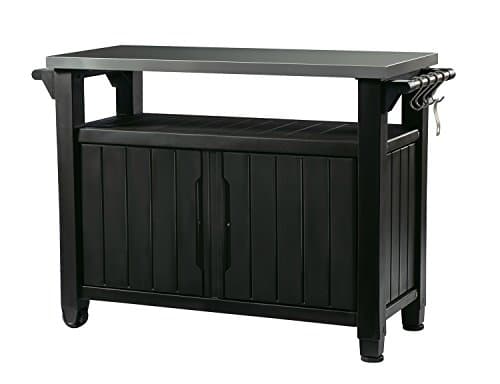
Keter Unity XL Portable Outdoor Table with Stainless Steel Top for Kitchen Prep and Outdoor Storage Cabinet for Grilling Accessories, Dark Grey
$220.99
Shop Now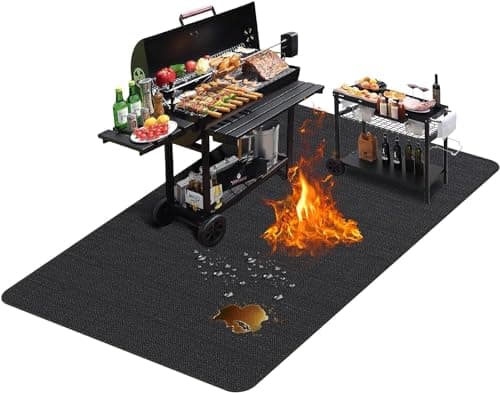
TAOMAND Large 76 x 52 inches Under Grill Mats for Outdoor Grill | Double-Sided Fireproof | Waterproof | Oil-Proof | Easy to Clean | Indoor Fireplace/Fire Pit Mat | Quality BBQ Mat for Deck Patio Lawn
$33.99
Shop Now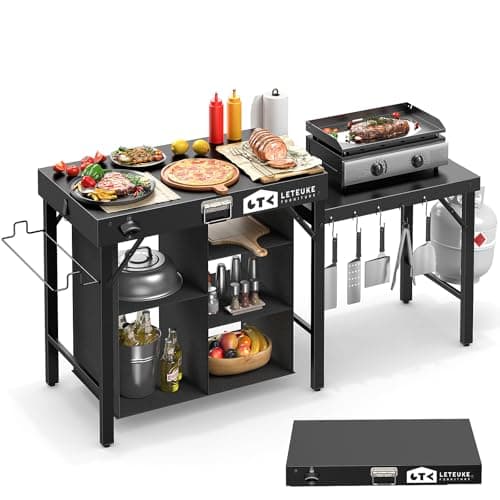
Leteuke Grill Table for Blackstone Griddle, Portable Foldable Grill Table with Storage Fits Ninja, Blackstone Griddle Stand for Outdoor Camping, Picnic, Garden, Patio, Dining, BBQ, Party
$159.99
Shop NowKeter Unity XL Portable Outdoor Table with Stainless Steel Top for Kitchen Prep and Outdoor Storage Cabinet for Grilling Accessories, Dark Grey
$220.99
Shop NowTAOMAND Large 76 x 52 inches Under Grill Mats for Outdoor Grill | Double-Sided Fireproof | Waterproof | Oil-Proof | Easy to Clean | Indoor Fireplace/Fire Pit Mat | Quality BBQ Mat for Deck Patio Lawn
$33.99
Shop NowLeteuke Grill Table for Blackstone Griddle, Portable Foldable Grill Table with Storage Fits Ninja, Blackstone Griddle Stand for Outdoor Camping, Picnic, Garden, Patio, Dining, BBQ, Party
$159.99
Shop NowSink Waste Drainage: Routing Gray Water Correctly
Outdoor kitchen sink waste drainage follows the same principles as indoor plumbing but with added considerations for UV exposure, freeze-thaw cycling, and longer drain runs that increase the chance of improper slope.
Drain pipe material: Schedule 40 PVC is the standard material for outdoor kitchen sink waste lines. It's UV-resistant (when installed underground or inside a cabinet), handles temperature extremes well, and is easy to solvent-weld at field cuts. ABS pipe is also acceptable in most jurisdictions. Do not use flexible corrugated drain pipe — it traps debris at every corrugation and blocks faster than smooth-wall pipe.
Slope requirement: The IPC requires ¼ inch per foot minimum slope for 1.5-inch pipe. For a 20-foot drain run from the kitchen to the waste connection point, you need 5 inches of fall. If your patio is flat concrete, plan for the drain pipe to run below the slab surface in a conduit. If the waste connection is at grade level on the home's exterior wall, the drain line may run at surface grade (in a protective chase or under a raised deck section) if grade provides adequate fall.
P-trap requirement: Every sink drain requires a p-trap immediately below the sink drain outlet. The p-trap's water seal prevents sewer gas (or pests, in the case of dry-well connections) from entering through the drain. Position the p-trap within 24 inches of the drain outlet for best function. The trap arm (the horizontal section from the p-trap outlet to the vent connection) should slope slightly toward the drain — 1/8 inch per foot is the standard for trap arms under 5 feet.
The freezing p-trap problem: In freeze-prone climates, the water in the p-trap will freeze if the outdoor kitchen is not winterized. A frozen p-trap can crack the trap body or crack the drain fitting it connects to. Winterizing procedure: blow out the supply lines with compressed air, then pour 1–2 cups of RV antifreeze (propylene glycol) into the drain. This protects the trap through the winter without requiring you to physically remove the trap assembly.
How do I prevent outdoor kitchen drain odors
Outdoor kitchen drain odors usually come from a dry p-trap (the water seal has evaporated, allowing sewer gas in) or from grease buildup in the drain line. Fix a dry p-trap by running water and ensuring the trap stays wet during the season, or pour RV antifreeze into it when winterizing. Fix grease odors by flushing with boiling water monthly and having the drain line cleaned professionally if flushing doesn't resolve it.
Floor Drains for Outdoor Kitchens
A floor drain in an outdoor kitchen patio collects water from rain, cooking surface washdowns, and spilled beverages, routing it away from the kitchen area without forming puddles. Whether you need one depends on your patio configuration.
When a floor drain is important: Covered outdoor kitchens (under a pergola, pavilion, or patio cover) that receive cooking grease and condensation from cover surfaces benefit significantly from a floor drain. Without a drain, cooking grease that drips off the grill or is splattered during cooking accumulates on the patio surface, becomes a slip hazard when wet, and is difficult to clean without a drain outlet. Enclosed or semi-enclosed outdoor kitchen spaces should have a floor drain as a building requirement, not an option.
When a floor drain can be skipped: Open outdoor kitchens on a sloped patio that drains naturally to the yard perimeter can function well without a dedicated floor drain. If your patio has a minimum 1% slope (1/8 inch per foot) away from the kitchen area and toward a permeable area, rainfall and wash-down water self-drain without standing water. Natural stone or paver patios also drain better than solid concrete because water moves through the joint material.
Floor drain installation: A standard 4-inch cast iron or PVC floor drain (with an adjustable top grate flush with the finished patio surface) connects to a 3-inch or 4-inch drain line. Position the drain at the lowest point of the kitchen zone — typically at the inside corner of an L-shaped kitchen or at the center of the island's footprint. Drain pipe from the floor drain should slope at ¼ inch per foot to the waste connection. Install a grate with a ½-inch or smaller opening to prevent large debris from entering the drain system.
Grease interceptor with floor drain: If a floor drain serves an outdoor kitchen with high grease output (large griddle, multiple side burners, regular high-volume cooking), a grease interceptor (also called a grease trap) installed on the drain line before it connects to the sewer prevents grease buildup in the main sewer line. For residential outdoor kitchens, a small-capacity grease interceptor ($200–$600) installed underground in the drain line is appropriate. Grease interceptors require periodic cleaning (pumping out accumulated grease) — typically annually for residential use.
Dry Well Systems for Outdoor Kitchen Gray Water
A dry well is a perforated chamber buried in the yard that disperses sink gray water (water from sink use — dish rinse, hand washing, food prep) into the surrounding soil. It's a simpler alternative to tying into the home's sewer system when the outdoor kitchen is detached or at a distance from the home's DWV system.
Is a dry well legal for outdoor kitchen sink gray water? This depends entirely on your local jurisdiction. Western US states (California, Arizona, New Mexico, Arizona) generally permit residential gray water dispersal with specific setback requirements. Most eastern US states and most Canadian provinces treat all wastewater (including gray water from sinks) as requiring connection to an approved sanitary sewer or septic system. Check with your local building department before installing a dry well — an unpermitted dry well discovered during a home inspection can require expensive removal and remediation.
Dry well sizing for outdoor kitchen gray water: A standard outdoor kitchen sink produces 1–3 gallons per minute during peak use. For a residential outdoor kitchen used 4–8 hours per week during cooking season, a 50-gallon nominal dry well (roughly 3 ft diameter × 4 ft deep) provides adequate dispersal capacity in typical sandy or loamy soil. Clay soils require larger dry well capacity or a leach field configuration because clay drains slowly. A soil percolation test (standard before septic system installation) tells you the specific dispersal rate your soil supports.
Setback requirements for dry wells: Most jurisdictions that permit dry wells require minimum setbacks from property lines (typically 5 feet), from wells (typically 50–100 feet), from surface water bodies (typically 50 feet), and from the home's foundation (typically 5–10 feet). Verify all setback requirements before excavating. Dry well placement is a permanent decision once the patio is built over it.
Grease Management in Outdoor Kitchen Drainage
Grease from outdoor cooking — rendered fats from grilling, cooking oils from griddles, butter and sauces from side burners — is the most common cause of outdoor kitchen drain problems. Liquid grease poured down a drain solidifies when it cools, accumulating on the pipe walls until a blockage forms. In outdoor climates where drain pipes cycle through large temperature swings, grease solidification happens faster than indoors.
The right way to manage grease from an outdoor kitchen:
1. Never pour liquid cooking grease down the sink drain. This is the single most important rule for preventing outdoor kitchen drain blockages. Liquid cooking grease should be collected in a heat-safe container (a wide-mouth mason jar or commercial grease container works well), allowed to solidify, and disposed of in the trash. A grease disposal container integrated into the island cabinet near the grill makes this easy and keeps the habit consistent.
2. Wipe down cooking surfaces before water contact. Grill grates, griddle surfaces, and drip trays should be scraped and wiped with paper towels to remove the bulk of the grease before any water rinse. This reduces the grease load that reaches the sink drain by 80–90%.
3. Use a grease trap on the drain line if high-volume cooking is expected. A small grease trap (interceptor) on the waste line between the p-trap and the main drain captures grease that does enter the drain. Standard residential outdoor kitchen grease traps are sized at 10–15 gallons of retention capacity. They require cleaning every 3–6 months depending on use volume — neglected grease traps generate significant odor and eventually overflow into the drain system they're meant to protect.
4. Hot water flush monthly during cooking season. Flush the drain with a kettle or pot of boiling water monthly to keep any residual grease coating on the pipe walls from building up into a blockage. This is not a substitute for proper grease management but is a useful maintenance habit that extends the time between plumber service calls.
Outdoor Kitchen Drainage for Decks vs. Concrete Patios
The drainage approach for an outdoor kitchen on an elevated wood deck is different from a ground-level concrete patio, and getting this wrong is expensive to correct after construction.
Elevated wood decks: Deck boards have natural gaps between them (typically ⅛ to ¼ inch) that allow water to pass through to the deck structure below. For outdoor kitchens on decks, this means water — and dissolved grease from cooking — drips through the deck boards onto the structural members below. Over time, grease accumulation on deck joists and beams creates staining, encourages rot in untreated wood, and can attract pests. Two mitigation approaches work: (1) a drip pan or stainless steel tray under the cooking area that captures grease and directs it to a drain point, or (2) a waterproof membrane system (like TREX HideAway or a similar product) installed under the deck boards in the cooking zone to create a solid waterproof deck surface that drains to a specific collection point.
Ground-level concrete patios: Concrete patios should be poured with a minimum 1% slope (⅛ inch per foot) away from the home's foundation toward the yard. In outdoor kitchen areas, a steeper 2% slope (¼ inch per foot) directed toward a floor drain or a permeable patio edge is preferred. If the existing concrete patio has no slope or slopes toward the home, retrofitting drainage either means saw-cutting channels to install linear drains or accepting standing water in the kitchen zone after cooking and rain events.
Paver and stone patios: Permeable paver systems (with open-graded aggregate base and joint sand) provide natural drainage that makes floor drains less critical. However, the joint material between pavers can trap cooking grease, darkening and eventually sealing the joints — reducing drainage performance over time. Annual power washing with a degreaser cleaner maintains the permeable performance of paver joints in high-grease outdoor kitchen zones.
A few specifics that come up repeatedly:
Does grease go down the outdoor kitchen drain?
No — liquid cooking grease should never go down the drain. Collect it in a heat-safe container, let it solidify, and dispose of it in the trash. Liquid grease poured down a drain solidifies when it cools, accumulating on pipe walls and eventually causing blockages. Wipe cooking surfaces with paper towels before water rinse to remove most grease before it reaches the sink.
Where the permit and code requirements above matter to safety or to a permit, verify them against your local adoption of the International Residential Code rather than against any single guide.
Frequently Asked Questions
01Do outdoor kitchens need a drain?
02How do you drain an outdoor kitchen?
03Can outdoor kitchen sink water drain to the yard?
04What is a dry well for an outdoor kitchen?
This guide is part of Outdoor Kitchen Build Guides: Planning, Permits, Cost, and Hiring — the hub covering every planning & guides guide on Outdoor Kitchen Setup.
Related Guides
Written and edited by Sukie
Sukie is the editor behind Outdoor Kitchen Setup. They compile manufacturer specification sheets, published building codes, and industry sizing standards into the measurement and planning guides on this site, and check every figure against its original source before it goes live. Where a number varies by brand or by local code, the guides say so rather than presenting a single figure as universal.