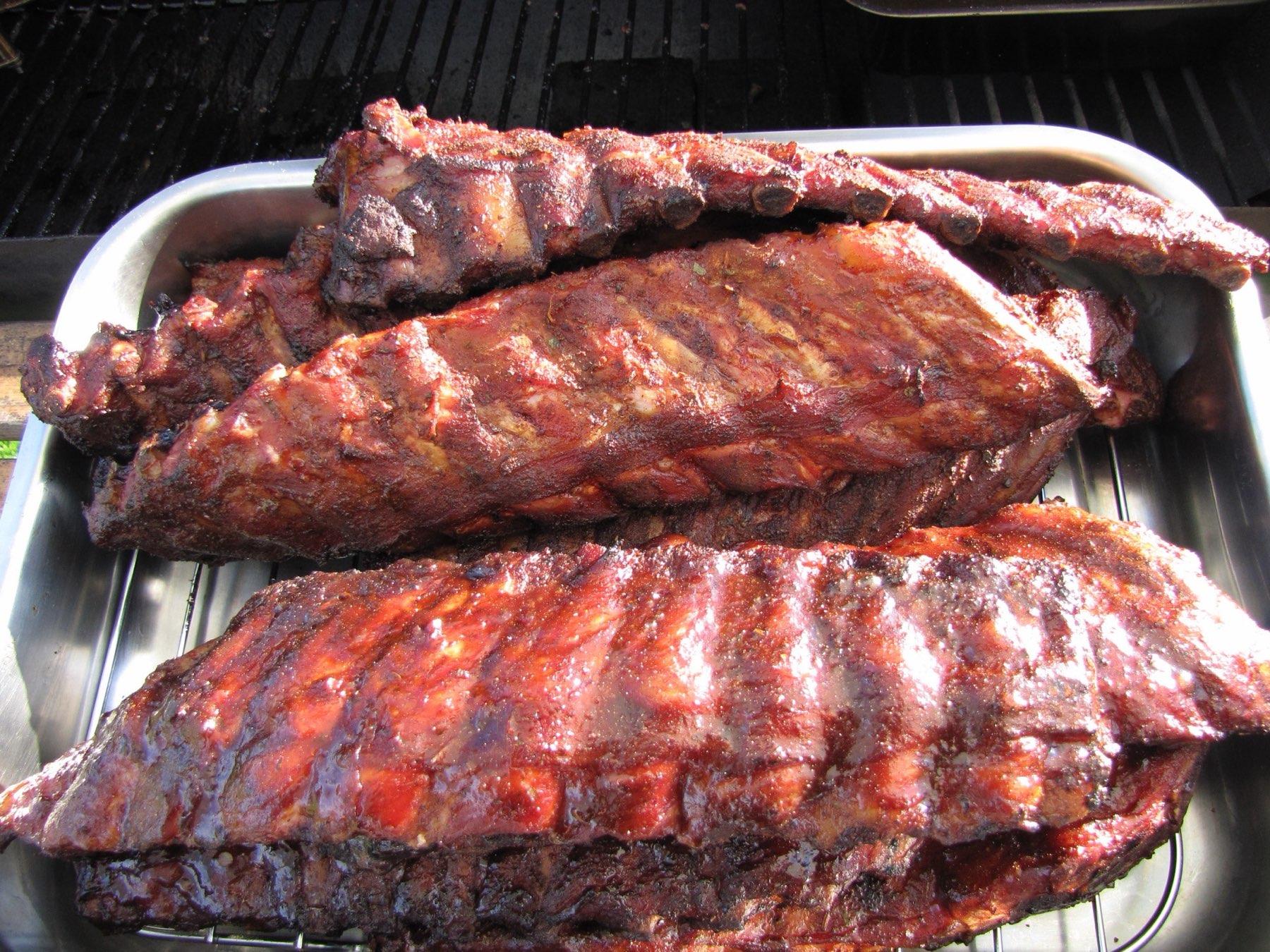
How Long to Smoke Ribs: 3-2-1 and Unwrapped Times, Planned Back From Dinner
Smoke pork ribs at 225 to 250 °F for 4 to 5 hours unwrapped (Kingsford). The 3-2-1 method takes 6 hours: 3 hours of smoke, 2 hours wrapped in foil, then 1 hour unwrapped, at 225 °F per Masterbuilt or 250 °F per Kingsford. Spare ribs run about an hour longer than baby backs (Weber). USDA's safe minimum for pork is 145 °F plus a 3-minute rest.
Photo: Thogru / Wikimedia Commons (CC BY-SA 3.0)
Rib Smoking Time Calculator
Enter the weight and your smoker temperature. Times are the published ranges below, multiplied by your weight; the thermometer, not the clock, tells you when it is done.
Estimated smoking time
6 h
at 250 °F: 6 h total, any weight
Done at 195 °F in the meat between the bones (not touching bone) (USDA minimum 145 °F), then rest 10–15 min.
Your timeline
Pick a meal time to see when to light the smoker.
The plan uses the long end of the range plus the longest rest, so the meat should be ready early rather than late. If it hits temperature early, keep it above 140 °F (out of the USDA danger zone) until you eat, and refrigerate leftovers within 2 hours.
Only the smoker temperatures a named source publishes a time for are offered (for this cut: 225 °F, 250 °F); we never fill gaps by guessing.
Sources: time from Kingsford, 3-2-1 Ribs (read 2026-11-16); 195 °F target from Masterbuilt, How to Smoke Meat on a Vertical Smoker; rest from Masterbuilt, How to Smoke Meat on a Vertical Smoker; safe temperatures and the 225–300 °F smoker range from USDA FSIS, Smoking Meat and Poultry.
You have a rack and a free afternoon: how long to smoke ribs so they are on the table at dinnertime? Kingsford says to smoke pork ribs at 225 to 250 °F for 4 to 5 hours unwrapped. The 3-2-1 method takes 6 hours: 3 hours of smoke, 2 hours wrapped in foil, then 1 hour unwrapped. Masterbuilt runs it at 225 °F and Kingsford at 250 °F, and the clock is the same at both.
The calculator above uses those two published schedules. Pick the method and your smoker temperature, enter the time you want to eat, and it works backward to the time you should light the smoker, using the long end of the range and the longest rest so the ribs finish early rather than late. Below, each number is traced to its source, including where the brands disagree. For other meats, the smoking time calculator hub has every cut on one page.
Gear for this cook
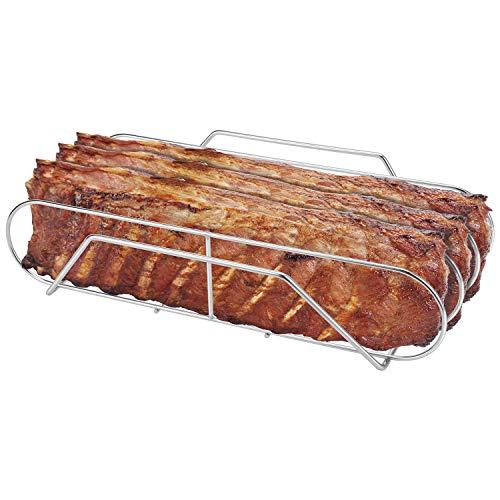
Extra Long Stainless Steel Rib Rack for Smoking and Grilling, Holds up to 3 Full Racks of Ribs, Fits 18” or Larger Gas Smoker or Charcoal Grill, Perfect Smoker Accessories Gifts for Men
$19.19
Check price on Amazon: Extra Long Stainless Steel Rib Rack for Smoking and Grilling, Holds up to 3 Full Racks of Ribs, Fits 18” or Larger Gas Smoker or Charcoal Grill, Perfect Smoker Accessories Gifts for Men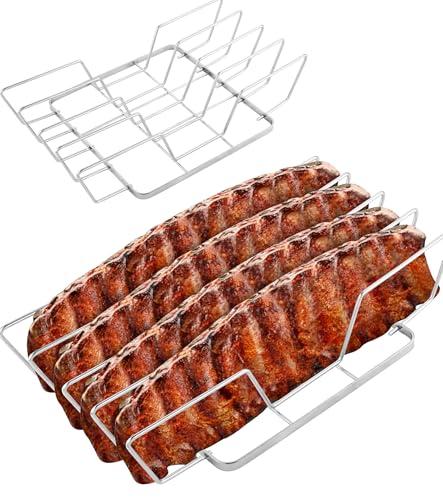
Rib Rack for Smoking – Foldable Extra Long Stainless Steel Rib Holder for 4 Ribs Upright – Fits 18" Smoker, Weber, Kamado, Traeger – BBQ Grill Accessories for Men & Meat Lovers
$19.99
Check price on Amazon: Rib Rack for Smoking – Foldable Extra Long Stainless Steel Rib Holder for 4 Ribs Upright – Fits 18" Smoker, Weber, Kamado, Traeger – BBQ Grill Accessories for Men & Meat Lovers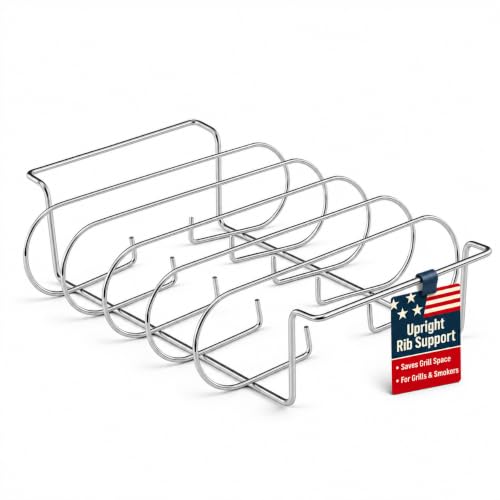
Orcela Rib Rack for Smoking and Grilling, Holds 5 Full Racks | Stainless Steel Rust-Resistant Design Fits Gas Smokers, Charcoal and Pellet Grills for BBQ
$12.98
Check price on Amazon: Orcela Rib Rack for Smoking and Grilling, Holds 5 Full Racks | Stainless Steel Rust-Resistant Design Fits Gas Smokers, Charcoal and Pellet Grills for BBQ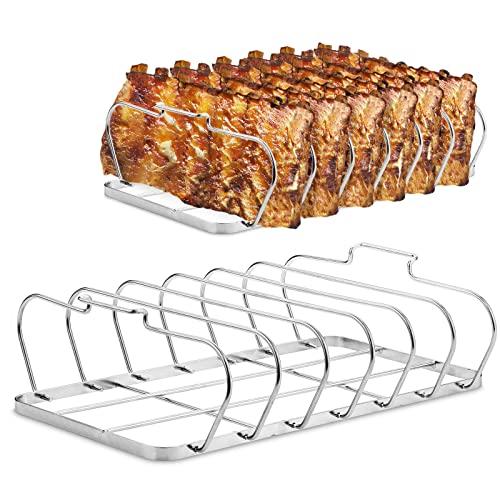
Large Rib Rack for Smoking - 6 Slots Rib Racks for Grilling - Easy to Use and Clean BBQ Premium Durable Rib Rack Stainless Steel
$16.99
Check price on Amazon: Large Rib Rack for Smoking - 6 Slots Rib Racks for Grilling - Easy to Use and Clean BBQ Premium Durable Rib Rack Stainless Steel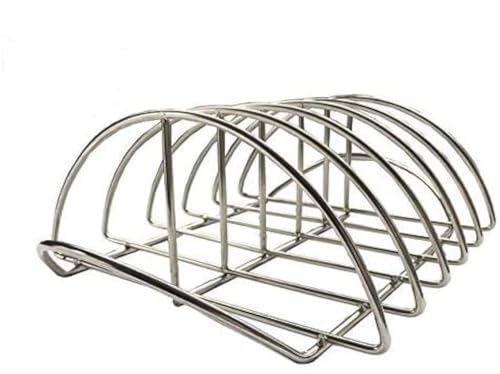
BBQ Rib Rack For Smoker Stainless Steel Rack For Large Big Green Egg and Kamado Joe Smoker Joe and 18" or Larger Grills Roast grill For Charcoal Grill Smoker
$22.99
Check price on Amazon: BBQ Rib Rack For Smoker Stainless Steel Rack For Large Big Green Egg and Kamado Joe Smoker Joe and 18" or Larger Grills Roast grill For Charcoal Grill SmokerExtra Long Stainless Steel Rib Rack for Smoking and Grilling, Holds up to 3 Full Racks of Ribs, Fits 18” or Larger Gas Smoker or Charcoal Grill, Perfect Smoker Accessories Gifts for Men
$19.19
Check price on Amazon: Extra Long Stainless Steel Rib Rack for Smoking and Grilling, Holds up to 3 Full Racks of Ribs, Fits 18” or Larger Gas Smoker or Charcoal Grill, Perfect Smoker Accessories Gifts for MenRib Rack for Smoking – Foldable Extra Long Stainless Steel Rib Holder for 4 Ribs Upright – Fits 18" Smoker, Weber, Kamado, Traeger – BBQ Grill Accessories for Men & Meat Lovers
$19.99
Check price on Amazon: Rib Rack for Smoking – Foldable Extra Long Stainless Steel Rib Holder for 4 Ribs Upright – Fits 18" Smoker, Weber, Kamado, Traeger – BBQ Grill Accessories for Men & Meat LoversOrcela Rib Rack for Smoking and Grilling, Holds 5 Full Racks | Stainless Steel Rust-Resistant Design Fits Gas Smokers, Charcoal and Pellet Grills for BBQ
$12.98
Check price on Amazon: Orcela Rib Rack for Smoking and Grilling, Holds 5 Full Racks | Stainless Steel Rust-Resistant Design Fits Gas Smokers, Charcoal and Pellet Grills for BBQLarge Rib Rack for Smoking - 6 Slots Rib Racks for Grilling - Easy to Use and Clean BBQ Premium Durable Rib Rack Stainless Steel
$16.99
Check price on Amazon: Large Rib Rack for Smoking - 6 Slots Rib Racks for Grilling - Easy to Use and Clean BBQ Premium Durable Rib Rack Stainless SteelBBQ Rib Rack For Smoker Stainless Steel Rack For Large Big Green Egg and Kamado Joe Smoker Joe and 18" or Larger Grills Roast grill For Charcoal Grill Smoker
$22.99
Check price on Amazon: BBQ Rib Rack For Smoker Stainless Steel Rack For Large Big Green Egg and Kamado Joe Smoker Joe and 18" or Larger Grills Roast grill For Charcoal Grill SmokerPrices and availability are accurate as of November 21, 2026, 2:35 PM UTC and are subject to change.
The 3-2-1 method, as each maker publishes it
Every brand that publishes a 3-2-1 schedule agrees on the shape: smoke bare, wrap in foil, then finish unwrapped. They disagree on smoker temperature and on what the thermometer should read at each stage. The table puts the published versions side by side, exactly as each one states them.
| Source and cut | Stage 1: smoke | Stage 2: wrapped | Stage 3: unwrapped | Internal temps stated |
|---|---|---|---|---|
| Masterbuilt chart, baby back (2 slabs) | 225 °F | 225 °F | 225 °F | 165 °F finished |
| Traeger 321 recipe, baby back | 180 °F, 3 hours | 225 °F, 2 hours | Sauced, 30 to 60 minutes | 160 °F after stage 1; 205 °F after stage 2 |
| Traeger BBQ 3-2-1, St. Louis cut | 180 °F, about 3 hours | 225 °F, about 2 hours | Sauced, about 30 to 60 minutes | 140 °F after stage 1; 160 °F after stage 2; 200 to 205 °F final |
| Kingsford 3-2-1, baby back (charcoal snake) | 250 °F, 3 hours | 250 °F, 2 hours | 250 °F, 1 hour | 165 °F finished; rest 3 minutes |
A few details are easy to miss. The Traeger 321 Ribs Method page gives three checkpoints for the end of the first stage: its recipe says 160 °F, its method text says 165 °F, and its FAQ says to smoke "at a temperature of around 225°F to 250°F" rather than 180 °F. Its final stage is 30 to 60 minutes, so a Traeger 3-2-1 can come in under 6 hours. The Traeger BBQ 3-2-1 St. Louis Ribs recipe uses the same timing for St. Louis-cut ribs.
One safety note on the Traeger versions: the USDA says a smoker's air temperature should stay "between 225 and 300 °F throughout the cooking process." The 180 °F opening stage sits below that range. If you follow it, a reliable smoker thermometer matters more than usual, and the meat still has to pass the USDA minimum for pork before it comes off.
Baby back vs spare and St. Louis ribs
Part of the answer to how long to smoke ribs is the cut. Baby back ribs are smaller and leaner, and spare ribs are bigger with more fat, so spare ribs take longer. The clearest published split comes from the Weber Searwood low-and-slow guide, which is written for a European audience and gives temperatures in Celsius:
| Cut | Weber's time | Weber's smoker temp (as published) | Same temp converted to °F |
|---|---|---|---|
| Baby back ribs | 4 to 5 hours | 110 to 120 °C | about 230 to 248 °F |
| Spare ribs | 5 to 6 hours | 110 to 120 °C | about 230 to 248 °F |
Weber's baby back range matches Kingsford's unwrapped 4 to 5 hours at 225 to 250 °F, which is why the calculator's "unwrapped" option uses 4 to 5 hours. Weber adds roughly another hour for spare ribs. No US source found gives untrimmed spare ribs their own Fahrenheit time. Traeger's St. Louis recipe covers the trimmed spare-rib cut, and it keeps the 3-2-1 clock.
For full spare ribs unwrapped, plan on Weber's longer window and start an hour earlier. Kingsford describes the trade in the same direction: spare ribs "take longer to cook," and baby backs are "smaller, leaner, and cook faster."
Why one brand says 165 °F and another says 205 °F
This is where the published figures split the most. Two sources say ribs are done at 165 °F, and three say about 195 to 205 °F:
- 165 °F: the Masterbuilt chart (baby back ribs) and Kingsford's 3-2-1 recipe.
- 195 to 203 °F: the Masterbuilt vertical-smoker guide, which lists "Pork Ribs: 195-203°F."
- 200 to 205 °F: Traeger's St. Louis recipe says "a final internal temperature between 200-205°F," its baby back recipe says 205 °F after the wrap, and its FAQ says "around 200°F."
Masterbuilt publishes both numbers on two different pages. They describe different things. The minimum safe temperature for pork is lower than either: the USDA FSIS safe temperature chart and its smoking page call for whole cuts of pork to reach 145 °F, followed by a rest of at least three minutes. Ribs at 165 °F are safe to eat. Ribs at 195 °F and above have had longer for the connective tissue to soften. Masterbuilt's guide makes the same point about large, tough cuts like brisket and pork shoulder, which need higher temperatures "to break down connective tissue."
Rib meat is thin and the bones make a thermometer reading tricky, so treat the number as a guide and confirm with the physical checks below. The calculator uses 195 °F as its target, the low end of Masterbuilt's vertical-smoker range. It never treats anything below the USDA's 145 °F as done.
Three doneness checks that beat the thermometer
Kingsford gives three ways to tell when ribs are ready, and none needs a thermometer:
- Bone exposure. "When about ¼” of bone is exposed, the smoked ribs should be done." As the meat shrinks it pulls back from the thin end of each bone.
- The bend test. Pick up the middle of the slab and flex it. The meat should separate from the bone and not flex back. Kingsford's wording: "if it feels rubbery, it's not done."
- The bite test. Cut one rib off and taste it. The meat "should pull off the bone with a slight tug but not fall off the bone."
Use them together with the clock. If the calculator's window has passed and the slab still flexes back like rubber, the ribs need more time, whatever the thermometer says.
Where to probe, if you do use a thermometer: in the meat between the bones, not touching bone. Bone conducts heat differently and gives a false reading.
Wrap or not: what the foil changes
Wrapping is what separates the two schedules in the calculator. Kingsford's answer to whether to wrap sums up the trade: foil gives "a speedier cook and potentially juicier results," with "a milder smoke taste and softer bark." Skipping the foil gives "maximum smoke flavor and a crispier crust, but it might take longer."
The published answers to how long to smoke ribs reflect that, though not the way you might expect. Kingsford's unwrapped ribs run 4 to 5 hours, while the wrapped 3-2-1 runs a fixed 6. The 3-2-1 is not faster in total. It is more predictable, and the foil stage softens the meat. Choose by result, not by time:
- Unwrapped (4 to 5 hours): firmer bite, heavier bark, more smoke. Shorter total, but the finish varies more, so check from hour 4.
- 3-2-1 wrapped (6 hours): softer, more uniform texture with less bark. The clock is fixed, which makes it easier to plan around dinner.
Masterbuilt's guide describes the same foil technique for bigger cuts, wrapping "Around 165°F internal" and noting that you "sacrifice some bark." If you wrap, crimp the foil edges tight. Traeger's tip is to prevent leakage by crimping them, because escaping liquid steams away and the wrap does less.
A related time cost: Masterbuilt says every time you open the door "you lose 50-75°F and it takes 10-15 minutes to recover." Unwrapping and wrapping are door openings. Do them quickly and do not add extra peeks.
When does the sauce go on?
Sweet sauces burn if they go on too early. The USDA's advice on its smoking page is direct: "If using a sauce, apply it during the last 15 to 30 minutes of smoking to prevent excess browning or burning." Kingsford's rib guide gives the same instruction for sugar or tomato-based sauces: "apply during the last half-hour."
The 3-2-1 method bends this rule. Its final stage is a sauced hour, 30 to 60 minutes in Traeger's version and 1 hour after a syrup dip in Kingsford's. If you see the glaze darkening fast in that last stage, it is about to burn. Pull the ribs at the 30-minute mark, which is still inside every published 3-2-1 window. For unwrapped ribs on the 4 to 5 hour schedule, sauce at the end, in the last 15 to 30 minutes only.
Resting ribs: 3 minutes or 15?
Rest times on ribs are short, and the published figures differ:
| Source | Rest | How |
|---|---|---|
| Kingsford rib guide (unwrapped ribs) | about 15 minutes | "rest and cool down … before handling and slicing" |
| Masterbuilt vertical-smoker guide | 10 to 15 minutes | "loosely tented with foil" |
| Kingsford 3-2-1 recipe | 3 minutes | then serve |
Three minutes is the USDA's minimum rest for whole cuts of pork, so Kingsford's 3-2-1 recipe sits right on that floor. The calculator plans 10 to 15 minutes for the 3-2-1 and 15 minutes for unwrapped ribs, and it uses the longer figure when it works out your timeline. If dinner runs late, ribs hold well loosely tented. Once they are off the heat, the USDA's two-hour rule applies to leftovers: refrigerate within 2 hours and use within 4 days.
Planning backward from a 6 pm dinner
Knowing how long to smoke ribs is only useful once it is turned into clock times. An illustrative cook shows how the calculator builds a plan. Take a 3-2-1 at 225 °F (Masterbuilt's schedule) with dinner at 6:00 pm, the calculator's default 30-minute preheat, and the longest published rest for this method, 15 minutes:
| Step | Time | How it is worked out |
|---|---|---|
| Light the smoker | 11:15 am | 30 minutes before the ribs go on |
| Ribs on, unwrapped | 11:45 am | 6 hours before they come off |
| Wrap in foil | 2:45 pm | after 3 hours |
| Unwrap and sauce | 4:45 pm | after 2 more hours |
| Ribs off | 5:45 pm | after the final hour |
| Serve | 6:00 pm | after a 15-minute rest |
The same dinner using the unwrapped schedule plans on Kingsford's long end of 5 hours. Light at 12:15 pm, ribs on at 12:45 pm, and expect them ready as early as 4:45 pm and no later than 5:45 pm. Start checking with the bend test at the 4-hour mark.
When the plan slips. If the ribs are ready early, wrap them in foil and hold them. If they are behind, check the smoker temperature first, since a drift below 225 °F is the usual cause, and keep the door shut. On the 3-2-1 you can shorten the final stage to 30 minutes, as Traeger's version allows. Skip the stage that adds smoke, not the one that adds tenderness. Building a permanent setup around a smoker? The outdoor kitchen smoker guide covers placement and clearances. The Outdoor Kitchen Setup homepage has the planning tools for the rest of the space.
Smoking chicken on the same pit for the same dinner? The chicken smoking times by part come from the same makers, so the two plans line up.
Frequently Asked Questions
01How long to smoke ribs at 225 °F?
02How long do ribs take at 250 °F?
03Is 165 °F done for ribs?
04Does the 3-2-1 method work for spare ribs?
05Should ribs be wrapped in foil or butcher paper?
06Does smoking more racks at once change the time?
07When does sauce go on smoked ribs?
This guide is part of Smoke Times: Calculator and Chart for Every Cut — the hub covering every smoking & bbq guide on Outdoor Kitchen Setup.
Related Guides
Written and edited by Sukie
Sukie is the editor behind Outdoor Kitchen Setup. They compile manufacturer specification sheets, published building codes, and industry sizing standards into the measurement and planning guides on this site, and USDA food-safety guidance and smoker makers’ published times into its smoking and turkey calculators. They check every figure against its original source before it goes live. Where a number varies by brand or by local code, the guides say so rather than presenting a single figure as universal.