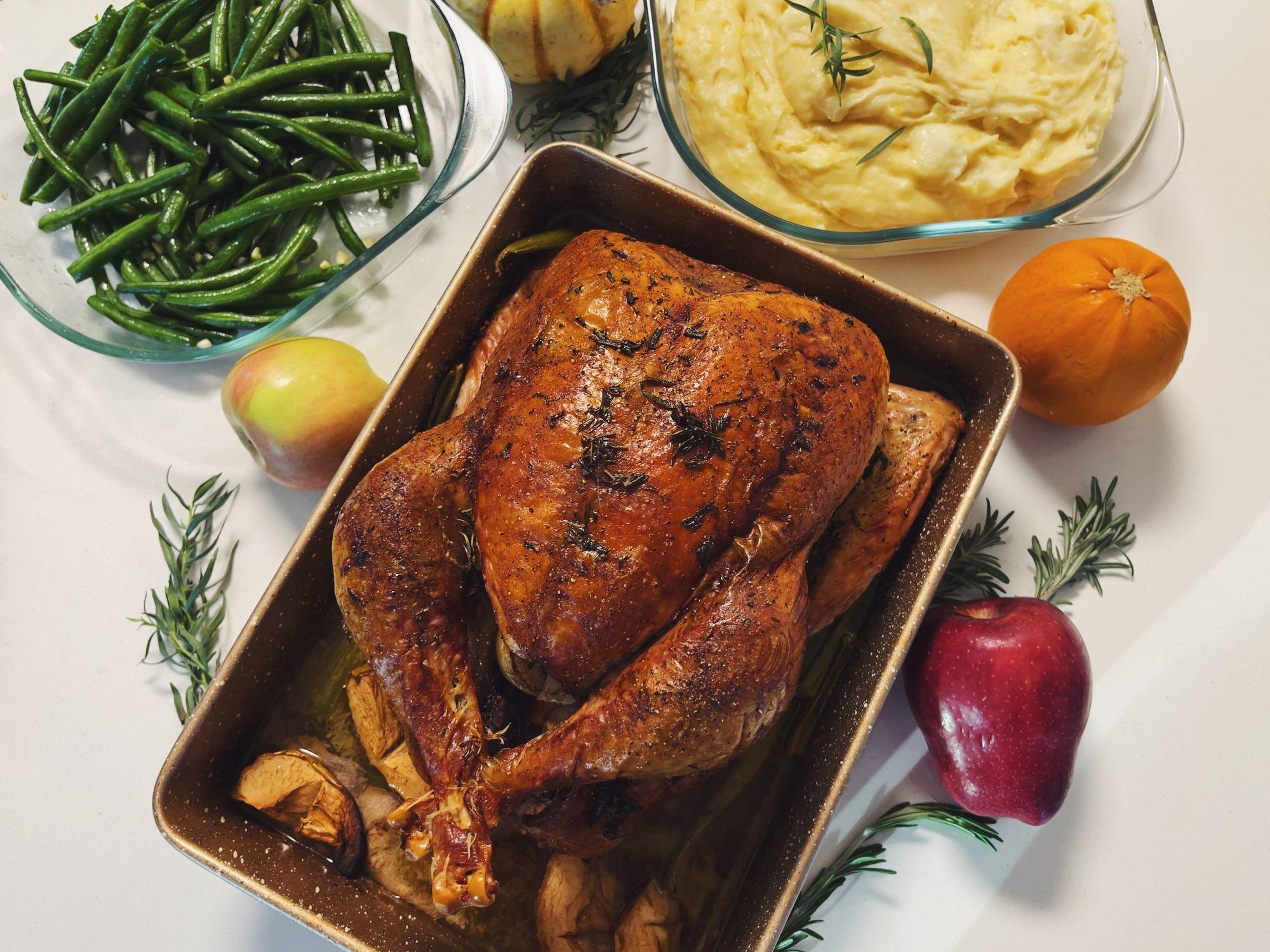
How Long to Thaw a Turkey: USDA Fridge and Cold-Water Times
USDA allows approximately 24 hours for every 4 to 5 pounds in a refrigerator at 40 °F or below: 1 to 3 days for 4–12 lb, 3 to 4 days for 12–16 lb, 4 to 5 days for 16–20 lb and 5 to 6 days for 20–24 lb. In cold water changed every 30 minutes, allow about 30 minutes per pound, then cook immediately.
Photo: Rufina Rusakova / Pexels (Pexels License)
Turkey Thawing Calculator
USDA’s two safe ways for a whole turkey: in the refrigerator at 40 °F or below, or in cold water.
In the refrigerator
3–4 days
Pick the day you will cook.
A thawed turkey keeps in the fridge for 1 to 2 days, so starting a day early is safe.
In cold water
6–8 hours
Keep it in its airtight wrapper, fully submerged, change the water every 30 minutes, and cook it right after it thaws. Do not refreeze it.
| Weight | Refrigerator | Cold water |
|---|---|---|
| 4 to 12 pounds | 1 to 3 days | 2 to 6 hours |
| 12 to 16 pounds | 3 to 4 days | 6 to 8 hours |
| 16 to 20 pounds | 4 to 5 days | 8 to 10 hours |
| 20 to 24 pounds | 5 to 6 days | 10 to 12 hours |
Source: USDA FSIS, Let's Talk Turkey—A Consumer Guide to Safely Roasting a Turkey, read 2026-11-16. USDA: never thaw food at room temperature.
How long to thaw a turkey depends on the method: the USDA Food Safety and Inspection Service allows approximately 24 hours for every 4 to 5 pounds in a refrigerator at 40 °F or below, and approximately 30 minutes per pound in cold water, with the water changed every 30 minutes. A 14-pound turkey therefore needs 3 to 4 days in the fridge or about 7 hours in cold water.
Enter your turkey's weight in the Turkey Thawing Calculator above to get the USDA range for both methods and the day to move the bird from the freezer to the fridge. The sections below give the full USDA table, a start-date countdown for Thanksgiving on Thursday, November 26, 2026, and what USDA says to do if the bird is still frozen when you need it.
Gear for this cook
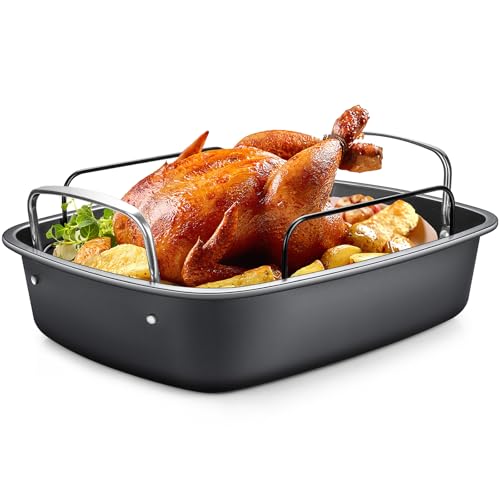
Nonstick Turkey Roasting Pan with Rack - 17×13 Inch Extra Large Roaster Pan, Deep Turkey Tray for Oven, U-Shaped Rack, Wider Handles, Ideal for Ovens, Thanksgiving, and Christmas
$39.99
Check price on Amazon: Nonstick Turkey Roasting Pan with Rack - 17×13 Inch Extra Large Roaster Pan, Deep Turkey Tray for Oven, U-Shaped Rack, Wider Handles, Ideal for Ovens, Thanksgiving, and Christmas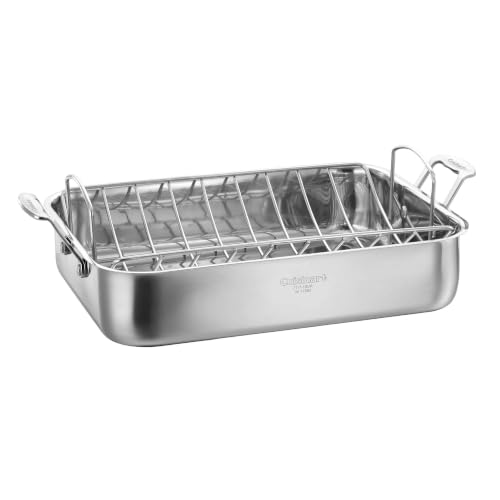
Cuisinart Chef's Classic 16 In. Roasting Pan with Rack, 7117-16URP1 | Pure aluminum encapsulated base for even heat, oven safe, uncoated stainless steel roaster pan with rack
$51.25
Check price on Amazon: Cuisinart Chef's Classic 16 In. Roasting Pan with Rack, 7117-16URP1 | Pure aluminum encapsulated base for even heat, oven safe, uncoated stainless steel roaster pan with rack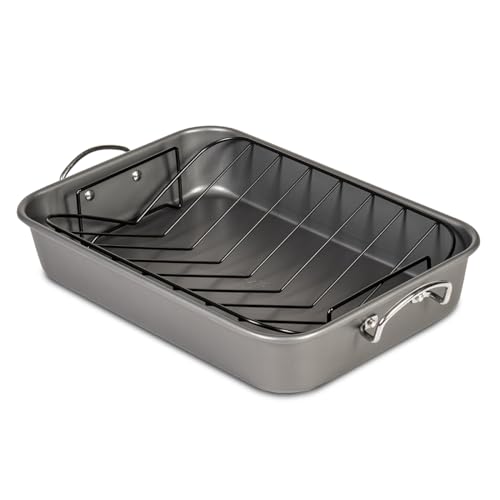
Glad Roasting Pan Nonstick Heavy Duty Metal Bakeware with Rack | 15 x 10.3 inch Large Oven Roaster Tray for Baking Turkey, Chicken, and Veggies
$21.05
Check price on Amazon: Glad Roasting Pan Nonstick Heavy Duty Metal Bakeware with Rack | 15 x 10.3 inch Large Oven Roaster Tray for Baking Turkey, Chicken, and Veggies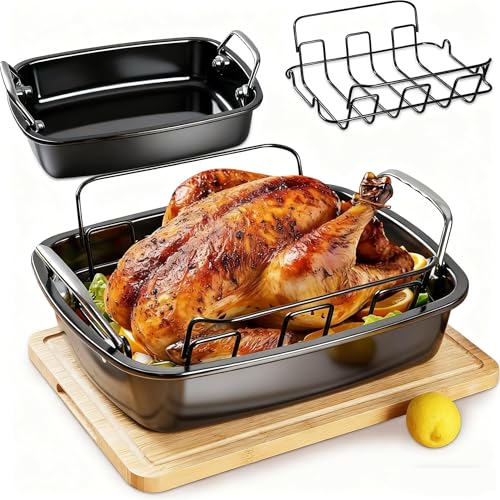
25 lb Nonstick Turkey Roasting Pan Kit with Rack, 17in Black, Easy to Clean | Heavy Carbon Steel Roaster with Removable Rack, Deep Sides, Nonstick Finish, and 450°F Oven-Safe Performance
$46.92
Check price on Amazon: 25 lb Nonstick Turkey Roasting Pan Kit with Rack, 17in Black, Easy to Clean | Heavy Carbon Steel Roaster with Removable Rack, Deep Sides, Nonstick Finish, and 450°F Oven-Safe PerformanceNonstick Turkey Roasting Pan with Rack - 17×13 Inch Extra Large Roaster Pan, Deep Turkey Tray for Oven, U-Shaped Rack, Wider Handles, Ideal for Ovens, Thanksgiving, and Christmas
$39.99
Check price on Amazon: Nonstick Turkey Roasting Pan with Rack - 17×13 Inch Extra Large Roaster Pan, Deep Turkey Tray for Oven, U-Shaped Rack, Wider Handles, Ideal for Ovens, Thanksgiving, and ChristmasCuisinart Chef's Classic 16 In. Roasting Pan with Rack, 7117-16URP1 | Pure aluminum encapsulated base for even heat, oven safe, uncoated stainless steel roaster pan with rack
$51.25
Check price on Amazon: Cuisinart Chef's Classic 16 In. Roasting Pan with Rack, 7117-16URP1 | Pure aluminum encapsulated base for even heat, oven safe, uncoated stainless steel roaster pan with rackGlad Roasting Pan Nonstick Heavy Duty Metal Bakeware with Rack | 15 x 10.3 inch Large Oven Roaster Tray for Baking Turkey, Chicken, and Veggies
$21.05
Check price on Amazon: Glad Roasting Pan Nonstick Heavy Duty Metal Bakeware with Rack | 15 x 10.3 inch Large Oven Roaster Tray for Baking Turkey, Chicken, and Veggies25 lb Nonstick Turkey Roasting Pan Kit with Rack, 17in Black, Easy to Clean | Heavy Carbon Steel Roaster with Removable Rack, Deep Sides, Nonstick Finish, and 450°F Oven-Safe Performance
$46.92
Check price on Amazon: 25 lb Nonstick Turkey Roasting Pan Kit with Rack, 17in Black, Easy to Clean | Heavy Carbon Steel Roaster with Removable Rack, Deep Sides, Nonstick Finish, and 450°F Oven-Safe PerformancePrices and availability are accurate as of November 21, 2026, 2:35 PM UTC and are subject to change.
USDA thawing times by weight
USDA answers how long to thaw a turkey with two tables, one for the refrigerator and one for cold water. Both are approximate. When you plan, use the long end: a turkey that thaws early can wait in the fridge (see below), while one that is still icy on the morning you cook it cannot be smoked.
| Turkey weight | Refrigerator (40 °F or below) | Cold water (change every 30 min) |
|---|---|---|
| 4 to 12 pounds | 1 to 3 days | 2 to 6 hours |
| 12 to 16 pounds | 3 to 4 days | 6 to 8 hours |
| 16 to 20 pounds | 4 to 5 days | 8 to 10 hours |
| 20 to 24 pounds | 5 to 6 days | 10 to 12 hours |
USDA's handling notes for each method matter as much as the times:
- Refrigerator: keep the turkey in its original wrapper and set it on a tray or in a pan to catch juices that leak.
- Cold water: wrap the turkey securely so water cannot leak in, submerge it in cold tap water, and change the water every 30 minutes. Cook it immediately after it is thawed, and do not refreeze it.
- Microwave: follow your owner's manual for size and power, and cook the turkey immediately (details in the FAQ below).
Other published thawing rates
Turkey producers and grill makers print their own rules of thumb, and they do not all match USDA. Every one falls inside USDA's range, but they sit at different ends of it:
| Source | Refrigerator | Cold water |
|---|---|---|
| USDA FSIS | 24 hours per 4 to 5 lb | 30 min per lb |
| Butterball | At least one day per 4 lb | 30 min per lb |
| Traeger | 24 hours per 5 lb | (not stated) |
| Pit Boss | About 24 hours per 5 lb (12–14 lb bird: 3–4 days) | Roughly 30 min per lb |
| Camp Chef | 6 hours per lb | 30 min per lb |
Cold water is 30 minutes per pound everywhere. For the fridge, Butterball and Camp Chef both work out to USDA's slow end (4 pounds a day), Traeger and Pit Boss to its quick end (5 pounds a day). Planning on 4 pounds a day satisfies every source on this list.
When to start thawing for Thanksgiving on November 26, 2026
Knowing how long to thaw a turkey only helps if you turn it into a date. Thanksgiving 2026 falls on Thursday, November 26. The dates below count back from Thursday morning using the long end of each USDA refrigerator band, so the bird is fully thawed by the time you light the smoker or heat the oven. A weight that sits exactly on a band edge (12, 16 or 20 lb) takes the longer band. Move the turkey from the freezer to the fridge on the morning of the date shown.
| Turkey weight | USDA fridge time | Move to the fridge by | Earliest it may be thawed | Cold-water backup (USDA) |
|---|---|---|---|---|
| 4 to under 12 lb | 1 to 3 days | Monday, Nov 23 | Tuesday, Nov 24 | 2 to 6 hours |
| 12 to under 16 lb | 3 to 4 days | Sunday, Nov 22 | Wednesday, Nov 25 | 6 to 8 hours |
| 16 to under 20 lb | 4 to 5 days | Saturday, Nov 21 | Wednesday, Nov 25 | 8 to 10 hours |
| 20 to 24 lb | 5 to 6 days | Friday, Nov 20 | Wednesday, Nov 25 | 10 to 12 hours |
In every row the quick-end finish is one or two days before Thursday, which is exactly how long USDA says a thawed turkey can stay in the refrigerator. Starting earlier than the date shown can run past that window, so do not add a spare day.
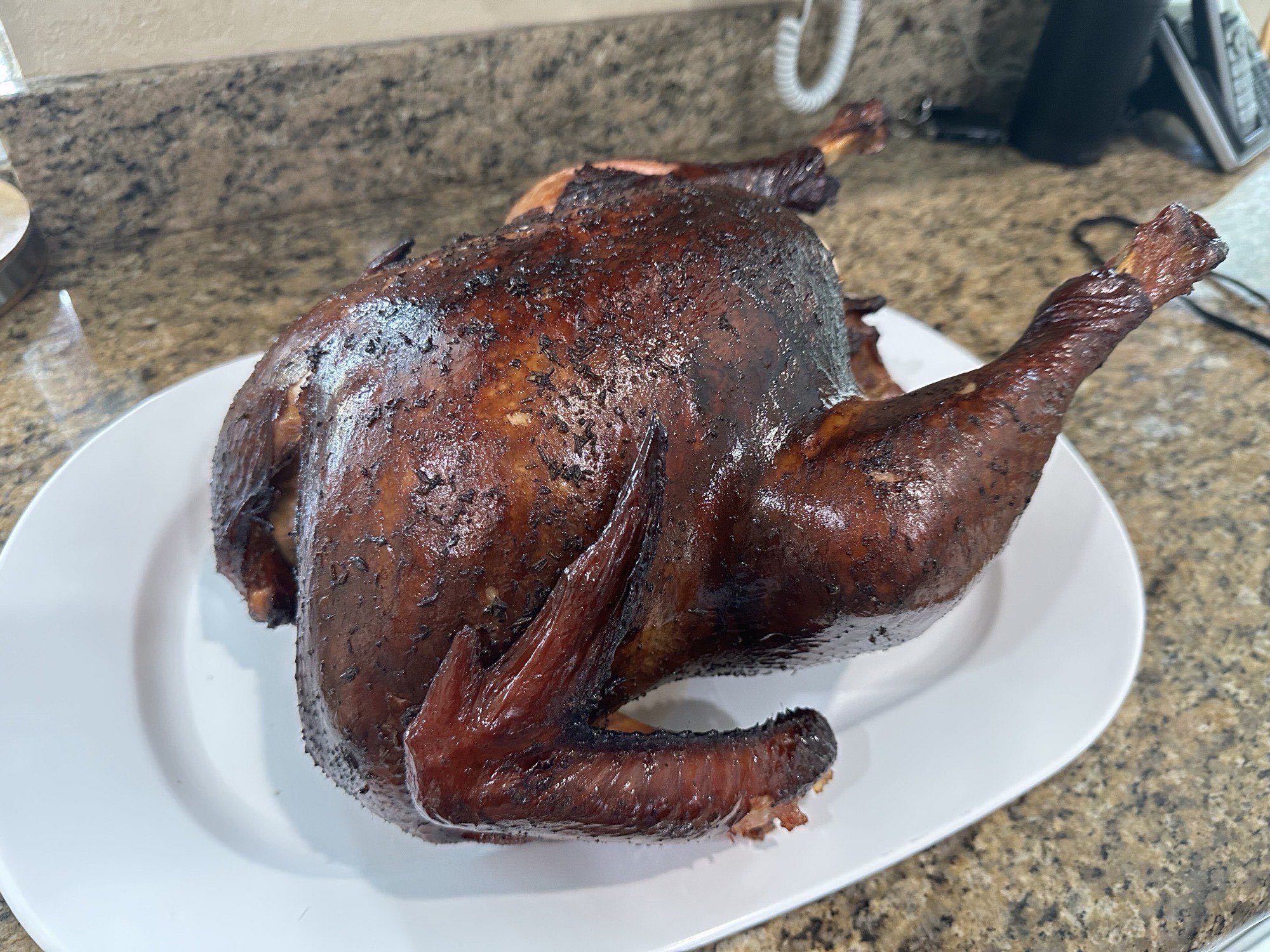
If you are smoking, the bird also has to be on the smoker early. An illustrative 14 lb turkey smoked at 250 °F for a 4 pm meal goes on by 8:30 am (the full timeline is on the how long to smoke a turkey page), so "thawed by Thursday" means thawed by breakfast. For buying the right size, the turkey per person page has USDA's 1 pound per person rule.
Still frozen the day before, or the morning of?
USDA gives a different answer depending on how much time is left.
The day before: switch to cold water
Cold water is the fast method USDA lists, at about 30 minutes per pound. Keep the bird in a leak-proof wrapper, submerge it in cold tap water, and change the water every 30 minutes. Because USDA says to cook a cold-water-thawed turkey immediately after it is thawed, time the soak so it finishes when you are ready to cook, not the night before. A 20 to 24 lb bird needs 10 to 12 hours this way, so it is a full day of water changes.
The morning of: you cannot smoke it, but you can roast it
USDA's Smoking Meat and Poultry page is direct: completely thaw meat or poultry before smoking. Smoking uses low temperatures, so a frozen bird would take too long to thaw in the smoker and linger in the Danger Zone, 40 to 140 °F, where bacteria multiply.
An oven is different. USDA states that it is safe to cook a turkey from the frozen state, and that the cooking time will take at least 50 percent longer than for a fully thawed turkey. Remove the giblet packages partway through cooking, carefully, with tongs or a fork. USDA's oven timetable is for 325 °F, and the "at least 50 percent longer" rule applied to it looks like this:
| Weight | Thawed (USDA) | From frozen: at least |
|---|---|---|
| 8 to 12 pounds | 2¾ to 3 hours | 4⅛ to 4½ hours |
| 12 to 14 pounds | 3 to 3¾ hours | 4½ to 5⅝ hours |
| 14 to 18 pounds | 3¾ to 4¼ hours | 5⅝ to 6⅜ hours |
| 18 to 20 pounds | 4¼ to 4½ hours | 6⅜ to 6¾ hours |
| 20 to 24 pounds | 4½ to 5 hours | 6¾ to 7½ hours |
"At least" is USDA's wording; the thermometer decides. The bird is done at 165 °F in the innermost part of the thigh and wing and the thickest part of the breast. USDA does not publish a separate method for a turkey that is only partly frozen, so treat a partly frozen bird as frozen: it is not ready for the smoker.
Frying is not a rescue for a frozen bird either; the outdoor turkey fryer page explains why the turkey must be fully thawed first.
Why a turkey never thaws on the counter or in the smoker
USDA's smoking page says it plainly: never thaw food at room temperature. Keeping meat and poultry cold while it thaws is what stops harmful bacteria growing, and the refrigerator is the method USDA calls the best. Butterball gives the same instruction on its thawing page: never thaw a turkey at room temperature.
The smoker fails for a related reason. A smoker runs at 225 to 300 °F according to USDA, far below an oven's roasting heat, and a frozen bird would sit too long between 40 and 140 °F while it thaws on the grate. USDA adds that defrosted meat also cooks more evenly, which matters on a smoker where the breast often finishes before the thighs.
The same logic rules out common shortcuts:
- A garage, porch or cooler without ice: USDA's refrigerator method specifies 40 °F or below.
- Warm or hot water: USDA's method is cold tap water, changed every 30 minutes.
- Partly cooking in the microwave to save smoker time: USDA allows this only if the food goes immediately from the microwave to the hot smoker, because partial cooking ahead of time lets bacteria survive and multiply.
How long does a thawed turkey keep?
Here the sources disagree, and the difference is two days:
| Source | Thawed turkey in the refrigerator |
|---|---|
| USDA FSIS | 1 to 2 days |
| Butterball | Up to 4 days (40 °F or below); "use turkey within four days after thawing" |
USDA, the federal food-safety agency, gives the shorter window, and the countdown table above fits inside it. If you rely on Butterball's four days, keep the fridge at 40 °F or below as it specifies.
Refreezing depends on how it was thawed. USDA says a turkey properly thawed in the refrigerator may be refrozen if necessary. A turkey thawed in cold water or in the microwave must be cooked immediately and not refrozen; USDA adds that a microwave-thawed turkey should not be refrigerated either.
Thawing a turkey you will smoke vs. one you will roast
How long to thaw a turkey is the same whichever way you cook it. What changes is how much slack you have when the plan slips.
- Roasting: USDA allows cooking from frozen in the oven, at least 50 percent longer. A late thaw costs you hours, not the meal.
- Smoking: there is no from-frozen option. USDA says to completely thaw before smoking, and Butterball's smoker instructions say the turkey should be completely thawed for even, safe cooking. A late thaw means changing the cooking method.
Smoking also starts earlier in the day. A smoked turkey can take many hours at 225 to 300 °F, so a bird that will be smoked must be thawed by early morning rather than by mid-afternoon. Pit Boss's turkey guide lists "Thaw It Completely" as its first step for the same reason.
For smoking times by weight and temperature, use the smoking time calculator, which plans back from your meal time using the long end of each maker's range. For grills, smokers and the rest of the backyard setup, start from the Outdoor Kitchen Setup home page.
Brined, pre-brined and frozen pre-stuffed turkeys
Brining a frozen turkey: Traeger's turkey guide says you can brine a frozen turkey, provided it is completely thawed first. Brining happens after thawing, so add the brine time on top of the thaw time; Camp Chef puts a wet brine at 12 to 24 hours. Brine in the refrigerator, in line with USDA's rule to marinate in the refrigerator, not on the counter.
Store-bought pre-brined turkeys: the USDA thawing table is by weight and does not list a separate time for pre-brined birds, so use the same table. Traeger's guide points readers to its brining instructions only if they have not bought a pre-brined turkey from the store.
Frozen pre-stuffed turkeys are the exception to everything on this page. USDA says: DO NOT THAW before cooking. Cook from the frozen state and follow the package directions. USDA recommends buying only frozen pre-stuffed turkeys that display the USDA or State mark of inspection, and allowing 1¼ pounds per person instead of 1 pound. USDA also advises against buying fresh pre-stuffed turkeys at all. Because a frozen pre-stuffed bird must be cooked from frozen, it is an oven bird, not a smoker bird.
Stuffing your own bird for the smoker is not advised either: Butterball says "Do not stuff your turkey," and USDA recommends cooking stuffing in a casserole, to 165 °F.
Frequently Asked Questions
01How long does it take to thaw a 20 lb turkey?
02How long to thaw a turkey that weighs 14 pounds?
03Can I thaw a turkey in cold water overnight?
04Can I refreeze a thawed turkey?
05Can I smoke a turkey that is still partly frozen?
06Can I thaw a turkey in the microwave?
This guide is part of Smoke Times: Calculator and Chart for Every Cut — the hub covering every smoking & bbq guide on Outdoor Kitchen Setup.
Related Guides
Written and edited by Sukie
Sukie is the editor behind Outdoor Kitchen Setup. They compile manufacturer specification sheets, published building codes, and industry sizing standards into the measurement and planning guides on this site, and USDA food-safety guidance and smoker makers’ published times into its smoking and turkey calculators. They check every figure against its original source before it goes live. Where a number varies by brand or by local code, the guides say so rather than presenting a single figure as universal.