
Outdoor Kitchen Materials: What Survives Weather and What Only Looks Like It Will
Outdoor kitchen materials get chosen from photographs and judged by weather.
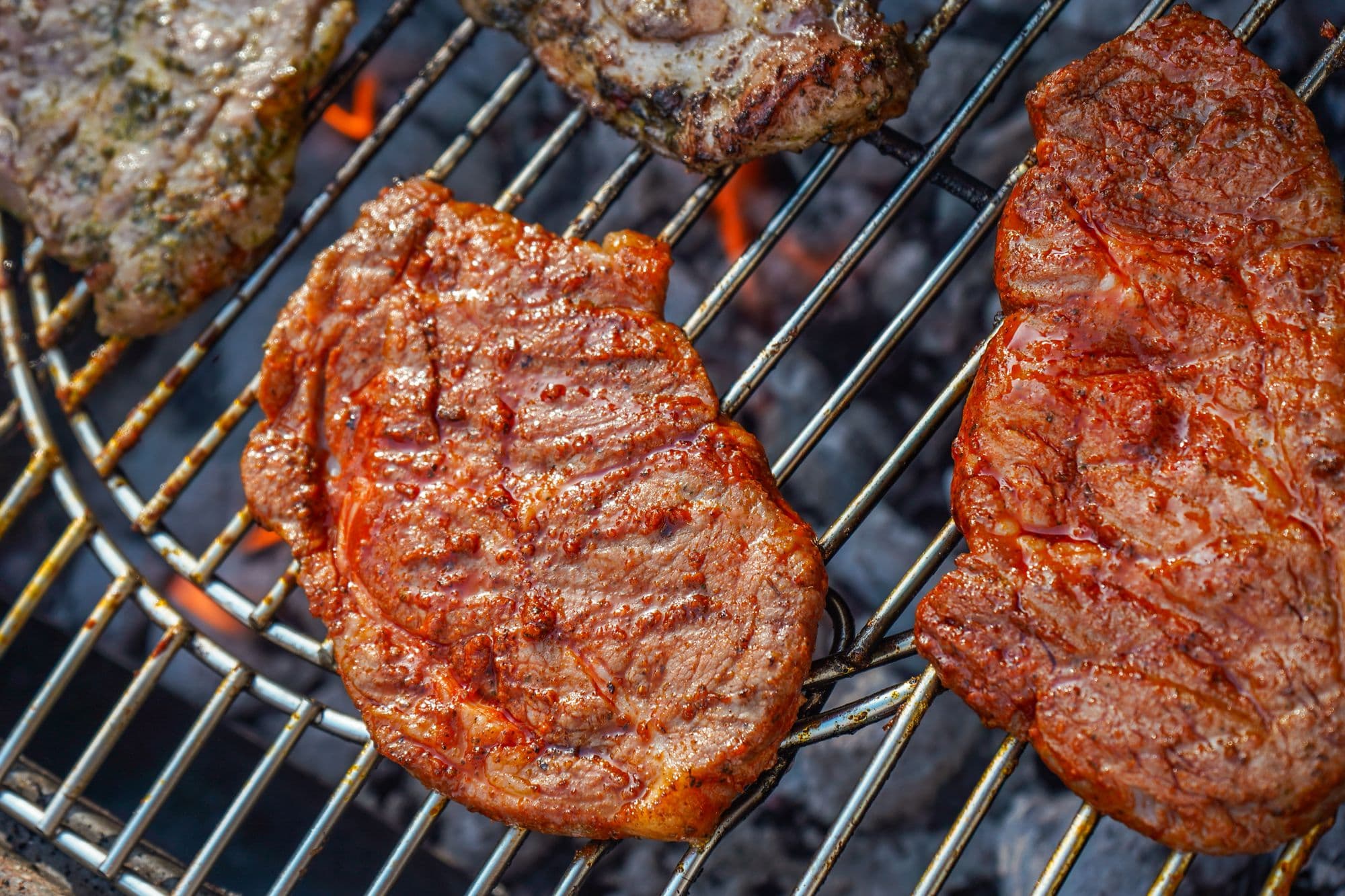
Photo: Dimitri C / Pexels (Pexels License)
Outdoor kitchen materials get chosen from photographs and judged by weather. The gap between those two things is where most outdoor kitchen failures live — a surface that looks superb in a showroom under artificial light and spalls after two winters, or a cabinet finish that is indistinguishable from a better one until a magnet tells you otherwise.
This hub covers the three material decisions that matter — frame, cladding, countertop — and what each climate does to them.
Top picks for this build
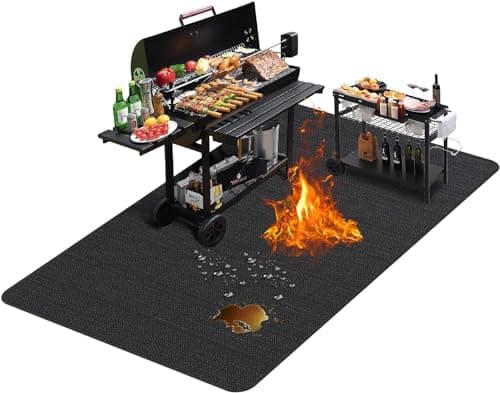
TAOMAND Large 76 x 52 inches Under Grill Mats for Outdoor Grill | BBQ Mat
$29.98
Check price on Amazon: TAOMAND Large 76 x 52 inches Under Grill Mats for Outdoor Grill | BBQ Mat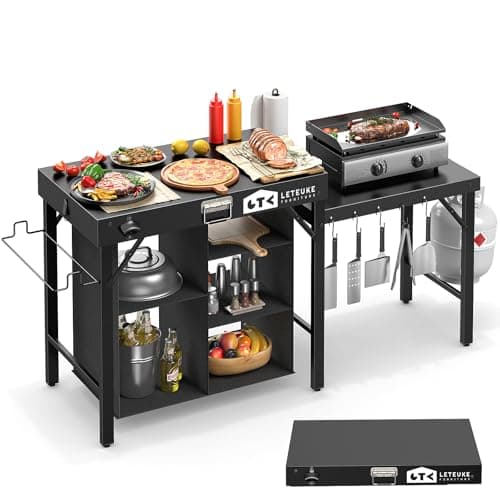
Grill Table for Blackstone Griddle Camping Grill Table Foldable Fits Ninja
$139.99
Check price on Amazon: Grill Table for Blackstone Griddle Camping Grill Table Foldable Fits Ninja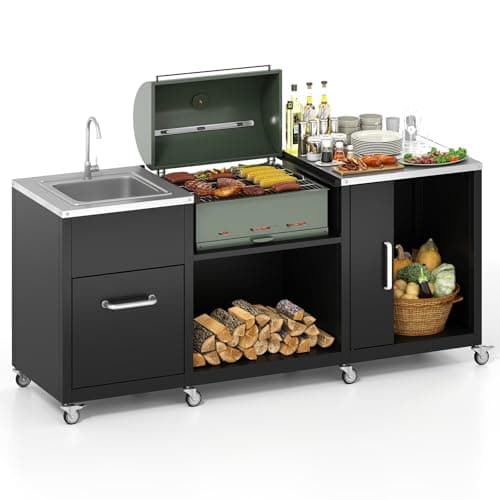
Happygrill 80” Outdoor Grill Table with Sink & Drainage, Wheels
See price on Amazon
Check price on Amazon: Happygrill 80” Outdoor Grill Table with Sink & Drainage, Wheels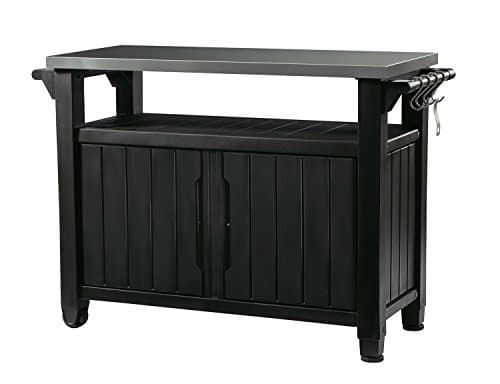
Keter Unity XL Portable Outdoor Table with Stainless Steel Top for Kitchen Prep and Outdoor Storage Cabinet for Grilling Accessories, Dark Grey
$237.99
Check price on Amazon: Keter Unity XL Portable Outdoor Table with Stainless Steel Top for Kitchen Prep and Outdoor Storage Cabinet for Grilling Accessories, Dark GreyTAOMAND Large 76 x 52 inches Under Grill Mats for Outdoor Grill | BBQ Mat
$29.98
Check price on Amazon: TAOMAND Large 76 x 52 inches Under Grill Mats for Outdoor Grill | BBQ MatGrill Table for Blackstone Griddle Camping Grill Table Foldable Fits Ninja
$139.99
Check price on Amazon: Grill Table for Blackstone Griddle Camping Grill Table Foldable Fits NinjaHappygrill 80” Outdoor Grill Table with Sink & Drainage, Wheels
See price on Amazon
Check price on Amazon: Happygrill 80” Outdoor Grill Table with Sink & Drainage, WheelsKeter Unity XL Portable Outdoor Table with Stainless Steel Top for Kitchen Prep and Outdoor Storage Cabinet for Grilling Accessories, Dark Grey
$237.99
Check price on Amazon: Keter Unity XL Portable Outdoor Table with Stainless Steel Top for Kitchen Prep and Outdoor Storage Cabinet for Grilling Accessories, Dark GreyPrices and availability are accurate as of October 22, 2026, 11:45 AM UTC and are subject to change.
Three Decisions, In Order of Consequence
The frame is the decision you can never revisit. It is buried inside the finished island, and if it fails the whole kitchen comes apart. Get this right and everything else is repairable.
The countertop is the surface you touch, look at, and put hot pans on. It is replaceable, but replacing it is destructive and expensive.
The cladding — the stone, tile, stucco, or panel on the outside — is the most visible and the least consequential. It is the one to economise on if something has to give.
People routinely invert this order, spending heavily on cladding while framing in whatever the kit came with.
There is a fourth material decision that sits underneath all three and is easy to overlook: what the kitchen stands on. A slab, a paver bed, or a deck is a material choice with its own weather behaviour, and it determines whether water drains away from the island or sits against its base. An otherwise well-specified kitchen on a surface that ponds will fail from the bottom up, and that failure is both invisible early and expensive late.
Frames: Steel Stud, Block, or Timber
Galvanised steel stud is the modern default. Light, fast, dimensionally accurate, does not rot, and takes cement board directly. Confirm it is genuinely galvanised rather than painted mild steel, because painted steel inside a damp island is a slow failure you will not see until it matters.
Concrete block is the traditional answer and the most durable, at the cost of weight, time, and a footing designed for the load. In freeze regions the footing must reach below the frost line or the island will move.
Timber is the one to be careful with. It can work — pressure-treated, well-detailed, well-drained — but it introduces a combustible enclosure, which means built-in appliances require insulated jackets, and it is the frame material most likely to be found rotted during a renovation.
See outdoor kitchen frame and cinder block outdoor kitchen.
Whatever frame you choose, the detail that decides its life is what happens where water gets in — and water always gets in. A frame that can drain and dry survives; one that holds moisture against metal or timber does not. That means weep holes at the base, a slab beneath that falls away rather than towards the centre, and ventilation openings that are not blocked by the cladding. These cost nothing at build time and cannot be added afterwards without opening the island.
Fasteners deserve the same attention as the frame itself. Stainless or hot-dip galvanised fixings in a galvanised frame; plain zinc-plated screws will corrode long before the frame does and become the failure point. This is a small line item that is easy to economise on by accident, because fixings are bought by whoever is on site rather than specified in advance.
Countertops: What Works Outdoors
| Material | Installed cost / sq ft | Outdoor verdict |
|---|---|---|
| Granite | $50–$120 | The reliable default — weather-stable, widely available |
| Porcelain slab | $70–$150 | Excellent — UV-stable, no sealing |
| Concrete | $60–$120 | Very good if properly sealed and maintained |
| Quartzite | $90–$200 | Good — note this is not engineered quartz |
| Tile | $25–$60 | Cheapest; grout is a real maintenance commitment |
| Engineered quartz | $60–$130 | Avoid outdoors — resin binder is not UV-stable |
The single most common material mistake in outdoor kitchens is engineered quartz. It is an outstanding indoor product, it looks identical to quartzite in a showroom, and most manufacturers void the warranty on outdoor installation because the resin binder discolours under UV. The names are confusingly similar; quartzite is a natural stone and is fine outdoors, quartz is not.
See countertops, concrete countertops, and countertop height.
Edge profile and thickness are worth a moment, because they affect durability outdoors rather than just appearance. Thicker slabs — three centimetres rather than two — resist cracking around cutouts, which matters a great deal when a large rectangular hole has been cut for a grill. Sharp square edges chip more readily than a slightly eased or bullnosed profile, and outdoors those chips collect water and dirt in a way indoor chips do not. A modest eased edge in a thicker slab is the durable choice, and it costs very little more than the alternative.
The Stainless Grade Question
Doors, drawers, and appliance housings are sold as “stainless steel” without saying which kind, and the difference decides how long they last.
- 430 — magnetic, cheaper, and rusts outdoors. Common in budget kits.
- 304 — non-magnetic, roughly 40 percent more, and the sensible minimum outdoors.
- 316 — marine grade, worth the premium within a few miles of salt water.
The test costs nothing: put a fridge magnet on the door face. If it sticks firmly, it is 430. Powder-coated aluminium is a legitimate alternative that does not rust at all, comes in colours, and costs less than 304 — the trade-off is that it dents where stainless would not.
A related material worth knowing about because it is increasingly common in kits: marine-grade polymer, sold under various trade names. It is a solid plastic board that does not rust, rot, or need sealing, and it takes colour throughout so scratches do not show a different substrate underneath. It performs genuinely well outdoors and is a reasonable alternative to stainless for doors and cabinet fronts. Its weaknesses are heat — it must be kept away from grill hot zones per the manufacturer's clearances — and thermal movement, which means fixings need to allow for expansion rather than clamping it rigid.
Freeze-Thaw Regions
Water gets into porous materials, freezes, expands, and takes the surface apart. This is what destroys outdoor kitchens in cold climates, and it targets specific materials.
At risk: unsealed concrete, porous natural stone, tile grout, and any cladding with an unsealed joint that can hold water. Frost-resistant tile is tested to ISO 10545-12, which cycles saturated tiles between freezing and thawing — look for that rating rather than a marketing claim.
The other freeze-region essentials are a footing below the frost line, drainage that moves water away from the island rather than into it, and plumbing that can be fully drained before winter.
Freeze regions also punish rigid connections between materials that expand at different rates. Stone, metal, and cement board all move by different amounts across a hundred-degree annual temperature swing, and a joint that clamps them rigidly together will eventually crack something. Flexible sealant at material transitions rather than rigid grout or mortar, and fixings that allow a little movement, are what prevent the hairline cracks that appear along countertop-to-cladding joints after the second or third winter.
Coastal and Desert Regions
Coastal. Salt is relentless and finds fasteners first. Specify 316 stainless where you can afford it, and be aware that sealed cabinets can perform worse than ventilated ones near the sea, because they trap humid salt air against metal without letting it dry. Rinse exposed stainless with fresh water periodically — it genuinely extends life.
Desert. UV is the enemy rather than water. Dark stone reaches temperatures that are unpleasant to touch, polymer and resin-based materials degrade, and thermal cycling between hot days and cold nights stresses rigid joints. Light-coloured stone, UV-stable materials, and shade over the working area are the answers.
The full index of material and surface guides follows. See also weather protection for covers and roofing, components for what mounts into these materials, and the homepage to start from the beginning.
Humid subtropical regions deserve their own note, because they combine the problems rather than presenting one. High humidity, heavy rain, intense UV, and in many areas salt air all act at once, and organic growth becomes a maintenance issue that colder or drier regions do not face — mildew on grout, algae on shaded stone, and mould inside sealed cabinets. Ventilated storage, light-coloured surfaces that show growth early, and a cleaning routine that is monthly rather than annual are what keep a kitchen looking maintained in those climates.
Sealing and Maintenance, Briefly
Most outdoor countertop failures are maintenance failures rather than material failures. Natural stone and concrete need periodic sealing; how often depends on the sealer and the exposure, but annually is a safe default in a wet or freezing climate.
A simple test tells you when: drop water on the surface. If it beads, the sealer is working. If it darkens the stone, it is time to reseal. That test takes ten seconds and prevents the staining that makes people replace a countertop that was structurally fine.
Grout needs the same attention and gets less of it, which is the main reason tile underperforms outdoors relative to its cost.
One sealing mistake worth naming, because it is common and it makes things worse rather than better: sealing a surface that is already wet or stained. A sealer is a barrier, and applying one over trapped moisture or an existing stain locks the problem in permanently. Clean thoroughly, let the surface dry completely — which after rain can mean several dry days for dense stone — and only then seal. In practice this means sealing is a job for a settled dry spell, not a job for the weekend it happens to be convenient.
A Materials Budget That Fails Gracefully
If the budget will not stretch to everything, spend in this order: frame first, countertop second, cladding last.
A galvanised steel or block frame with a granite top and plain stucco cladding will outlast a timber frame with a quartz top and expensive stacked stone, and it will cost less. The cladding can be upgraded in ten years without disturbing anything structural; the frame cannot be touched without demolishing the kitchen.
This is the opposite of how outdoor kitchens are usually sold, because cladding is what photographs well.
A final way to think about the materials budget: ask which decisions are reversible. Cladding is reversible. A countertop is expensively reversible. A frame is not reversible at all, and neither is a footing. Spend in inverse proportion to reversibility, and you will end up with a kitchen that ages well and can be refreshed rather than one that photographs well and has to be demolished.
Frequently Asked Questions
01What is the best countertop material for an outdoor kitchen?
02What stainless steel is best for an outdoor kitchen?
Every materials & surfaces guide on this site
6 guides, each covering one decision in detail.
- Cinder Block Outdoor Kitchen
Cinder block outdoor kitchen guide: CMU sizing, S-type mortar ratios, rebar layout, stucco and stone veneer finishes.
- Outdoor Kitchen Concrete Countertops: DIY Forms, Mix Ratios & Finishing Guide for 2026
Outdoor kitchen concrete countertops cost $5 to $15 per square foot in raw materials for DIY pours. Forms, mix ratios, pigments…
- Outdoor Kitchen Countertops: The Definitive Material Comparison Guide for 2026
Outdoor kitchen countertops compared head to head: granite, concrete, porcelain, quartzite, soapstone, and stainless on heat, U…
- Outdoor Kitchen Stone: Natural Stone Types, Veneer Options & Cost Comparisons
Outdoor kitchen stone choices compared: flagstone, slate, travertine, and quartzite versus manufactured veneer.
- Outdoor Kitchen Tile: Porcelain, Ceramic & Natural Stone Options for Every Surface
Outdoor kitchen tile selection covering porcelain, ceramic, and natural stone options, frost ratings under 0.5% absorption, mod…
- Outdoor Stainless Steel Kitchen
Outdoor stainless steel kitchen guide: 304 vs 316 grade explained, brushed vs polished finishes, top brands Danver and Werever,…
Related Guides
Written and edited by Sukie
Sukie is the editor behind Outdoor Kitchen Setup. They compile manufacturer specification sheets, published building codes, and industry sizing standards into the measurement and planning guides on this site, and check every figure against its original source before it goes live. Where a number varies by brand or by local code, the guides say so rather than presenting a single figure as universal.