Outdoor Kitchen Cooking Equipment: Grills, Griddles, Smokers, and Pizza Ovens
Outdoor kitchen cooking equipment falls into six families, and the most common expensive mistake is buying three of them when you will only ever use one properly.
Photo: Derwin Edwards / Pexels (Pexels License)
Outdoor kitchen cooking equipment falls into six families, and the most common expensive mistake is buying three of them when you will only ever use one properly. Every family cooks a different way, and the honest question is not which is best but which matches the food you actually make on a Tuesday.
This hub compares the families, covers what each demands from the build, and indexes every grill and cooking guide on the site.
Top picks for this build
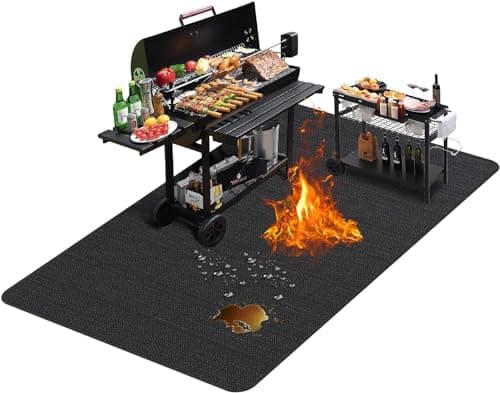
TAOMAND Large 76 x 52 inches Under Grill Mats for Outdoor Grill | BBQ Mat
$29.98
Check price on Amazon: TAOMAND Large 76 x 52 inches Under Grill Mats for Outdoor Grill | BBQ Mat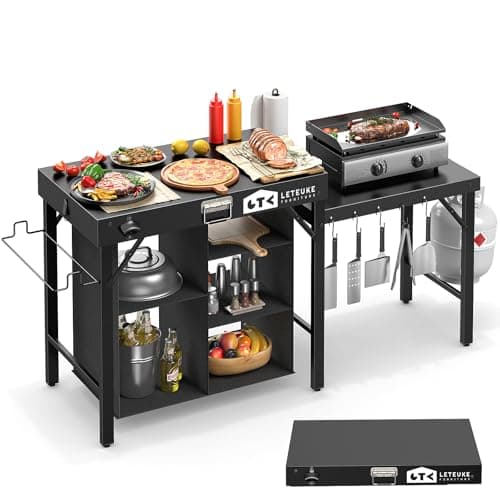
Grill Table for Blackstone Griddle Camping Grill Table Foldable Fits Ninja
$139.99
Check price on Amazon: Grill Table for Blackstone Griddle Camping Grill Table Foldable Fits Ninja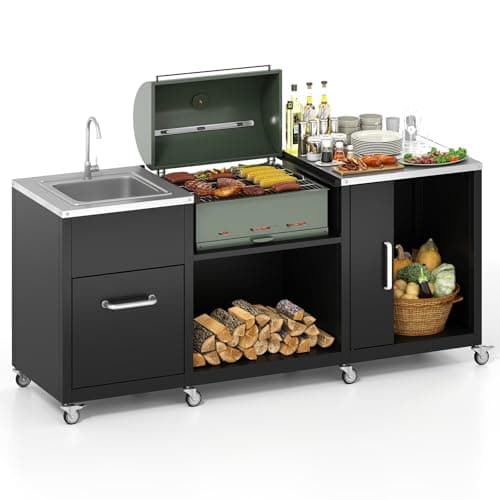
Happygrill 80” Outdoor Grill Table with Sink & Drainage, Wheels
See price on Amazon
Check price on Amazon: Happygrill 80” Outdoor Grill Table with Sink & Drainage, Wheels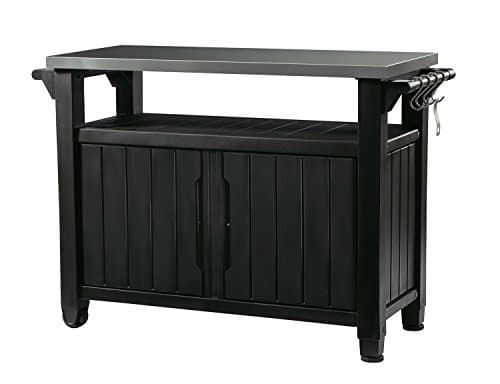
Keter Unity XL Portable Outdoor Table with Stainless Steel Top for Kitchen Prep and Outdoor Storage Cabinet for Grilling Accessories, Dark Grey
$237.99
Check price on Amazon: Keter Unity XL Portable Outdoor Table with Stainless Steel Top for Kitchen Prep and Outdoor Storage Cabinet for Grilling Accessories, Dark Grey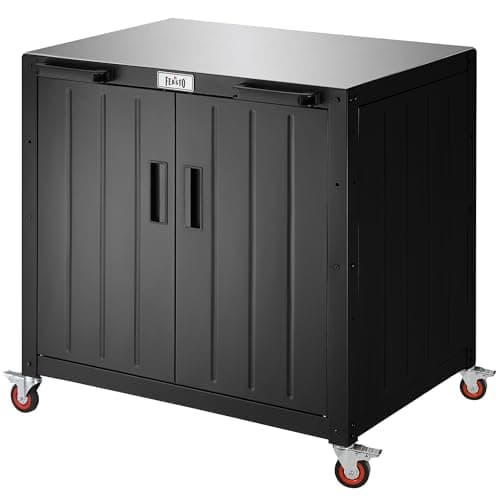
Feasto Modular Outdoor Kitchen Island with Storage and Stainless Steel Top
$229.00
Check price on Amazon: Feasto Modular Outdoor Kitchen Island with Storage and Stainless Steel TopTAOMAND Large 76 x 52 inches Under Grill Mats for Outdoor Grill | BBQ Mat
$29.98
Check price on Amazon: TAOMAND Large 76 x 52 inches Under Grill Mats for Outdoor Grill | BBQ MatGrill Table for Blackstone Griddle Camping Grill Table Foldable Fits Ninja
$139.99
Check price on Amazon: Grill Table for Blackstone Griddle Camping Grill Table Foldable Fits NinjaHappygrill 80” Outdoor Grill Table with Sink & Drainage, Wheels
See price on Amazon
Check price on Amazon: Happygrill 80” Outdoor Grill Table with Sink & Drainage, WheelsKeter Unity XL Portable Outdoor Table with Stainless Steel Top for Kitchen Prep and Outdoor Storage Cabinet for Grilling Accessories, Dark Grey
$237.99
Check price on Amazon: Keter Unity XL Portable Outdoor Table with Stainless Steel Top for Kitchen Prep and Outdoor Storage Cabinet for Grilling Accessories, Dark GreyFeasto Modular Outdoor Kitchen Island with Storage and Stainless Steel Top
$229.00
Check price on Amazon: Feasto Modular Outdoor Kitchen Island with Storage and Stainless Steel TopPrices and availability are accurate as of October 22, 2026, 11:45 AM UTC and are subject to change.
The Six Families
| Type | Best at | Weak at | Built-in? | Typical cost |
|---|---|---|---|---|
| Gas grill | Weeknight speed, control | Smoke flavour | Yes — the default | $900–$5,000 |
| Charcoal | Flavour, high heat | Time to ready, mess | Sometimes | $200–$2,000 |
| Kamado (ceramic) | Low-and-slow and searing | Weight, cutout depth | Yes, with a table | $700–$2,500 |
| Pellet smoker | Hands-off smoking | Searing | Increasingly | $500–$2,500 |
| Flat-top griddle | Breakfast, volume, smash burgers | Anything needing grates | Yes | $300–$1,800 |
| Pizza oven | Very high heat, fast bakes | Everything else | Insert or countertop | $300–$5,000+ |
The pairing that covers the widest range of real cooking is a gas grill plus a griddle. Gas handles weeknights and anything on grates; the griddle handles breakfast, onions, smash burgers, and volume cooking for a crowd — which is most of what people actually do outdoors beyond steaks.
The pairing people buy but under-use is gas plus a side burner. See components for why.
Two families are missing from that table because they sit slightly outside the built-in world, and both deserve consideration. Electric grills are the only realistic option on many balconies and in some rental agreements and condominium rules, where open flame is prohibited outright; modern ones cook considerably better than their reputation suggests, though they will not match gas or charcoal for searing. Portable and tabletop cookers — a small gas grill, a compact pizza oven, a hibachi — are worth keeping even if you build a full kitchen, because they travel, and because they let you cook somewhere else in the garden when you feel like it.
Neither belongs in a built-in cutout, which is exactly why they are easy to overlook when planning an island. Plan a place to store them rather than assuming the built-in equipment replaces them.
What Each Demands From the Build
Cooking equipment is where cutout, clearance, and structure requirements enter the design, and they differ sharply by family.
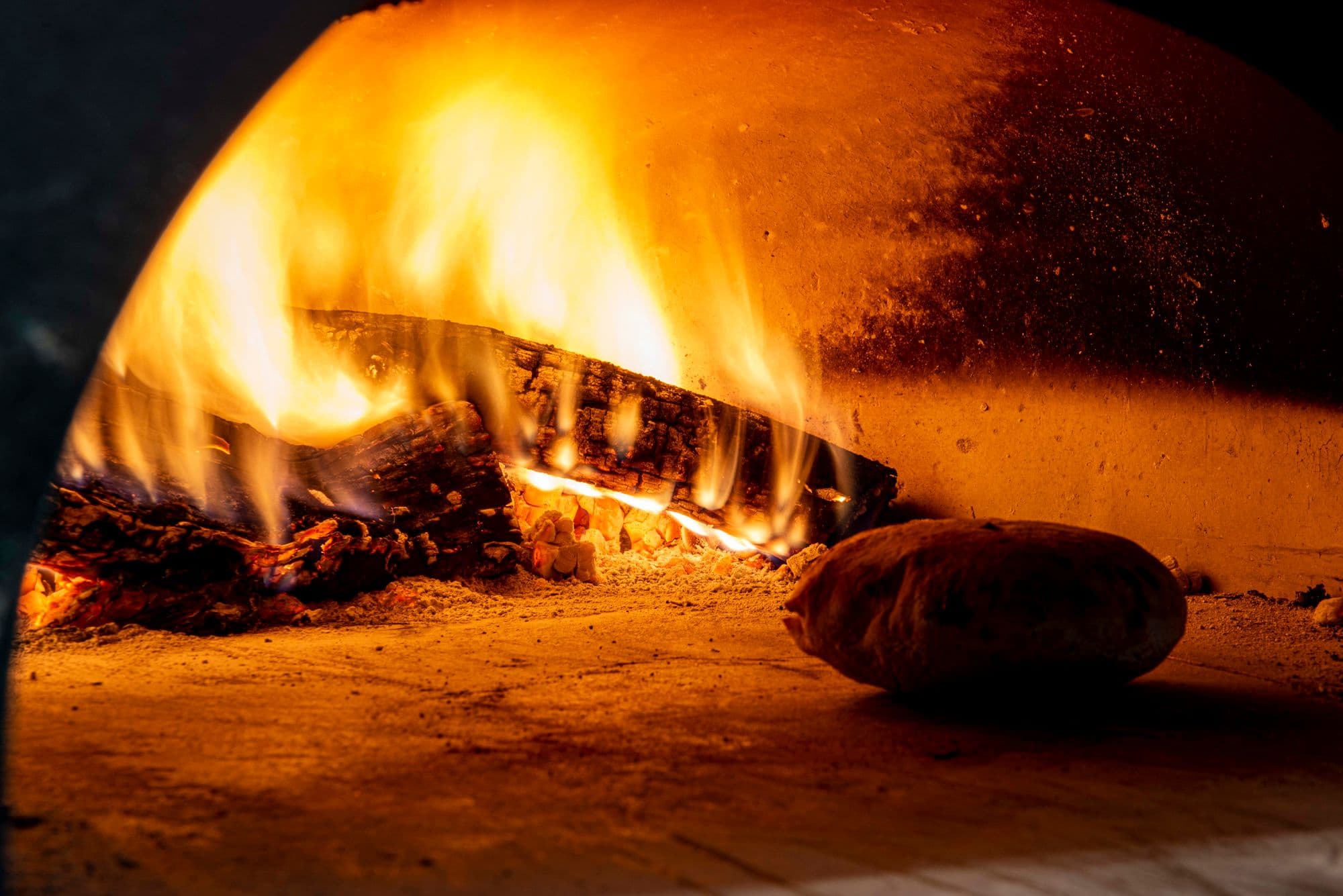
Gas grills drop into a cutout that is typically 21 to 24 inches deep and needs 9 to 13 inches of clear space below. Nothing in your frame may cross that envelope. If any part of the enclosure is combustible you need the manufacturer's insulated jacket.
Kamados are heavy — often 150 to 250 pounds before charcoal — and deep. They need a purpose-built table or a reinforced bay, and their ceramic exterior has its own clearance requirements that differ from a metal grill's.
Pellet smokers need electrical power, which surprises people. A pellet grill in a built-in bay needs a GFCI-protected receptacle within reach, and the hopper needs access for loading.
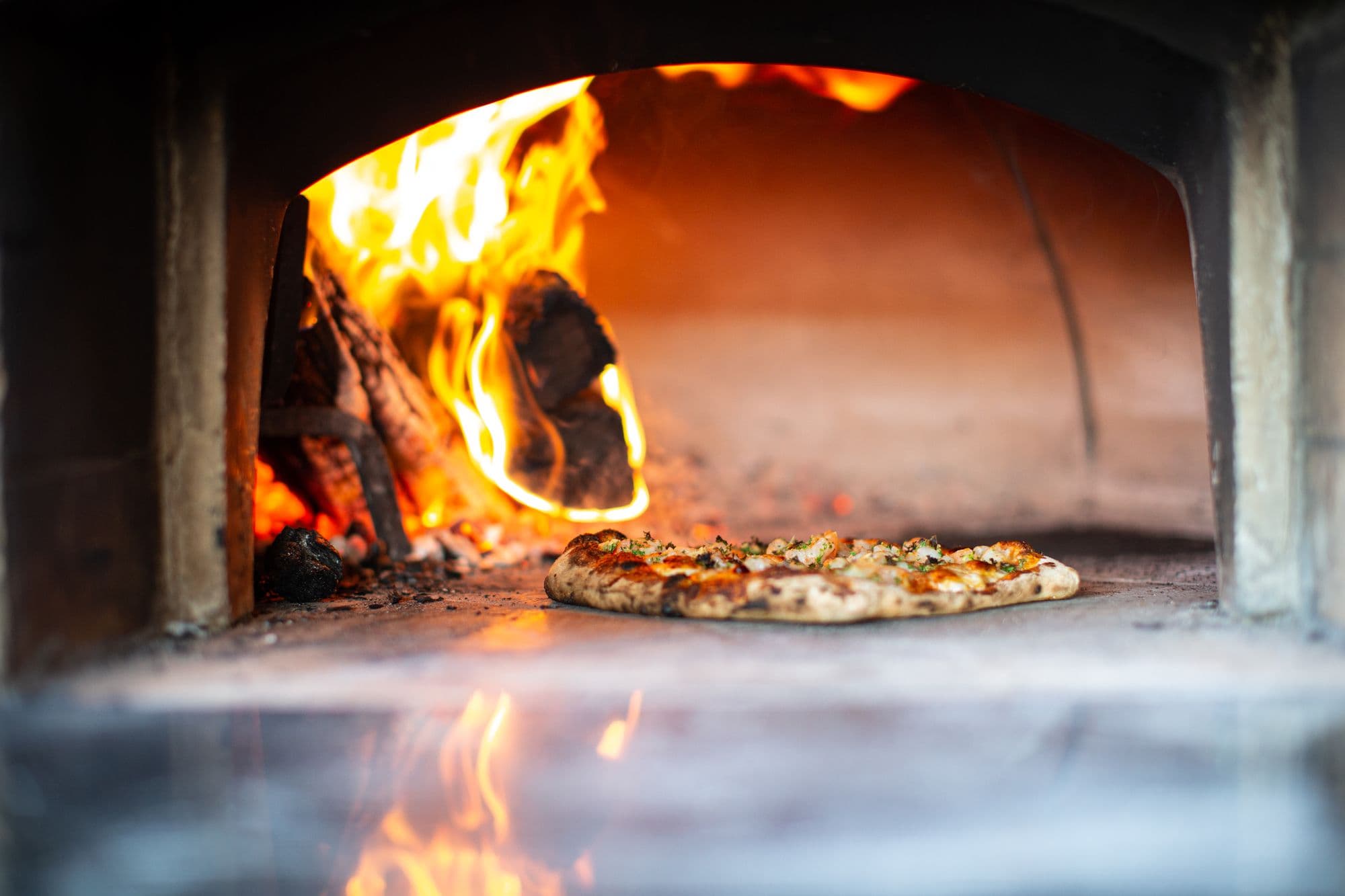
Pizza ovens are governed by mouth height rather than counter height, and wood-fired versions need a properly terminated flue if they sit under any cover.
Detail: grill cutout dimensions and pizza oven dimensions.
One demand that applies across every family and is routinely underestimated: access for service and replacement. Grills, smokers, and ovens are the components most likely to be replaced during the life of the island, and a bay built so tightly that the appliance cannot be lifted out without demolishing masonry turns a straightforward swap into a construction project. Leave a route out. It costs nothing at build time and it is the difference between a two-hour replacement and a two-thousand-dollar one.
The same logic applies to gas connections. A shut-off valve that is accessible without dismantling anything, and a connection you can reach, means service and replacement stay simple. Burying the connection behind fixed panels is a decision that looks tidy on day one and is regretted at the first repair.
Fuel: The Decision Behind the Decision
Natural gas means never running out, and it is the right answer if a line can reach the island. It requires a licensed connection and a permit, and it fixes the grill in place permanently.
Propane is flexible and needs no trench, but the cylinder has to live somewhere ventilated and be replaceable. Requirements for LP-gas appliance installation are set out in NFPA 58, and enclosures must be vented low because propane is heavier than air and collects at the bottom.
Charcoal and wood need dry storage nearby and an ash disposal plan that is not a plastic bin.
Pellets need dry storage above all — damp pellets swell, jam the auger, and are the most common cause of a pellet grill failing to start.
One point that decides more builds than it should: converting a grill between natural gas and propane is sometimes possible with a manufacturer kit and sometimes not, and the cutout depth occasionally differs between the two variants. Decide fuel before you buy the grill, not after.
A note on fuel quantity that catches people out with propane. A standard 20-pound cylinder runs a mid-size gas grill for roughly eighteen to twenty hours of cooking, which sounds ample and translates to running out mid-cook perhaps twice a season for a regular griller. The two practical answers are keeping a full spare cylinder and fitting a gauge, or running natural gas if a line can reach. Almost nobody regrets the spare cylinder; a great many people have discovered the problem with steaks already on the grates.
How Many Appliances You Actually Need
Most people need one primary cooker and, at most, one secondary. Three built-in cooking appliances in a residential outdoor kitchen is nearly always one more than gets used.
A useful test before adding a second cooker: how many times in the last year did you cook two different things outdoors simultaneously? If the answer is under five, the second appliance is buying you convenience on five occasions at a cost of a thousand dollars and eighteen inches of counter — and that eighteen inches of counter would have been used every single cook.
The exception is genuinely different cooking modes: a gas grill plus a pellet smoker is two appliances doing genuinely different jobs, and people who smoke regularly do use both. A gas grill plus a second gas grill with a side burner is not.
The full index of grill and cooking guides follows. For the structure they mount into see build guides, for sizing see dimensions, and for everything else start at the homepage.
There is one more consideration that argues for fewer appliances rather than more, and it is maintenance. Every cooking appliance outdoors needs cleaning, covering, and winterising, and each one added is another set of grates to scrub, another cover to fit, and another gas or electrical connection to check. People who own three built-in cookers frequently report that two of them are dirty, because maintenance effort scales with appliance count while enthusiasm does not.
If in doubt, buy one very good appliance rather than two adequate ones. A high-quality grill used four hundred times is a better purchase than two mid-range appliances used two hundred times each, and it occupies less of the counter run that you will use on every single cook.
A last point about sequencing that saves money: buy the cooking equipment before building the island, not after. Everything in this section — cutout dimensions, clearance requirements, weight, whether it needs power, whether the fuel is natural gas or propane — is a property of the specific model you end up with. Designing an island around a category and then choosing a model within it is how people discover that their chosen grill needs an inch more depth than the frame provides.
Having the appliance physically on site while the structure is built costs you some storage space for a few weeks and removes the entire category of fitment error. It is the cheapest insurance available anywhere in an outdoor kitchen project, and it is the single recommendation most consistently ignored.
Frequently Asked Questions
01What is the best cooking setup for an outdoor kitchen?
02Should I use natural gas or propane for an outdoor kitchen?
03Can you convert a grill from propane to natural gas?
04How many grills should an outdoor kitchen have?
05Do pellet grills need electricity in an outdoor kitchen?
06Can a kamado grill be built into an outdoor kitchen?
07What size built-in grill should I get?
08Is a griddle better than a side burner?
09What clearance does a built-in grill need?
10Do I need a vent hood over an outdoor grill?
11How do I store charcoal and pellets outdoors?
Every grills & cooking guide on this site
11 guides, each covering one decision in detail.
- Halloween Cookout Ideas: A Grill, Griddle and Pizza-Oven Menu With a Cook Timeline
Halloween cookout ideas for your grill, griddle or pizza oven: a station-by-station menu, a prep-to-serve timeline, USDA safe t…
- Outdoor BBQ Kitchen: The Complete Guide to Building a Backyard BBQ Paradise
Outdoor BBQ kitchen designs built around smokers, kamados, and pit master workflow. Compare charcoal vs gas, smoke management, …
- Outdoor Kitchen Griddle: Flat-Top Cooking Stations, Sizing & Top Brands for 2026
Outdoor kitchen griddle picks unlock smash burgers, breakfast spreads, and stir-fry. Compare 22-inch inserts to 36-inch built-i…
- Outdoor Kitchen Grill Cutout Dimensions: How to Get the Hole Right the First Time
Outdoor kitchen grill cutout dimensions by nominal grill size — width, depth, height, and the insulated-jacket and combustible …
- Outdoor Kitchen Grill Guide: Built-In vs Freestanding, Gas vs Charcoal & Top Brands
Outdoor kitchen grill picks ranked by fuel type, BTU output, and build quality. Built-in vs freestanding, gas vs charcoal, $800…
- Outdoor Kitchen Pizza Oven Dimensions: Counter Height, Footprint, and Clearance
Outdoor kitchen pizza oven dimensions — countertop footprint, the mouth height that makes launching easy, hearth depth, and cle…
- Outdoor Kitchen Pizza Oven: Wood-Fired vs Gas, Top Brands & Installation
Outdoor kitchen pizza oven picks hit 800 to 950°F to bake Neapolitan pies in 60-90 seconds. Compare Ooni, Gozney, Alfa, Forno B…
- Outdoor Kitchen Smoker: Built-In Smoker Types, Top Brands & Integration Guide for 2026
Outdoor kitchen smoker comparison covering offset, pellet, kamado, and drum builds, plus insulated firebox specs and clearances…
- Outdoor Kitchen With Offset Smoker: Integration, Clearance & Design Guide
Outdoor kitchen with offset smoker: clearance requirements, built-in versus freestanding placement, firebox access.
- Outdoor Kitchen With Traeger and Blackstone: Setup, Layout & Integration Guide
Outdoor kitchen with Traeger and Blackstone setup: how to integrate a pellet grill and flat top griddle into one island, layout…
- Outdoor Turkey Fryer: Where to Set It Up, How Much Oil, and When Not to Use One
Outdoor turkey fryer guide: NFPA discourages oil fryers. If you fry anyway, follow CPSC and USDA rules on placement, thawing, t…
Related Guides
Written and edited by Sukie
Sukie is the editor behind Outdoor Kitchen Setup. They compile manufacturer specification sheets, published building codes, and industry sizing standards into the measurement and planning guides on this site, and check every figure against its original source before it goes live. Where a number varies by brand or by local code, the guides say so rather than presenting a single figure as universal.