Smoke Times: Calculator and Chart for Every Cut
Smoke times, from the makers' charts: whole turkey 25–30 minutes per pound at 250 °F, pork butt 1 hour per pound at 250 °F, 3-2-1 ribs 6 hours. USDA says hold the smoker at 225–300 °F and cook poultry to 165 °F, beef and pork whole cuts to 145 °F plus 3 minutes.
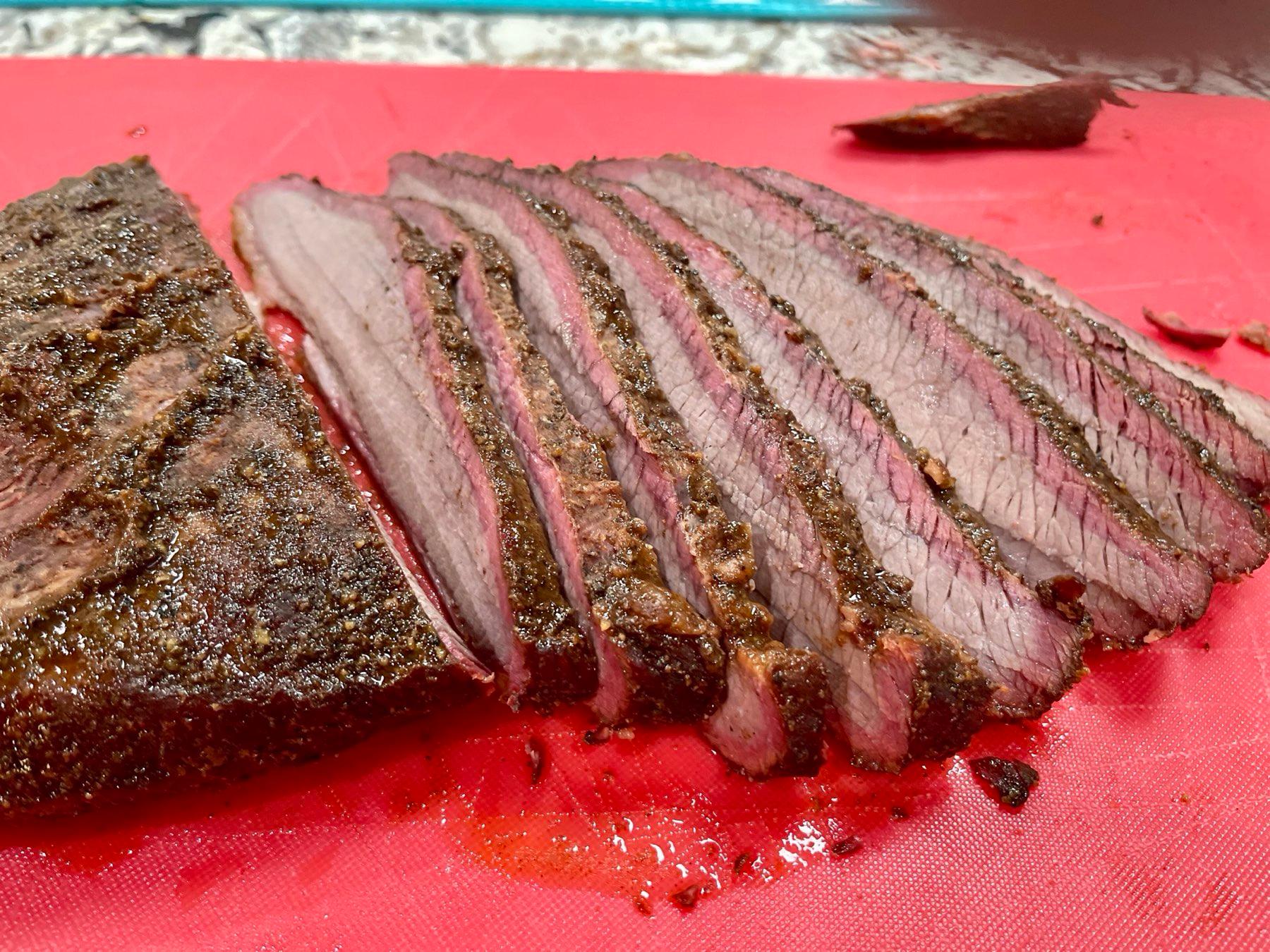
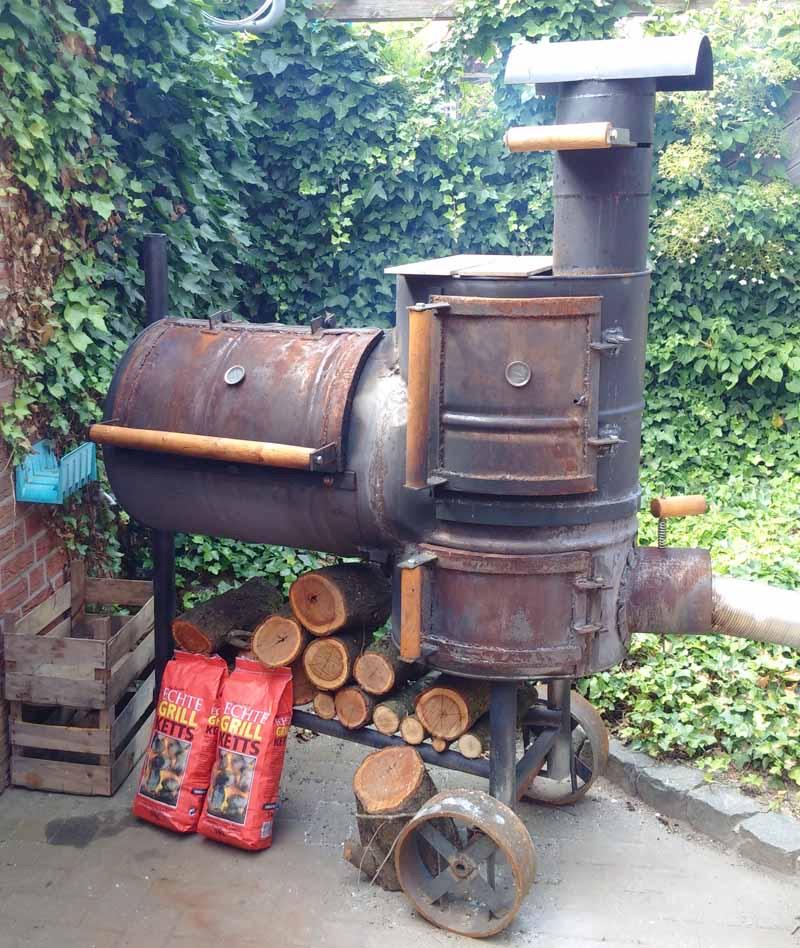
Photo: Johnsparks75 / Wikimedia Commons (CC BY-SA 4.0)
Smoke Times Calculator
Enter the weight and your smoker temperature. Times are the published ranges below, multiplied by your weight; the thermometer, not the clock, tells you when it is done.
Estimated smoking time
5 h 50 min to 7 h
14 lb at 250 °F: 25–30 min per lb
Done at 165 °F in the innermost thigh and wing and the thickest part of the breast, then rest 20–30 min.
Your timeline
Pick a meal time to see when to light the smoker.
The plan uses the long end of the range plus the longest rest, so the meat should be ready early rather than late. If it hits temperature early, keep it above 140 °F (out of the USDA danger zone) until you eat, and refrigerate leftovers within 2 hours.
Only the smoker temperatures a named source publishes a time for are offered; we never fill gaps by guessing.
Sources: time per pound from Pit Boss, How to Smoke a Whole Turkey (read 2026-11-16); safe temperatures and the 225–300 °F smoker range from USDA FSIS, Smoking Meat and Poultry.
These smoke times come from the smoker makers’ own charts, and the calculator below takes a cut, its weight and your smoker temperature and returns the cook time, the target internal temperature, the rest, and the clock time to light the smoker so the meat is ready when you want to eat. The USDA Food Safety and Inspection Service says to keep a smoker between 225 and 300 °F the whole cook, and sets the safe minimums at 165 °F for all poultry and 145 °F plus a 3-minute rest for whole cuts of beef and pork.
Every time the calculator uses is copied from a named smoker maker or turkey producer: Masterbuilt, Traeger, Pit Boss, Weber and Kingsford. Where those sources disagree, the chart below shows the figure the calculator uses and the text names the others. When the planner works back from dinner, it takes the long end of each range plus the longest rest, so a slow cook leaves you waiting with a wrapped cut instead of hungry guests. The sections cover what makes the times move, why some cuts scale by the pound and others do not, the stall, resting, and the safety floor that sits under all of it.
Gear for this cook
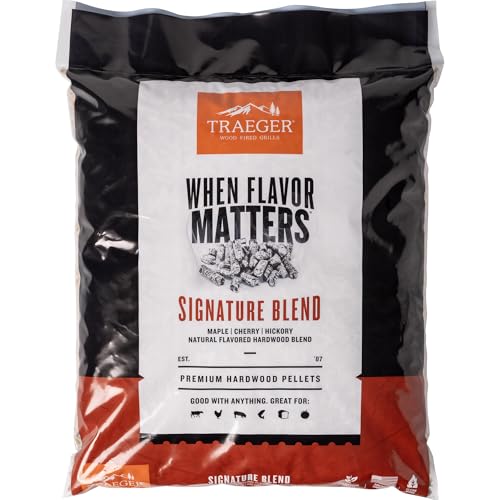
Traeger Signature Blend Wood Pellets for Pellet Grills & Smokers, 18 lb Bag | Smoke, BBQ, bake, roast & braise; hickory, maple & cherry hardwood blend
$19.99
Check price on Amazon: Traeger Signature Blend Wood Pellets for Pellet Grills & Smokers, 18 lb Bag | Smoke, BBQ, bake, roast & braise; hickory, maple & cherry hardwood blend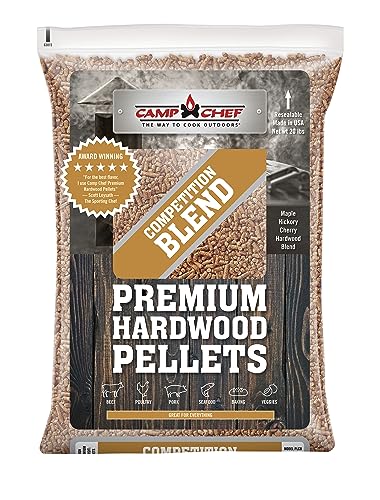
Camp Chef Competition Blend BBQ Pellets, Hardwood Pellets for Grill, Smoke, Bake, Roast, Braise and BBQ, 20 lb. Bag
$19.99
Check price on Amazon: Camp Chef Competition Blend BBQ Pellets, Hardwood Pellets for Grill, Smoke, Bake, Roast, Braise and BBQ, 20 lb. Bag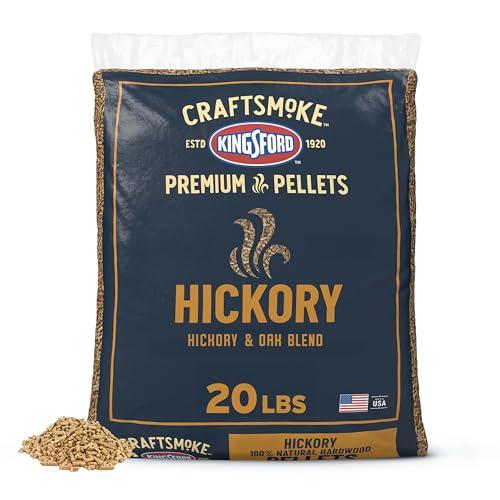
Kingsford Craftsmoke Premium Grilling Wood Pellets, Hickory, 20 lbs | 100 Percent Natural Hardwood, Compatible with All Pellet Grills, Hickory and Oak Smoke Flavor, Grilling Kit Essentials
$13.57
Check price on Amazon: Kingsford Craftsmoke Premium Grilling Wood Pellets, Hickory, 20 lbs | 100 Percent Natural Hardwood, Compatible with All Pellet Grills, Hickory and Oak Smoke Flavor, Grilling Kit Essentials
Traeger Hickory Hardwood Pellets for Pellet Grills & Smokers, 18 lb Bag | Smoke, BBQ, bake, roast & grill with classic, robust hickory flavor
$19.99
Check price on Amazon: Traeger Hickory Hardwood Pellets for Pellet Grills & Smokers, 18 lb Bag | Smoke, BBQ, bake, roast & grill with classic, robust hickory flavor
Bear Mountain BBQ 2 Pack Hardwood Smoker Pellets, Gourmet Blend, 20 lb Bag | Sweet and Smoky Barbecue Flavor for Red Meats, Poultry, and Vegetables, Works in Pellet, Gas, Charcoal, and Electric Grills
$33.24
Check price on Amazon: Bear Mountain BBQ 2 Pack Hardwood Smoker Pellets, Gourmet Blend, 20 lb Bag | Sweet and Smoky Barbecue Flavor for Red Meats, Poultry, and Vegetables, Works in Pellet, Gas, Charcoal, and Electric Grills
Traeger Grills Apple 100% All-Natural Wood Pellets for Smokers and Pellet Grills, BBQ, Bake, Roast, 18 lb. Bag
$19.99
Check price on Amazon: Traeger Grills Apple 100% All-Natural Wood Pellets for Smokers and Pellet Grills, BBQ, Bake, Roast, 18 lb. BagTraeger Signature Blend Wood Pellets for Pellet Grills & Smokers, 18 lb Bag | Smoke, BBQ, bake, roast & braise; hickory, maple & cherry hardwood blend
$19.99
Check price on Amazon: Traeger Signature Blend Wood Pellets for Pellet Grills & Smokers, 18 lb Bag | Smoke, BBQ, bake, roast & braise; hickory, maple & cherry hardwood blendCamp Chef Competition Blend BBQ Pellets, Hardwood Pellets for Grill, Smoke, Bake, Roast, Braise and BBQ, 20 lb. Bag
$19.99
Check price on Amazon: Camp Chef Competition Blend BBQ Pellets, Hardwood Pellets for Grill, Smoke, Bake, Roast, Braise and BBQ, 20 lb. BagKingsford Craftsmoke Premium Grilling Wood Pellets, Hickory, 20 lbs | 100 Percent Natural Hardwood, Compatible with All Pellet Grills, Hickory and Oak Smoke Flavor, Grilling Kit Essentials
$13.57
Check price on Amazon: Kingsford Craftsmoke Premium Grilling Wood Pellets, Hickory, 20 lbs | 100 Percent Natural Hardwood, Compatible with All Pellet Grills, Hickory and Oak Smoke Flavor, Grilling Kit EssentialsTraeger Hickory Hardwood Pellets for Pellet Grills & Smokers, 18 lb Bag | Smoke, BBQ, bake, roast & grill with classic, robust hickory flavor
$19.99
Check price on Amazon: Traeger Hickory Hardwood Pellets for Pellet Grills & Smokers, 18 lb Bag | Smoke, BBQ, bake, roast & grill with classic, robust hickory flavorBear Mountain BBQ 2 Pack Hardwood Smoker Pellets, Gourmet Blend, 20 lb Bag | Sweet and Smoky Barbecue Flavor for Red Meats, Poultry, and Vegetables, Works in Pellet, Gas, Charcoal, and Electric Grills
$33.24
Check price on Amazon: Bear Mountain BBQ 2 Pack Hardwood Smoker Pellets, Gourmet Blend, 20 lb Bag | Sweet and Smoky Barbecue Flavor for Red Meats, Poultry, and Vegetables, Works in Pellet, Gas, Charcoal, and Electric GrillsTraeger Grills Apple 100% All-Natural Wood Pellets for Smokers and Pellet Grills, BBQ, Bake, Roast, 18 lb. Bag
$19.99
Check price on Amazon: Traeger Grills Apple 100% All-Natural Wood Pellets for Smokers and Pellet Grills, BBQ, Bake, Roast, 18 lb. BagPrices and availability are accurate as of November 21, 2026, 2:35 PM UTC and are subject to change.
Smoke times chart: every cut in the calculator
A smoking time calculator is only as good as its rates. This one covers 13 cuts, and each row below is exactly what it uses (spatchcock turkey and unwrapped ribs use one rate across the listed band). A "per lb" figure is multiplied by the weight you enter; a "total" figure is the whole cook regardless of weight.
| Cut | Smoker temp | Time | Target internal | Rest | Time source |
|---|---|---|---|---|---|
| Whole turkey (12–20 lb) | 225 °F | 30–40 min per lb | 165 °F | 20–30 min | Traeger |
| Whole turkey | 250 °F | 25–30 min per lb | 165 °F | 20–30 min | Pit Boss |
| Whole turkey | 275 °F | 20–25 min per lb | 165 °F | 20–30 min | Pit Boss |
| Whole turkey | 300 °F | 15–20 min per lb | 165 °F | 20–30 min | Pit Boss |
| Spatchcock turkey (10–20 lb) | 225–275 °F | 11–13 min per lb | 165 °F | 30 min | Weber |
| Turkey breast (6–7 lb) | 225 °F | 45 min per lb | 165 °F | 20 min | Masterbuilt recipe |
| Pork ribs, 3-2-1 (wrapped) | 225 °F | 6 hours total (3 + 2 + 1) | 195 °F | 10–15 min | Masterbuilt chart |
| Pork ribs, 3-2-1 (wrapped) | 250 °F | 6 hours total (3 + 2 + 1) | 195 °F | 10–15 min | Kingsford 3-2-1 |
| Pork ribs, unwrapped | 225–250 °F | 4–5 hours total | 195 °F | 15 min | Kingsford |
| Whole chicken (3–5 lb) | 225 °F | 3–5 hours total | 165 °F | 10–15 min | Traeger |
| Whole chicken (3–5 lb) | 235 °F | 1 hour per lb | 165 °F | 10–15 min | Masterbuilt chart |
| Chicken breasts, boneless | 225 °F | 45 min per lb | 165 °F | 10 min | Masterbuilt chart |
| Chicken breasts, bone-in | 225 °F | 1 hour per lb | 165 °F | 10 min | Masterbuilt chart |
| Chicken thighs, bone-in | 225 °F | 2 hours total | 175 °F | 10 min | Masterbuilt chart |
| Chicken wings | 225 °F | about 1 hour total | 165 °F | 5 min | Traeger |
| Chicken drumsticks | 275 °F | about 2 hours total (1 h + 45 min + 15 min) | 190 °F | 15 min | Traeger |
| Pork butt, bone-in (6–10 lb) | 250 °F | 1 hour per lb | 195 °F | 45–60 min | Masterbuilt chart |
| Pork butt, bone-in (6–10 lb) | 275 °F | 1–1½ hours per lb | 195 °F | 45–60 min | Traeger |
| Brisket, full packer (6–14 lb) | 225 °F | 30–60 min per lb | 200 °F | 1–3 hours | Traeger |
| Brisket, full packer (6–14 lb) | 250 °F | 1 hour per lb | 200 °F | 1–3 hours | Masterbuilt chart |
The source column credits the time. Target temperatures come from: ribs 195 °F, the low end of the 195–203 °F in Masterbuilt's vertical-smoker guide (its own chart says 165 °F); brisket 200 °F, the low end of Traeger's "200 - 205°F" (Masterbuilt's chart says 195 °F); pork butt 195 °F, Masterbuilt's chart; chicken thighs 175 °F, Masterbuilt's vertical-smoker guide; drumsticks 190 °F, Traeger. Poultry targets never go below USDA's 165 °F, and pork and beef never below 145 °F.
Two notes on the target column. Ribs, pork butt and brisket finish far above USDA's 145 °F because the sources cook them until tender, not just safe: Traeger calls brisket done at 200–205 °F and "probe-tender," and says pulled pork is ready between 195 and 204 °F. Thighs and drumsticks are set above 165 °F for the same reason; Masterbuilt says poultry "tastes better at 175°F for dark meat," and Traeger's competition drumsticks go to 190 °F.
The ribs target is the biggest disagreement in the chart. Masterbuilt's chart and Kingsford's 3-2-1 recipe both list 165 °F; Masterbuilt's vertical-smoker guide says 195–203 °F; Traeger's 3-2-1 recipes finish at 200–205 °F. The calculator uses 195 °F, the low end of Masterbuilt's guide. Kingsford's bend test, about ¼ inch of bone showing, is a second check that does not depend on the probe.
Turkey is the cut where sources spread most on time. At 225–250 °F, Traeger says 30–40 minutes per pound, Weber 23–27, Pit Boss 25–30 at 250 °F, and Masterbuilt's chart 30 at 220 °F. The calculator assigns one source per temperature rather than averaging them, so the figure it shows can always be traced to a page.
Why smoke times are ranges, and what moves them
Times are ranges because the same cut cooks at different speeds in different conditions, and USDA names the causes: "the type of meat, its size and shape, the distance of food from the heat, the temperature of the coals, and the weather." It puts the overall span at 4 to 8 hours for meat or poultry and says that is why thermometers are required, not optional.
Two sources put numbers on specific conditions:
- Altitude. Traeger: "If you're smoking above 5,000 feet, allow an extra 10–15 minutes per pound." On an illustrative 14 lb turkey that is 140 to 210 extra minutes.
- Cold weather. Weber's turkey table says "Adjust by about 3 minutes per pound if it is cold." That is about 42 minutes on the same 14 lb bird.
The calculator does not add either adjustment for you, because both sources write them for turkey only. If you are cooking in wind, cold or thin air, plan from the long end of the range and add the adjustment yourself.
Some ranges are wide because the source itself is wide. Traeger's brisket guide gives "About 30-60 minutes per pound" at 225 °F, but also "8-9 hours for a 12-14 lb full packer" on the same page, which is a tighter and faster band. An illustrative 12 lb brisket at 225 °F comes out at 6 to 12 hours on the per-pound figure. Traeger's pork butt page is internally inconsistent too: "about 2 hours of cook time per pound" at 225 °F, yet "around 12 to 14 hours" for a 10-pound butt. The calculator uses neither 225 °F pork figure and offers pork butt at 250 and 275 °F only.
What to do when the cook runs long: trust the thermometer, not the clock. Keep the smoker inside 225–300 °F, check the thickest part, and let the rest absorb the slack. Large cuts tolerate a long rest; Traeger says brisket "can rest for up to 3 hours."
Per-pound cuts vs fixed-time cuts
Ribs, wings, thighs, drumsticks and the 225 °F whole chicken are fixed totals because the sources give them that way: a rack time or a batch time, never minutes per pound. Turkey, turkey breast, chicken breasts, pork butt and brisket scale with weight because the sources print a per-pound rate.
The split follows the shape of the meat. A rack of ribs is thin and roughly the same thickness whether the rack is long or short, so a second rack adds grate space, not cook time. Masterbuilt lists bone-in thighs as "12 Pieces … 2 hours" and Kingsford gives unwrapped ribs "4 to 5 hours" at 225 to 250 °F. A pork butt or brisket gets thicker as it gets heavier, and heat has further to travel to the center, so the sources multiply.
That is why the weight box matters for some cuts and is ignored for others. Enter 6 lb of ribs or 2 lb, and the 3-2-1 time is still 6 hours. Enter an 8 lb pork butt at 275 °F and Traeger's 1–1½ hours per pound gives 8 to 12 hours; the planner then adds the longest rest, 60 minutes, and tells you to start 13 hours before dinner.
Whole chicken shows both styles. Traeger's guide gives a total, "about 3-5 hours" at 225 °F, while Masterbuilt's chart gives "1 hour per pound" at 235 °F for a 3–5 lb bird. Pick 225 °F and the weight does not change the answer; pick 235 °F and it does.
The stall, and when to wrap
The stall is the stretch where a large cut's internal temperature stops climbing for hours, and the sources place it between 150 and 170 °F. Wrapping is the standard way through it.
| Cut | Stall | Wrap point | Source |
|---|---|---|---|
| Pork butt | "around 150 to 160 degrees" | 160 °F (foil, recipe) | Traeger |
| Brisket | "usually around 150–170°F" | 160–170 °F, butcher paper or foil | Traeger |
| Large cuts generally | 150–170 °F | around 165 °F, foil or butcher paper | Masterbuilt |
| Ribs, 3-2-1 | not stated | after the first 3 hours, wrapped for 2 | Masterbuilt chart, Kingsford, Traeger |
Masterbuilt explains the cause as moisture evaporating from the surface and cooling the meat, and gives two options: wait it out, which it says gives the best bark, or wrap at around 165 °F, which "speeds up the cook" at the cost of some bark crispness. Traeger's pulled pork recipe takes the wrap route: 3 to 5 hours at 250 °F to reach 160 °F, then foil and another 3 to 4 hours to 204 °F.
Poultry does not get a wrap step. No source in this set wraps a turkey; Traeger says to tent it only if the skin is browning too fast. The calculator's per-pound times assume the cut is not wrapped except where the method itself, like 3-2-1, includes it.
How long should each cut rest?
Rest runs from 5 minutes for wings to as much as 3 hours for brisket, and the planner always counts the long end.
| Cut | Rest | Source |
|---|---|---|
| Whole turkey | 20–30 min | USDA (20 min) and Pit Boss (20–30 min) |
| Spatchcock turkey | 30 min | Weber |
| Turkey breast | 20 min | USDA |
| Pork ribs, 3-2-1 | 10–15 min | Masterbuilt vertical-smoker guide |
| Pork ribs, unwrapped | 15 min | Kingsford |
| Whole chicken | 10–15 min | Masterbuilt (10 min) and Traeger (15 min) |
| Chicken breasts and thighs | 10 min | Masterbuilt vertical-smoker guide |
| Chicken wings | 5 min | Traeger |
| Chicken drumsticks | 15 min | Traeger |
| Pork butt | 45–60 min | Traeger (at least 45 min) and Masterbuilt (30–60 min) |
| Brisket | 1–3 hours | Traeger (at least 1 hour, ideally 2–3 in a cooler) |
Turkey rest advice varies more than the table shows. USDA says to let a turkey stand 20 minutes "for quality"; Traeger's turkey guide says 15 to 20 minutes and its recipe 10 to 15; Pit Boss 20 to 30; Weber "20-30% of the total cooking time." The calculator takes 20 to 30 minutes.
For whole cuts of beef and pork, USDA's minimum rest is at least 3 minutes after reaching 145 °F. Every rest in the table is longer than that, so the safety rest is covered automatically. The long rests on brisket and pork butt are a buffer as much as a step: when the cook finishes early, a wrapped cut held in a cooler waits for dinner.
The safety floor under every time
Whatever the chart says, the meat is done only when a food thermometer reads the USDA minimum, and the smoker must hold 225 to 300 °F the whole time.
- Temperatures. USDA's safe minimum internal temperature chart lists 165 °F for all poultry, including breasts, whole birds, legs, thighs and wings, and 145 °F with a 3-minute rest for beef and pork steaks, chops and roasts.
- Thaw first. USDA: "Completely thaw meat or poultry before smoking." Low smoker heat would leave frozen meat in the 40 to 140 °F danger zone too long. Never thaw at room temperature; use the refrigerator or cold water changed every 30 minutes.
- No head starts. USDA allows partial cooking in a microwave or on the stove only if the food goes straight into a hot smoker.
- Sauce last. USDA says to apply sauce during the last 15 to 30 minutes of smoking, to prevent excess browning or burning.
- Chill within 2 hours. Refrigerate smoked meat and poultry within 2 hours of taking it off the smoker, in smaller portions in shallow covered containers, and use it within 4 days or freeze it.
For whole turkey, two producers add a time limit. Butterball says the bird must pass from 40 °F to 140 °F in 4 hours or less, and to finish it in the oven if the internal temperature is low after 3½ hours. Pit Boss uses a stricter limit: no more than 3 hours below 140 °F. If your smoker struggles to hold heat, go with the stricter one.
Guides for each cut
Each cut has its own page with every source's figures, the failure cases and the smoking time calculator preset to that cut. Turkey: how long to smoke a turkey, with whole, spatchcock and breast times by temperature; how long to thaw a turkey, which sets your start date; and how much turkey per person, which sets the size. Pork: how long to smoke ribs, covering 3-2-1 and unwrapped, and how long to smoke a pork butt. Poultry: how long to smoke chicken, from whole birds to wings and drumsticks. Brisket is in the calculator above and has no separate guide yet. For the equipment side, see the outdoor kitchen smoker guide, or go back to the Outdoor Kitchen Setup homepage for the Turkey Planner and the layout tools.
Frequently Asked Questions
01How accurate is a smoking time calculator?
02How long does it take to smoke meat at 225 °F?
03Should I wrap meat during the stall?
04Why does the calculator plan from the long end of the range?
05Can I smoke above 300 °F?
Every smoking & bbq guide on this site
5 guides, each covering one decision in detail.
- How Long to Smoke a Turkey: Times by Weight and Temperature
How long to smoke a turkey: Pit Boss charts 25–30 min/lb at 250 °F, 20–25 at 275 °F, 15–20 at 300 °F. Weight tables, pull temps…
- How Long to Smoke Chicken: Whole Bird, Breasts, Thighs, Wings and Drumsticks
How long to smoke chicken: about 1 hour per pound whole at 235 °F, 2 hours for thighs and 1 hour for wings at 225 °F. All cuts …
- How Long to Smoke Ribs: 3-2-1 and Unwrapped Times, Planned Back From Dinner
How long to smoke ribs: 4 to 5 hours unwrapped at 225 to 250 °F, or 6 hours for 3-2-1. See each maker's temps and get a timelin…
- How Long to Thaw a Turkey: USDA Fridge and Cold-Water Times
How long to thaw a turkey: USDA allows 24 hours per 4–5 lb in the fridge or 30 min per lb in cold water. Thanksgiving 2026 star…
- How Much Turkey Per Person: USDA's Rule, Guest Chart and When to Buy Two Birds
How much turkey per person: USDA says 1 lb for a whole turkey, 1¼ lb pre-stuffed. Guest chart, Butterball, Traeger and Camp Che…
Related Guides
Written and edited by Sukie
Sukie is the editor behind Outdoor Kitchen Setup. They compile manufacturer specification sheets, published building codes, and industry sizing standards into the measurement and planning guides on this site, and USDA food-safety guidance and smoker makers’ published times into its smoking and turkey calculators. They check every figure against its original source before it goes live. Where a number varies by brand or by local code, the guides say so rather than presenting a single figure as universal.