Outdoor Kitchen Components: What Goes In, In What Order, and What to Skip
Outdoor kitchen components are usually chosen in the wrong order.
Photo: RDNE Stock project / Pexels (Pexels License)
Outdoor kitchen components are usually chosen in the wrong order. People start with the grill, add a refrigerator because the showroom had one, and discover two years later that the thing they use every single time they cook is a drawer that cost a tenth as much.
This hub ranks the components by how much use they actually get per dollar, explains what each one demands from the build, and indexes every component, appliance, and accessory guide on the site.
Top picks for this build
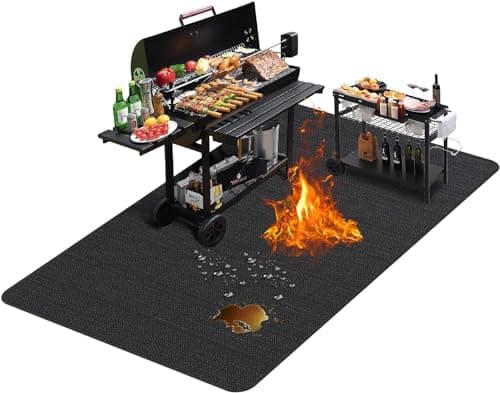
TAOMAND Large 76 x 52 inches Under Grill Mats for Outdoor Grill | BBQ Mat
$29.98
Check price on Amazon: TAOMAND Large 76 x 52 inches Under Grill Mats for Outdoor Grill | BBQ Mat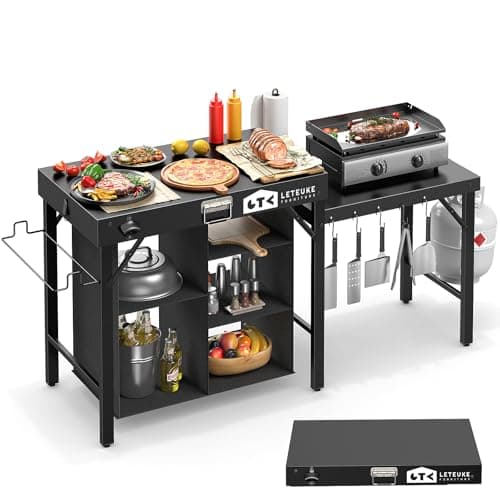
Grill Table for Blackstone Griddle Camping Grill Table Foldable Fits Ninja
$139.99
Check price on Amazon: Grill Table for Blackstone Griddle Camping Grill Table Foldable Fits Ninja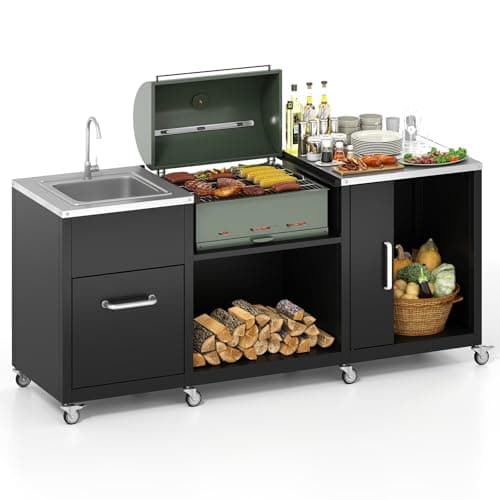
Happygrill 80” Outdoor Grill Table with Sink & Drainage, Wheels
See price on Amazon
Check price on Amazon: Happygrill 80” Outdoor Grill Table with Sink & Drainage, Wheels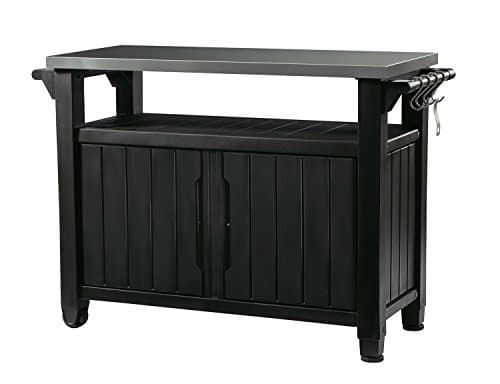
Keter Unity XL Portable Outdoor Table with Stainless Steel Top for Kitchen Prep and Outdoor Storage Cabinet for Grilling Accessories, Dark Grey
$237.99
Check price on Amazon: Keter Unity XL Portable Outdoor Table with Stainless Steel Top for Kitchen Prep and Outdoor Storage Cabinet for Grilling Accessories, Dark Grey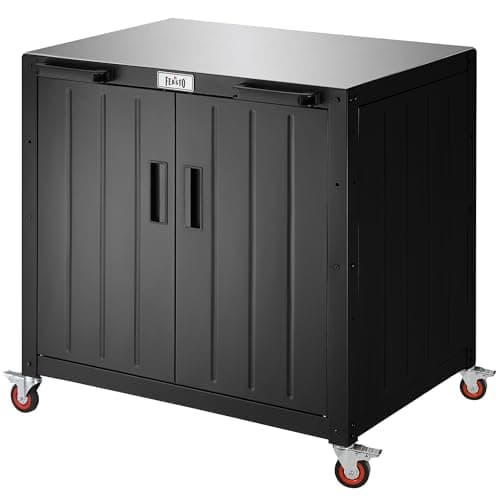
Feasto Modular Outdoor Kitchen Island with Storage and Stainless Steel Top
$229.00
Check price on Amazon: Feasto Modular Outdoor Kitchen Island with Storage and Stainless Steel Top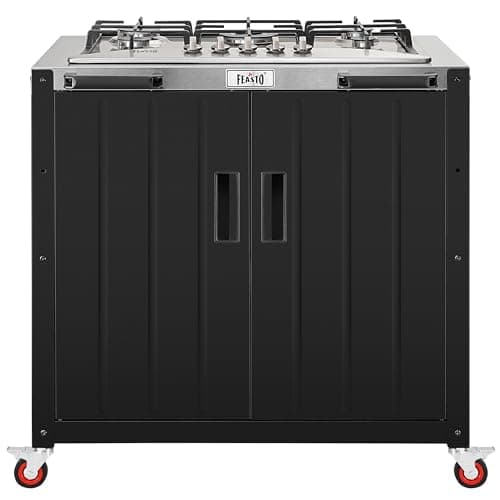
Feasto Modular Outdoor Kitchen Island with 5-Burner Gas Stove and Storage
$539.99
Check price on Amazon: Feasto Modular Outdoor Kitchen Island with 5-Burner Gas Stove and Storage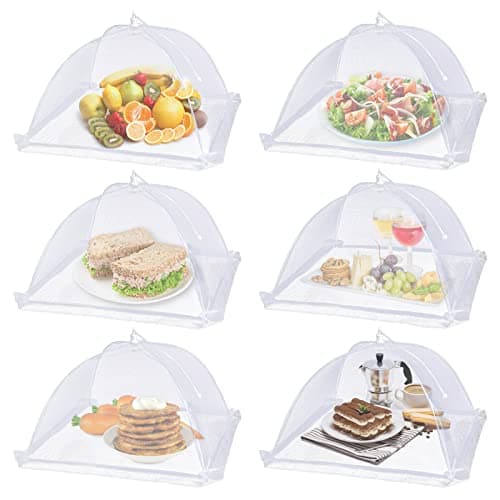
Lauon Large Food Cover,6 Pack Mesh Food Tent,17"x17",White Nylon Covers,Pop-Up Umbrella Screen Tents,Patio Net for Outdoor Camping, Picnics, Parties,BBQ,Collapsible and Reusable
$9.99
Check price on Amazon: Lauon Large Food Cover,6 Pack Mesh Food Tent,17"x17",White Nylon Covers,Pop-Up Umbrella Screen Tents,Patio Net for Outdoor Camping, Picnics, Parties,BBQ,Collapsible and Reusable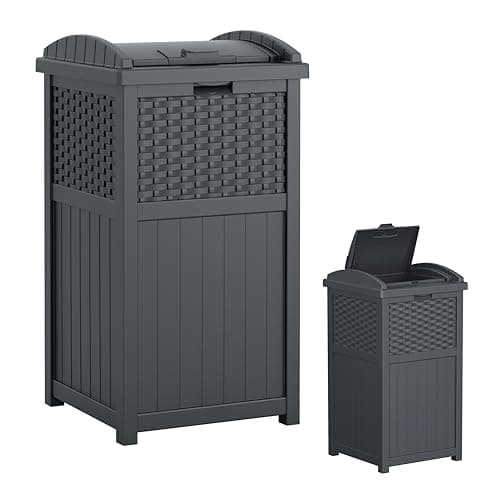
Suncast 33 Gal, Wicker Hideaway Trash Can, Secure Lid, Cyberspace Gray
$64.99
Check price on Amazon: Suncast 33 Gal, Wicker Hideaway Trash Can, Secure Lid, Cyberspace GrayTAOMAND Large 76 x 52 inches Under Grill Mats for Outdoor Grill | BBQ Mat
$29.98
Check price on Amazon: TAOMAND Large 76 x 52 inches Under Grill Mats for Outdoor Grill | BBQ MatGrill Table for Blackstone Griddle Camping Grill Table Foldable Fits Ninja
$139.99
Check price on Amazon: Grill Table for Blackstone Griddle Camping Grill Table Foldable Fits NinjaHappygrill 80” Outdoor Grill Table with Sink & Drainage, Wheels
See price on Amazon
Check price on Amazon: Happygrill 80” Outdoor Grill Table with Sink & Drainage, WheelsKeter Unity XL Portable Outdoor Table with Stainless Steel Top for Kitchen Prep and Outdoor Storage Cabinet for Grilling Accessories, Dark Grey
$237.99
Check price on Amazon: Keter Unity XL Portable Outdoor Table with Stainless Steel Top for Kitchen Prep and Outdoor Storage Cabinet for Grilling Accessories, Dark GreyFeasto Modular Outdoor Kitchen Island with Storage and Stainless Steel Top
$229.00
Check price on Amazon: Feasto Modular Outdoor Kitchen Island with Storage and Stainless Steel TopFeasto Modular Outdoor Kitchen Island with 5-Burner Gas Stove and Storage
$539.99
Check price on Amazon: Feasto Modular Outdoor Kitchen Island with 5-Burner Gas Stove and StorageLauon Large Food Cover,6 Pack Mesh Food Tent,17"x17",White Nylon Covers,Pop-Up Umbrella Screen Tents,Patio Net for Outdoor Camping, Picnics, Parties,BBQ,Collapsible and Reusable
$9.99
Check price on Amazon: Lauon Large Food Cover,6 Pack Mesh Food Tent,17"x17",White Nylon Covers,Pop-Up Umbrella Screen Tents,Patio Net for Outdoor Camping, Picnics, Parties,BBQ,Collapsible and ReusableSuncast 33 Gal, Wicker Hideaway Trash Can, Secure Lid, Cyberspace Gray
$64.99
Check price on Amazon: Suncast 33 Gal, Wicker Hideaway Trash Can, Secure Lid, Cyberspace GrayPrices and availability are accurate as of October 22, 2026, 11:45 AM UTC and are subject to change.
Components Ranked by Use Per Dollar
| Component | Typical cost | Used every cook? | Priority |
|---|---|---|---|
| Counter space | $40–$150 / sq ft | Yes | 1 — buy first |
| Built-in grill | $900–$5,000 | Yes | 2 |
| Storage drawers | $300–$1,500 | Yes | 3 — underrated |
| Task lighting | $150–$900 | Most evenings | 4 — underrated |
| Refrigeration | $800–$3,500 | Often | 5 |
| Access doors | $200–$1,200 | Yes | 6 |
| Sink + plumbing | $1,500–$6,000 | Sometimes | 7 — expensive per use |
| Side burner | $400–$1,500 | Rarely | 8 — often regretted |
| Ice maker | $1,200–$3,000 | Rarely | 9 |
| Warming drawer | $700–$2,500 | Rarely | 10 |
The two most consistently under-bought items on that list are storage and lighting, and the two most consistently over-bought are the side burner and the ice maker. Side burners get used for one pot of corn a summer; a good drawer gets opened every time anyone cooks.
Counter Space Is a Component
It is not the leftover between appliances. It is the thing you use most, and the only component that cannot be retrofitted once the island is finished.
The working minimum is 15 inches of clear counter on each side of the grill, plus a dedicated prep area of at least 24 inches somewhere in the run. Below that you will cook with a plate balanced on the grill lid, which is how plates get broken and how raw chicken ends up somewhere it should not be.
If a fixed budget forces a choice between a better grill and more counter, take the counter every time. A grill head is replaceable in a decade without touching the structure. Counter is not.
There is a second reason counter matters that has nothing to do with cooking: it is where everything lands during a party. Serving dishes, drinks, someone's phone, a cake. A kitchen sized precisely for the cook's working needs becomes unusable the moment six people are present, because every surface is occupied within minutes. If you entertain, add a foot beyond what the appliance arithmetic says, or plan a separate serving counter away from the cooking run.

Storage: Drawers Beat Doors
Deep cabinets behind doors are where outdoor kitchen contents go to corrode quietly out of sight. Drawers keep things visible, reachable, and — because you open them often — ventilated.
Specify shallow drawers for utensils rather than one deep one; a deep drawer of tongs, skewers, and thermometers becomes a pile you rummage through. Reserve doored cabinets for genuinely bulky, occasional items: charcoal, a spare cylinder, the cover, cleaning supplies.
On grade: 430-grade stainless is magnetic and rusts outdoors; 304 does not and costs perhaps 40 percent more. Within a few miles of salt water, 316 justifies its premium. Test what you are being sold with a fridge magnet — if it sticks firmly to the door face, it is 430.
See outdoor kitchen drawers, storage, and cabinets.
Refrigeration: Buy Outdoor-Rated, Not a Bargain
This is the component where buying the cheap version reliably fails. An indoor-rated under-counter refrigerator installed outdoors will struggle in heat, corrode at the door seal, and in many cases void its own warranty — manufacturers are explicit that indoor units are not rated for outdoor installation.
Look for a unit specified as outdoor-rated, with a stainless exterior of a known grade and a compressor rated for high ambient temperatures. Expect to pay $800 to $3,500, and expect a genuinely outdoor-rated unit to cost noticeably more than the indoor equivalent that looks identical.
Give it its own dedicated circuit with GFCI protection, and check it after storms — a tripped fridge circuit is a failure you discover by smell. See outdoor kitchen refrigerator and electrical requirements.
Two practical points on refrigeration placement that affect performance rather than convenience. First, ventilation: under-counter refrigerators reject heat, usually through a front vent, and blocking that vent with a cabinet panel or a tight enclosure makes the compressor run continuously in summer heat. Follow the manufacturer's clearance figures rather than treating the unit as a box that fits a hole. Second, direct sun: a refrigerator on the west face of an island in full afternoon sun works considerably harder than the same unit in shade, and the difference shows up in both electricity and lifespan.
A cheaper alternative worth considering honestly: a good insulated cooler with a drain, restocked before guests arrive, handles drinks perfectly well for a household that entertains occasionally. The refrigerator earns its cost when you cook outside frequently enough that keeping raw ingredients out there saves real trips, which is a different use case from keeping beer cold.
Sinks: Genuinely Useful, Genuinely Expensive
A sink is the component with the widest gap between how much people want one and how much it costs to install. The basin is cheap; the supply line, the drain, the winterisation, and the roughly 36 inches of extra counter run it demands are not.
It earns its place if your kitchen is more than about 30 feet from the house door, or if you cook outdoors weekly. It does not if the back door is five steps away — in that case a good tray and a bin do most of the same work.
If you install one, plan the drain properly. A sink that drains onto the ground is a permit problem in many jurisdictions and a mosquito problem everywhere. See outdoor kitchen sink, sink dimensions, and plumbing.
Lighting Is a Component, Not a Finishing Touch
Most outdoor kitchens are used after dark for a large share of the year, and most are under-lit because lighting is specified last, when the budget is gone.
Three layers: task light aimed at the grill and prep surface so you can judge doneness; ambient light for the seating area, warmer and dimmer; accent and safety light on steps and paths. Put task and ambient on separate switches so you can drop the mood without cooking blind.
Run lighting on its own circuit. It is a small load and a cheap circuit, and it means a nuisance trip on the receptacle circuit does not leave you with food on a grill in the dark. See outdoor kitchen lighting.
Colour temperature is worth specifying rather than accepting. Very cool white light makes food look grey and unappetising, which matters when you are judging whether meat is done and when guests are looking at what you have plated. Warmer light flatters food and people, but pushed too far it makes it genuinely hard to distinguish doneness. A practical compromise is neutral light aimed at the cooking and prep surfaces where accuracy matters, and warmer light everywhere else where atmosphere does.
Aim matters as much as brightness. A fixture mounted above and behind the cook throws their own shadow onto the grill, which is the most common lighting error outdoors and is invisible until you stand there after dark. Light the cooking surface from in front or from the side.
What to Defer, and Every Component Guide
Components you can add later without touching masonry: lighting upgrades, accessories, portable warming equipment, a bar cart. Components you cannot sensibly add later: counter run, cutouts, utilities, and anything requiring a trench.
So the rule for a constrained budget is simple — build the structure and the utilities to the full plan, and populate it over time. Run the spare conduit, cap the spare circuit, rough in the water line, and leave the cabinet bay empty until you can afford the refrigerator. Retrofitting a bay is trivial; retrofitting a trench is not.
The complete index of component, appliance, and accessory guides follows. For sizing, see dimensions; for the structure they sit in, build guides; and to start over from the top, the outdoor kitchen homepage.
One component genuinely worth adding late, and often forgotten entirely: a bin. Outdoor cooking generates packaging, trimmings, and empty bottles, and a kitchen with no waste plan means everything is carried indoors or piles up on the counter. A pull-out bin unit in the island is the tidy solution; a good lidded bin nearby is the cheap one. Either beats the default, which is a plastic bag hanging from a cabinet handle.
Similarly overlooked is somewhere to put a hot pan down. Not a trivet you fetch from indoors — a permanent, heat-tolerant section of counter you have mentally designated for it. Cooks improvise this with whatever is nearest, which is how countertops get scorched and cutting boards get warped.
Treat the clearance and sizing figures here as a planning starting point and the kitchen sizing standards published by the National Kitchen & Bath Association as the authority, since local amendments are common.
Frequently Asked Questions
01What are the essential components of an outdoor kitchen?
02What should I buy first for an outdoor kitchen?
03Do I need an outdoor-rated refrigerator?
04Is an outdoor kitchen sink worth it?
05What stainless steel grade should outdoor kitchen doors be?
06What outdoor kitchen components do people regret buying?
Every components guide on this site
21 guides, each covering one decision in detail.
- Gazebo For Outdoor Kitchen
Gazebo for outdoor kitchen comparison: Sojag, Yardistry, Sunjoy steel-and-aluminum models, sizes, grill clearances, anchoring, …
- How to Organize an Outdoor Kitchen So You Stop Walking Back Inside
How to organize an outdoor kitchen: zone layout, what belongs in each drawer, weatherproof storage rules.
- Outdoor Kitchen Accessories: Essential Tools, Lights & Gadgets 2026
Outdoor kitchen accessories ranked — utensil sets, LED lighting, weather covers, drawer organizers, smart thermometers, and the…
- Outdoor Kitchen Appliances: Essential Equipment Guide for 2026
Outdoor kitchen appliances must be UL-rated for outdoor use to survive humidity, UV, and freeze cycles. Compare grills, fridges…
- Outdoor Kitchen Backsplash Height: Behind the Grill, the Sink and the Bar
Outdoor kitchen backsplash height has no code minimum. What sets it: the 6 in rise to a 42 in bar, grill clearances, sink landi…
- Outdoor Kitchen Bar: Design, Seating & Beverage Setup Guide
Outdoor kitchen bar designs hinge on bar-height vs counter-height seating, beverage infrastructure, and overhang depth. Plan ke…
- Outdoor Kitchen BBQ Grill: Selection, Sizing & Installation Guide
Outdoor kitchen BBQ grill guide: compare Weber, Napoleon, Bull, Lynx by BTU, burner count, and price. Cutout specs, gas convers…
- Outdoor Kitchen Built In Grill: Drop-In Models, Cutouts & Specs
Outdoor kitchen built in grill specs: cutout dimensions, BTU ratings, vent requirements, and drop-in installation steps for Bul…
- Outdoor Kitchen Cabinet Dimensions: Widths, Heights and How the Modules Add Up
Outdoor kitchen cabinet dimensions from four catalogues: 3-inch width steps, 30-inch boxes on 4.5-inch legs, grill base sizing …
- Outdoor Kitchen Cabinets: Material Comparisons, Weather Resistance & Top Picks
Outdoor kitchen cabinets must endure UV, rain, and 100°F+ heat. Compare 304 stainless, marine polymer HDPE.
- Outdoor Kitchen Counter: Materials, Sealing & Edge Profiles
Outdoor kitchen counter guide: granite, Dekton, concrete, porcelain compared. Edge profiles, ideal depth, sealing schedules, an…
- Outdoor Kitchen Countertop Height: The 36-Inch Rule and Its Three Exceptions
Outdoor kitchen countertop height is 36 inches as standard, 42 for bars and 30 for tables. Full height reference, why each numb…
- Outdoor Kitchen Drawers
Outdoor kitchen drawers buying guide: warming, ice, propane & utility drawer types from Blaze, Lynx, Bull. Sizes, prices, insta…
- Outdoor Kitchen Frame: Steel, Wood & RTA Construction Guide for 2026
Outdoor kitchen frame guide covers galvanized steel, treated wood, and RTA kits. Compare load ratings, costs from $400-$4,500.
- Outdoor Kitchen Islands: Prefab vs Custom, Sizing, Materials & Best Picks
Outdoor kitchen island choices range from $1,500 prefab kits to $30K custom masonry. Sizing, utility hookups, materials, and pr…
- Outdoor Kitchen Refrigerator: Sizing, Ratings & Top Picks for 2026
Outdoor kitchen refrigerator picks rated for 38-110°F ambient temps. UL outdoor listings, compressor types, and dual-zone model…
- Outdoor Kitchen Sink Dimensions: Standard Sizes, Depths & Rough-In Guide
Outdoor kitchen sink dimensions guide covers standard widths (15"-33"), depths (6"-10"), rough-in plumbing measurements.
- Outdoor Kitchen Sink: Types, Materials, and Installation Guide for 2026
Outdoor kitchen sink installation guide covering plumbing supply lines, freeze-proof drain layouts, T-304 stainless basins.
- Outdoor Kitchen Storage: Cabinets, Drawers & Organization Solutions
Outdoor kitchen storage solutions ranked: marine polymer cabinets, stainless drawers, sealed spice pull-outs, weatherproof tool…
- Outdoor Kitchen With Mini Fridge: Best Models, Sizing & Installation Guide
Outdoor kitchen with mini fridge: outdoor-rated models that survive heat, cutout dimensions, ventilation clearances, and the de…
- Outdoor Kitchen With Pizza Oven: Wood-Fired Integration Guide 2026
Outdoor kitchen with pizza oven — Ooni, Alfa, Forno Bravo comparisons, brick wood-fired integration, venting, costs from $400 t…
Related Guides
Written and edited by Sukie
Sukie is the editor behind Outdoor Kitchen Setup. They compile manufacturer specification sheets, published building codes, and industry sizing standards into the measurement and planning guides on this site, and check every figure against its original source before it goes live. Where a number varies by brand or by local code, the guides say so rather than presenting a single figure as universal.