Outdoor Kitchen Island Cover: Measuring, Custom Fit, and Seasonal Protection
Outdoor kitchen island cover guide: how to measure straight and L-shaped islands, custom vs stock sizing, mesh vents, gust straps, and timing by climate zone.
By Sukie
Editor · compiles manufacturer specs and building-code references into the measurement guides on this site
The first hard freeze of the season usually arrives quietly, an overnight low in the upper 20s buried in a Tuesday forecast. That is the night an outdoor kitchen island cover earns its keep. Water that soaked into a countertop seam or the gap around a drop-in grill expands as it freezes, and by March an uncovered island shows the toll: hairline cracks radiating from the seams, rust blooming on the hood and hinges, chalky efflorescence streaking the stone veneer, and mice nesting behind the access doors.
Covering a whole island is a different problem than covering a grill. A full-island cover has to clear a raised bar top, hug a side burner shelf, and stay put through winter wind without trapping condensation underneath. This guide covers measuring, straight versus L-shaped fits, when custom is worth the money, and timing by climate.
Top Picks: Best Outdoor Kitchen Island Cover: Measuring, Custom Fit, and Seasonal Protection in 2026
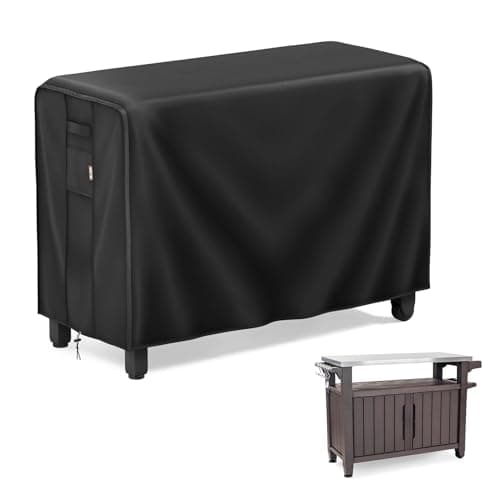
MR. COVER Outdoor prep table cover 52 inch for Keter Unity XL Outdoor Rolling Table Cart, 600D Heavy Duty Waterproof for Grill Dining Kitchen Island cart Protective, Outdoor Storage Cabinet Cover
$28.79
Shop Now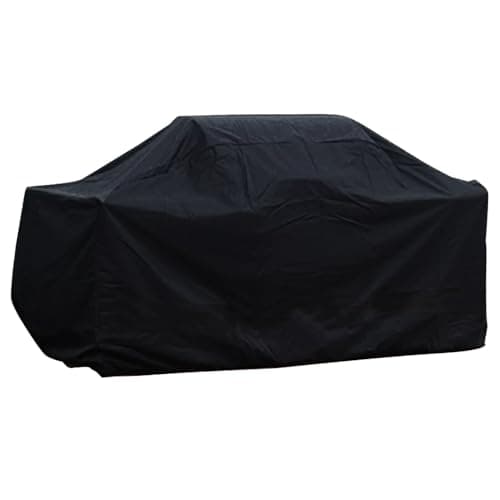
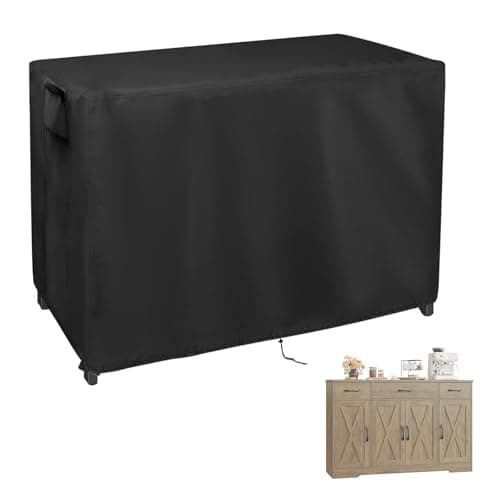
Iptienda Outdoor Table Cover for Patio Prep Tables, 55inch Bar Table Cover Waterproof for Bar Furniture,Grill Cart,Kitchen Island Tables-55"L x 24"W x 40"H
$33.99
Shop Now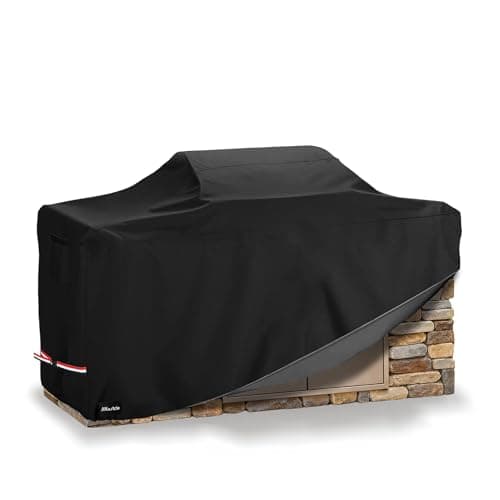
ANartcle Waterproof Extra Large Grill Cover for 110 Inch Island with Center Grill Head,600D Heavy Duty Waterproof All Weather Outdoorbar Island Kitchen Covers,Black
$139.99
Shop Now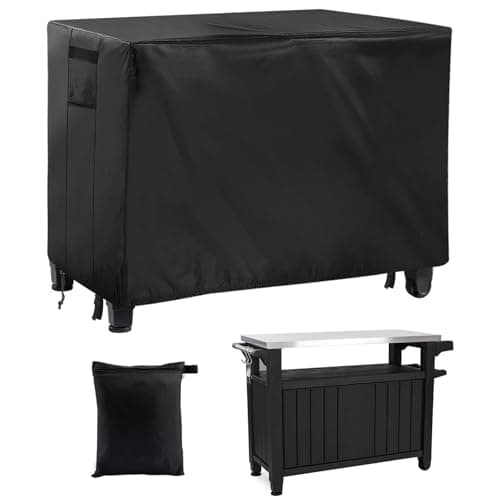
PAMASE Outdoor Dining Grill Cart Cover - 54"L*23"W*35"H, Compatible with Keter Unity XL Portable Cabinet Bar, Heavy Duty Waterproof BBQ Food Prep Table Serving Worktable Metal Movable Station
$23.99
Shop NowMR. COVER Outdoor prep table cover 52 inch for Keter Unity XL Outdoor Rolling Table Cart, 600D Heavy Duty Waterproof for Grill Dining Kitchen Island cart Protective, Outdoor Storage Cabinet Cover
$28.79
Shop NowIptienda Outdoor Table Cover for Patio Prep Tables, 55inch Bar Table Cover Waterproof for Bar Furniture,Grill Cart,Kitchen Island Tables-55"L x 24"W x 40"H
$33.99
Shop NowANartcle Waterproof Extra Large Grill Cover for 110 Inch Island with Center Grill Head,600D Heavy Duty Waterproof All Weather Outdoorbar Island Kitchen Covers,Black
$139.99
Shop NowPAMASE Outdoor Dining Grill Cart Cover - 54"L*23"W*35"H, Compatible with Keter Unity XL Portable Cabinet Bar, Heavy Duty Waterproof BBQ Food Prep Table Serving Worktable Metal Movable Station
$23.99
Shop NowHow to Measure an Outdoor Kitchen Island for a Cover
Nearly every bad cover experience traces back to a bad measurement. A cover 4 inches too short leaves a seam exposed all winter; one 8 inches too long balloons like a sail. Before you shop, take a tape measure to your outdoor kitchen island and write down five numbers:
- Length. Measure the longest run at countertop level, end cap to end cap, out to the edge of any overhang; the cover hangs from the widest point.
- Depth. Front to back at the counter, again to the overhang edges. Seating-side overhangs of 12 inches or more are the most commonly missed dimension, and why so many stock covers come up short.
- Counter height. Ground or deck surface to countertop, typically 36 inches. Covers should stop 2 to 4 inches above grade so air enters from below; fabric that pools on the ground traps moisture.
- Bar-top step-ups. If part of the island rises to a 42-inch bar, record its height, length, and where along the run it starts and stops.
- Appliance protrusions. Note anything above or beyond the counter plane: grill hood peak and handle, side burner lids, vent hood, faucet, umbrella pole. The cover needs sewn-in relief for these shapes or enough volume to swallow them.
Sketch the footprint with all five numbers labeled; it is the document every manufacturer asks for first.
Straight Island Covers vs. L-Shaped Island Covers
A straight island is the easy case: a rectangular box, so a well-sized rectangular cover with a peaked top for the grill hood fits naturally, and stock sizes serve it well from 5 to 10 feet.
An L-shaped outdoor kitchen is where flat rectangles fail. You have three options, in ascending order of cost and fit:
- Two overlapping straight covers, one per leg, overlapping 6 to 12 inches at the inside corner. Cheapest route and workable in mild climates, but the seam admits wind-driven rain and the corner never sits tight.
- A single oversized square cover draped over the whole L. It protects the tops but leaves a tented void over the corner notch that catches wind. A one-season stopgap.
- A true L-shaped wraparound cover, sewn to the island's actual corner geometry. The fabric turns the corner with you, hugs both legs, and cinches at the base. For islands over about 10 linear feet, or any L with a raised bar on one leg, this is the configuration that survives winters.
Curved bars, 45-degree ends, and U-shapes almost always force custom, because no stock pattern fits them without fabric bunched at every transition.
Custom Outdoor Kitchen Island Covers: How Ordering Actually Works
Custom covers sound intimidating, but ordering is more paperwork than craft project. Most shops, from Coverstore to marine canvas outfits, follow the same sequence: you submit your dimension sketch, a rep returns a spec drawing showing seams, vents, and hem height, you approve it, and the cover enters the sewing queue. Lead times run 2 to 4 weeks, stretching to 5 or 6 in the September-to-November rush, which is why the smart order date is August, not the week of the first freeze warning.
For complicated islands, some makers send a template kit: pattern film you tape over the island, trace, and mail back. It adds a week but removes all measurement risk, the only sane path for curved or multi-level layouts. Expect $250 to $700 custom in solution-dyed polyester or acrylic, versus $80 to $200 for stock sizes.
When is stock good enough? If your island is a straight run within 2 inches of a listed length, has no raised bar, and lives in a moderate climate, a quality stock unit from our general outdoor kitchen cover guide does the job for a third of the price. Add a step-up bar, an L, or an odd depth, and custom becomes the cheaper option once you price one ruined countertop seam.
Materials, Vents, and Tie-Down Hardware That Survive Winter
Fabric grade matters less than people assume; hardware matters more. A 600-denier solution-dyed polyester with waterproof backing is the workhorse spec; 900 to 1200 denier adds abrasion resistance on rough stacked-stone corners. What separates six-season covers from one-season failures:
- Mesh vents. A sealed cover over a masonry island is a condensation machine: the stone releases moisture for weeks, and cold nights condense it on the fabric's underside, dripping onto your grill hood. Look for at least two mesh vents high on opposite ends; four on covers longer than 8 feet.
- Gust straps. Webbing that runs under the island's toe-kick into buckles on the opposite side. These, not the fabric, keep the cover on in a storm. Two minimum; one per 4 feet is better.
- Buckles over drawstrings. A hem drawstring cinches once and loosens all winter as fabric stretches. Side-release buckles re-tension in five seconds.
- Padded contact points. Counter corners and hood handles wear through fabric from the inside; better covers put double-layer patches there. On a custom order, ask for them by name.
The straps are not optional. In the November 2025 wind event that brought 52 mph gusts through our area, my neighbor's brand-new full-kitchen cover, installed that afternoon with its straps still zip-tied, left in one night; we found it two yards over, wrapped around a swing set. My own four-year-old cover, all four straps buckled, never moved.
Seasonal Cover Strategy by Climate Zone
When you cover matters as much as what you cover with. NOAA's U.S. Climate Normals publish median first-freeze dates for every station, a better planning tool than folklore.
- Freeze-thaw belt (Midwest, Northeast, mountain West). This is where an outdoor kitchen island cover does its most important work, because freeze-thaw cycling is what cracks countertops and masonry. Get full coverage on two weeks before your median first-freeze date: mid-October in most of zone 5, late September in zone 4. Uncover for winter grilling, but re-buckle the same night.
- Gulf South and humid Southeast. Freezes are rare; the enemies are UV, thunderstorms, and mildew. A vented cover used episodically, during storms, pollen season, and any week you will not cook, beats a sealed cover left on for months incubating mold.
- Desert Southwest. UV is the killer, not water. Cover whenever the island sits unused more than a few days, in acrylic or high-UV-rated polyester that will not go brittle by year three.
- Pacific coast. Salt air corrodes stainless year-round, so coastal islands stay covered whenever not in use, with monthly rinses of cover and island alike.
Whatever your zone, never cover wet; give the island a dry afternoon first. If you are still planning the build itself, our outdoor kitchen homepage guide covers how material choices shift by region.
Installation, Removal, and Off-Season Storage
A cover for a 9-foot island weighs 12 to 20 pounds and handles like a fitted sheet for a truck. The two-person method: drape it over the tallest point first, the grill hood or raised bar, work outward to the ends, seat the sewn corners, then pull the hem down and buckle the straps. Hem-first is ten minutes of fighting fabric. Solo, start at the bar-top end and walk it down the length like unrolling a rug.
Removal is where covers die in slow motion. Dragging one off across a stone counter edge saws through the lining within a season. Lift, gather toward the center, and fold on the countertop. Sweep off frost or standing water first; folding a wet cover into a deck box is how you grow the mildew you smell in April.
For off-season storage, dry the cover completely, brush off grit, fold loosely, and store it in a breathable bag out of the sun, never a sealed plastic tote. Hose it down twice a year and air-dry fully before re-folding. A cover treated this way lasts five to seven seasons; one dragged, stuffed, and stored wet lasts two. Treat it right and the island underneath outlives the mortgage.
Points worth settling before you commit:
Can I use a regular kitchen island cover or tarp instead of a fitted one?
A hardware-store tarp is worse than nothing left on long-term. Tarps are non-breathable, so they trap condensation against stainless and stone, and their grommet tie-downs let them flog in wind, scratching countertops. A fitted cover with mesh vents, proper hem height, and gust straps costs more but protects the surfaces a tarp slowly damages.
When should I put the cover on for winter?
In freeze-prone regions, target roughly two weeks before your area's median first-freeze date, which NOAA's climate normals list by station: mid-October across much of zone 5, late September in colder zones. Cover a dry island, so give it a rain-free afternoon first. Uncovering for winter cookouts is fine as long as everything goes back on the same night.
How do I keep an island cover from blowing off in high wind?
Buckled gust straps that pass under or through the island base, not the hem drawstring, hold a cover in a storm. Use at least two, one per four feet of length, and re-tension monthly. In a November 2025 storm with 52 mph gusts, an unstrapped cover on a neighboring island blew off overnight while a strapped one never moved.
How long does an outdoor kitchen island cover last?
Five to seven seasons for a quality solution-dyed cover that is lifted rather than dragged off, dried before storage, and kept in a breathable bag out of the sun. Two to three seasons when covers are dragged over stone corners, folded wet, or compressed into sealed totes. Handling habits matter more than fabric grade.
Frequently Asked Questions
01What is the best cover for outdoor kitchen island setups with a raised bar?
02Do outdoor kitchen island covers come in L-shaped versions?
03How much do custom outdoor kitchen island covers cost?
04How do I measure for a cover for outdoor kitchen island protection?
05Should an island cover reach all the way to the ground?
06Why does condensation form under my island cover, and how do I stop it?
This guide is part of Outdoor Kitchen Weather Protection: Covers, Roofs, and Winterising — the hub covering every covers & protection guide on Outdoor Kitchen Setup.
Related Guides
Written and edited by Sukie
Sukie is the editor behind Outdoor Kitchen Setup. They compile manufacturer specification sheets, published building codes, and industry sizing standards into the measurement and planning guides on this site, and check every figure against its original source before it goes live. Where a number varies by brand or by local code, the guides say so rather than presenting a single figure as universal.