Outdoor Kitchen Renovation Cost: What It Costs to Fix One You Already Have
Outdoor kitchen renovation cost broken down by job — countertop, grill, doors, structure, and full rebuild. What to fix, what to replace, and what never pays back.
By Sukie
Editor · compiles manufacturer specs and building-code references into the measurement guides on this site
Outdoor kitchen renovation cost is a very different question from what it costs to build one from scratch, and most cost guides answer the wrong one. Renovating means you already have a slab, a frame, a gas line, and probably an electrical run. The expensive infrastructure exists. What you are pricing is which parts of it are worth keeping.
This guide breaks renovation down by job rather than by total, because almost nobody renovates everything at once. Figures are typical US ranges for 2026; labour in high-cost metros runs materially above them and rural areas below.
Top Picks: Best Outdoor Kitchen Renovation Cost: What It Costs to Fix One You Already Have in 2026
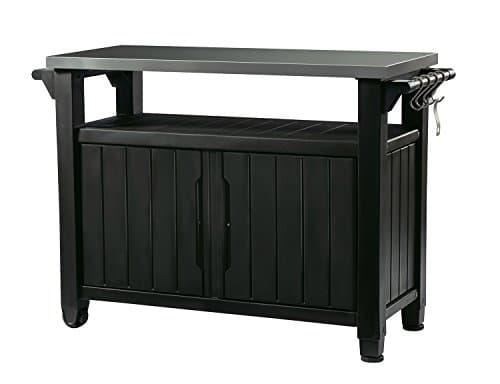
Keter Unity XL Portable Outdoor Table with Stainless Steel Top for Kitchen Prep and Outdoor Storage Cabinet for Grilling Accessories, Dark Grey
$237.99
Shop Now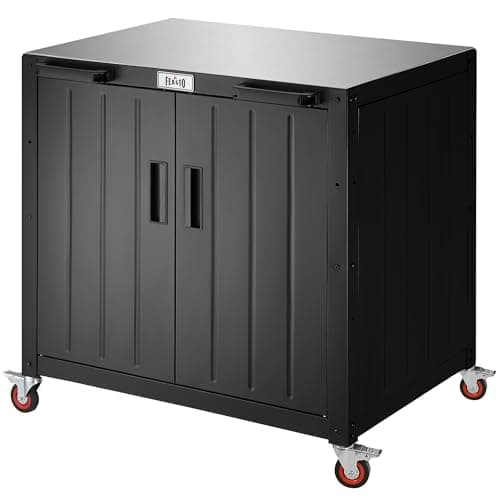
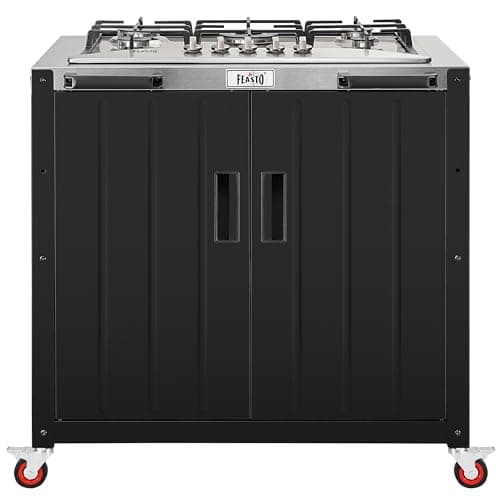
Keter Unity XL Portable Outdoor Table with Stainless Steel Top for Kitchen Prep and Outdoor Storage Cabinet for Grilling Accessories, Dark Grey
$237.99
Shop NowRenovation Costs by Job
| Job | Typical range | Disruption | Worth it? |
|---|---|---|---|
| Replace the grill head only | $900–$5,000 | One afternoon | Almost always |
| Replace countertop (10 ft run) | $1,800–$6,500 | 2–4 days | Usually |
| Replace access doors & drawers | $600–$3,500 | One day | Yes, if rusted |
| Reface island exterior (stone/tile) | $2,500–$8,000 | 3–7 days | Cosmetic call |
| Add under-counter refrigeration | $1,200–$3,800 | 1–2 days + electrical | Often |
| Add a sink (with plumbing) | $1,500–$6,000 | 3–6 days | Depends on run length |
| Add a roof or pergola cover | $4,000–$20,000 | 1–3 weeks | Biggest usability gain |
| Rebuild frame & structure | $6,000–$18,000 | 2–4 weeks | Only if failing |
| Full teardown and rebuild | $12,000–$45,000+ | 4–10 weeks | See below |
The pattern in that table is the whole lesson: the cheap jobs are the ones that change how the kitchen feels day to day, and the expensive jobs are the ones that fix problems you can see but rarely notice while cooking. A new grill head and new drawers for $4,000 will change your experience of the kitchen more than $8,000 of refacing.
Start by Working Out What Actually Failed
Outdoor kitchens fail in a predictable order, and diagnosing which stage you are at determines the budget.
Stage one: the appliances. Burners corrode, igniters die, grates warp. This happens at five to ten years on mid-range equipment and is not a renovation — it is maintenance. Replacing a grill head in an existing cutout is genuinely straightforward if the cutout dimensions match.
Stage two: the hardware. Access doors and drawers rust from the inside out, particularly if they are 430-grade stainless rather than 304, and especially within a few miles of salt water. Doors that no longer close are the most common trigger for someone starting to think about renovating.
Stage three: the countertop. Freeze-thaw cracking, staining on unsealed stone, delamination on tiled tops, or a concrete top that has spalled. This is where the cost jumps, because removal is destructive.
Stage four: the structure. Movement in the slab, a wood frame that has rotted, or block that has cracked because it was built without a proper footing. This is the one that turns a renovation into a rebuild, and it is worth establishing early whether you are in stage four, because it changes every other decision.
An honest diagnostic: pull one access door off and look inside the island. If the interior is dry, the frame is sound, and the fasteners are not weeping rust, you are in stages one to three and your renovation is affordable. If there is standing water, rotted timber, or rusted-through steel, price a rebuild.
The Grill Head Swap: Cheapest Meaningful Upgrade
If the cutout in your countertop matches a new grill's required dimensions, swapping the head is the highest-value renovation available. Budget $900 to $2,500 for a solid mainstream built-in and $2,500 to $5,000 for a premium one.
The catch is fitment, and it is a real catch. Cutout dimensions are not standardised, so a replacement head only drops in if its published cutout requirements fall within your existing opening. Enlarging a stone cutout is possible but risky; a fabricator can do it, and sometimes the stone cracks. Reducing an opening is worse — you cannot un-cut granite, so you are into filler strips that look like what they are.
Measure your existing cutout carefully in all three dimensions before shopping, then shop by cutout specification rather than by nominal size. Our grill cutout dimensions guide explains exactly which numbers to record.
Countertop Replacement: Where the Money Goes
For a typical 10-foot run, expect $1,800 to $6,500 installed. The spread is almost entirely material choice:
- Concrete (poured or precast): $60–$120 per sq ft installed. Excellent outdoors if properly sealed; the cheapest route to a monolithic look.
- Granite: $50–$120 per sq ft. The default outdoor choice for good reason — genuinely weather-stable and widely available.
- Porcelain slab: $70–$150 per sq ft. Increasingly popular outdoors because it is UV-stable and does not need sealing.
- Tile: $25–$60 per sq ft. Cheapest, but grout outdoors is a maintenance commitment and freeze-thaw is unkind to it.
- Soapstone or quartzite: $90–$200 per sq ft. Beautiful, and quartzite handles UV better than engineered quartz.
One material to avoid outdoors specifically: engineered quartz. The resin binder is not UV-stable and most manufacturers void the warranty on outdoor installation. It is a superb indoor product and a poor outdoor one, and it is the single most common material mistake in outdoor kitchen renovation.
Removal and disposal typically adds $300 to $800. If the old top is mortared to block, budget toward the top of that range and expect some repair to the block below.
Doors, Drawers, and the 304 Question
Replacing rusted access doors and drawer stacks runs $600 to $3,500 depending on how many openings and what grade you buy.
The grade matters more than almost anything else in the renovation. 430-grade stainless is magnetic, cheaper, and rusts outdoors. 304-grade is non-magnetic, costs perhaps 40 percent more, and lasts. If you are within a few miles of the coast, 316 is worth the premium over 304.
You can test what you currently have with a fridge magnet: if it sticks firmly to the door face, you have 430, and that is very likely why it is rusting. Replacing 430 with 430 to save money means doing this job again in five years.
Powder-coated aluminium is a legitimate alternative that a lot of people dismiss. It does not rust at all, comes in colours other than silver, and costs less than 304. The trade-off is that it dents where stainless would not.
Adding a Cover: The Renovation That Changes Everything
Of every job on this list, adding a roof or pergola over an existing outdoor kitchen produces the largest change in how much the kitchen actually gets used. It is also among the most expensive, at $4,000 to $20,000 depending on structure and span.
The reason it matters so much is seasonal. An uncovered outdoor kitchen is a fair-weather appliance. A covered one absorbs rain, extends the shoulder seasons, protects the appliances from the UV and precipitation that caused most of the damage you are now repairing, and — with heaters — can push usable months from roughly five to nine in a temperate climate.
Two constraints. First, overhead clearance and ventilation for the grill. Manufacturers specify a minimum vertical clearance to combustible overhead surfaces, and covered installations frequently require a vent hood. Get this right at design stage; it is not something to retrofit. Second, permits. A solid roof attached to the house is usually a permitted structure in a way that a freestanding pergola may not be. Check before you order materials.
See covered outdoor kitchen and outdoor kitchen roof for the structural options.
When Renovation Stops Making Sense
There is a point where repairing costs more than replacing, and outdoor kitchens reach it faster than indoor ones because so much of the value is in the appliances rather than the box.
Rebuild rather than renovate if any of these are true:
- The slab has moved or cracked structurally. Everything above it will move again.
- The frame is wood and has rotted. Rebuilding in steel stud or block is cheaper than repeatedly patching timber.
- The layout is wrong — the grill is against a wall it should not be, the run is too shallow for modern appliances, or there is no landing zone. You cannot renovate your way out of a bad layout.
- The base is less than about 25 inches deep. Current built-in grills need 25 to 30 inches, and a shallow base limits you permanently.
- Three or more of the jobs in the first table apply at once. At that point their combined cost approaches a rebuild, and you finish with old infrastructure.
That last one is the common trap. A grill, a countertop, doors, and a refacing add up to roughly $12,000 — which is the bottom of the full rebuild range, except a rebuild also fixes the layout.
What Renovation Returns at Resale
Be realistic here. The National Association of Realtors tracks how outdoor improvements affect home value, and the honest summary is that outdoor kitchens recoup part of their cost, not all of it, and the recovery rate is highly regional. In warm climates with long outdoor seasons they perform well. In cold climates they perform considerably less well.
Two practical implications for a renovation budget. First, a tidy, functional, modest outdoor kitchen shows better than a large, dated, deteriorating one — so the cheap end of this list (grill, doors, clean countertop) is where resale value actually lives. Second, do not renovate to sell. If you are moving within a year or two, fix what is broken and clean what is stained; a $20,000 rebuild will not return $20,000.
Renovate because you want to use the space. That is the return that reliably materialises.
A Sensible Sequence If You Are Doing It in Stages
Most people cannot or should not do this in one go. This order front-loads the changes you will notice and defers the ones you will not.
- Grill head — biggest daily difference, lowest cost, no disruption.
- Doors and drawers in 304 stainless — stops ongoing corrosion and makes the whole thing look maintained.
- Countertop — do this before refacing, because removal damages the island exterior.
- Refacing — after the top, so you are not repairing new stone.
- Refrigeration or sink — utility work is disruptive; group it with any electrical you need.
- Cover or roof — last and largest, and best done when you know the rest is sound.
The one exception to the order: if water is getting into the island, fix that first, whatever it costs. Every other job on this list has a shorter life if the interior stays wet. For running costs and new-build comparison, see our outdoor kitchen cost guide and the cost calculator.
Related reading: Outdoor Kitchen Countertops, and Build Outdoor Kitchen for the adjacent decision. Or start again from the outdoor kitchen homepage.
Frequently Asked Questions
01How much does it cost to renovate an outdoor kitchen?
02Is it cheaper to renovate or rebuild an outdoor kitchen?
03Can I replace just the grill in a built-in outdoor kitchen?
04What countertop material should I avoid outdoors?
05Does an outdoor kitchen renovation add value to a home?
This guide is part of Outdoor Kitchen Build Guides: Planning, Permits, Cost, and Hiring — the hub covering every guides guide on Outdoor Kitchen Setup.
Related Guides
Written and edited by Sukie
Sukie is the editor behind Outdoor Kitchen Setup. They compile manufacturer specification sheets, published building codes, and industry sizing standards into the measurement and planning guides on this site, and check every figure against its original source before it goes live. Where a number varies by brand or by local code, the guides say so rather than presenting a single figure as universal.