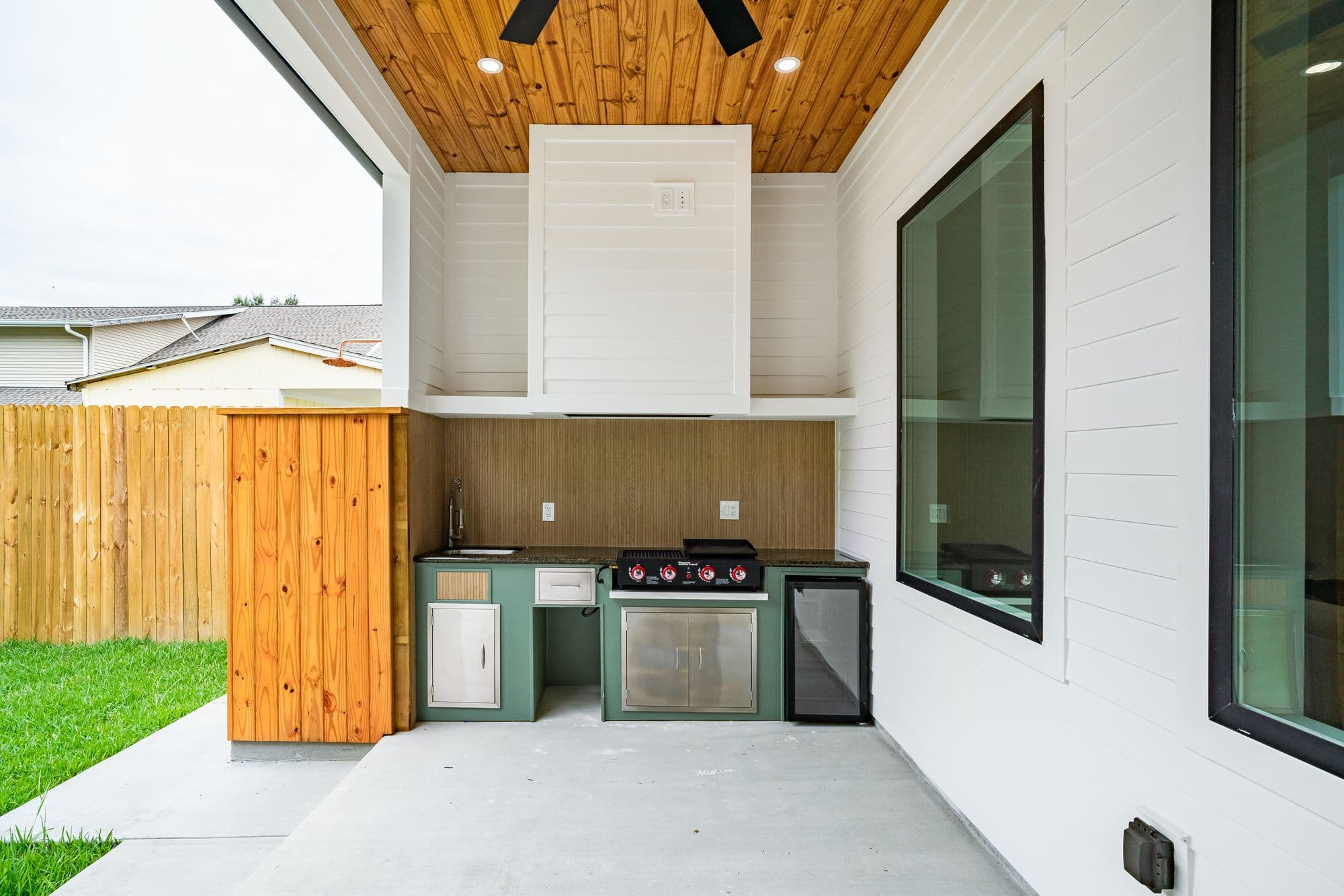
Outdoor Refrigerator Dimensions: Sizes, Cutouts and the 34½-Inch Rule
Outdoor refrigerator dimensions are two different sets of numbers: the size of the cabinet itself, and the size of the opening the manufacturer tells you to build for it.
Photo: Chad Populis / Pexels (Pexels License)
Will Your Outdoor Fridge Fit? Check It in Your Layout
Enter your space and the appliances you want. The checker lays them out with the landing space the NKBA kitchen-planning guidelines call for, and tells you whether it fits.
Your appliances, left to right
Fits, with 11⅞″ to spare
This list needs at least 11′ 0⅛″ of counter; you have 12′.
Coloured blocks are appliances, hatched areas are landing space, and red means past the end of your counter.
How this is calculated
- Landing space comes from the NKBA Kitchen Planning Guidelines: 12″ on one side of a cooking surface and 15″ on the other (Guideline 17), 24″ and 18″ beside a sink (Guideline 11), and a 36″ prep area next to the sink (Guideline 12), which this tool lets count as the sink’s 24″ landing area. When two landing areas meet, the shared stretch is the longer one plus 12″ (Guideline 24). NKBA writes these for indoor kitchens. Outdoors they are a sensible minimum, not a code.
- The checker tries every left/right orientation of each appliance and keeps the shortest. “Best order” also tries every order.
- A drop-in uses its cutout width plus at least 3″ of frame (the Danver specification guide puts a grill base 3–6″ wider than the cutout), or the head’s own width if that is larger.
- Model sizes are compiled from each manufacturer’s specification sheet (follow “source” on any appliance). Cutouts differ by model number and fuel type, so confirm against the sheet for your exact unit before cutting anything.
Outdoor refrigerator dimensions are two different sets of numbers: the size of the cabinet itself, and the size of the opening the manufacturer tells you to build for it. The second set is the one that matters when you frame an island, and it is rarely the same as the first. A fridge sold as a 24-inch model can need a 26-inch-wide hole; another 24-inch model needs exactly 24 inches. Height is where most builds go wrong, because the space under a standard counter is fixed before anyone has chosen the appliance.
Below are seven built-in outdoor refrigerators from five manufacturers, with every figure copied from the maker’s own spec sheet, manual or product page and linked so you can check it. We compiled the table in October 2026. It shows where the published numbers disagree with each other, too, because two of them do. If you have already picked a layout, the fit checker above runs these same records against your counter height and flags any fridge that needs a taller opening than your counter leaves. For buying advice rather than measurements, see our outdoor kitchen refrigerator guide.
Top picks for this build
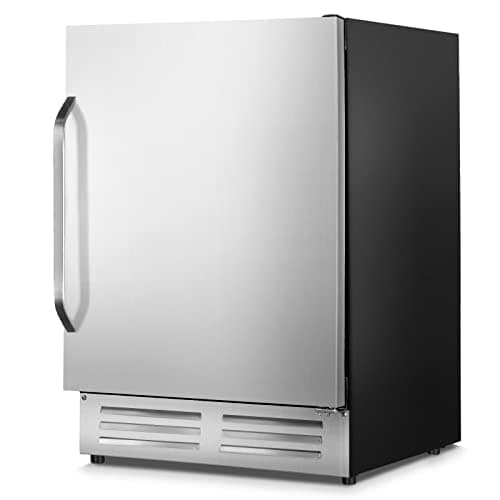
Velieta 24 Inch Outdoor Beverage Refrigerator Cooler,Stainless Steel Wide Refrigerator for 210 Cans,Fit Perfectly for 24" Space Built-in Counter or Freestanding with powerful and quiet cooling system
$569.99
Check price on Amazon: Velieta 24 Inch Outdoor Beverage Refrigerator Cooler,Stainless Steel Wide Refrigerator for 210 Cans,Fit Perfectly for 24" Space Built-in Counter or Freestanding with powerful and quiet cooling system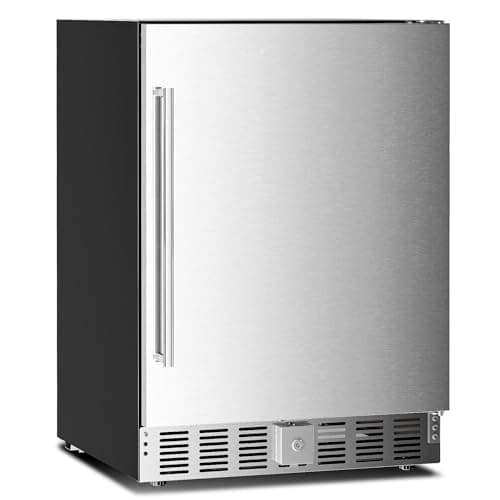
Antarctic Star Outdoor Beverage Refrigerator 24 Inch Wide,Stainless Steel Mini Fridge 180 Can for Undercounter Built-in or Freestanding, Wine Cooler for Home and Patio,Fast Cooling, Low Noise, 32-50°F
See price on Amazon
Check price on Amazon: Antarctic Star Outdoor Beverage Refrigerator 24 Inch Wide,Stainless Steel Mini Fridge 180 Can for Undercounter Built-in or Freestanding, Wine Cooler for Home and Patio,Fast Cooling, Low Noise, 32-50°F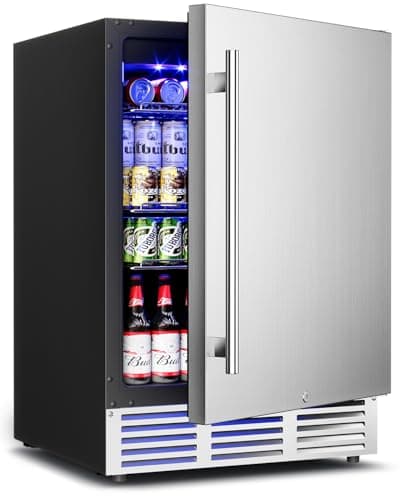
Feelfunn 24 Inch Beverage Refrigerator,180 Cans Outdoor Refrigerator | 37-65°F,Stainless Steel Door,LED Light,<40dB,Freestanding Beverage Fridge for Beer Wine Soda in Home Office Kitchen or Bar
$549.99
Check price on Amazon: Feelfunn 24 Inch Beverage Refrigerator,180 Cans Outdoor Refrigerator | 37-65°F,Stainless Steel Door,LED Light,<40dB,Freestanding Beverage Fridge for Beer Wine Soda in Home Office Kitchen or Bar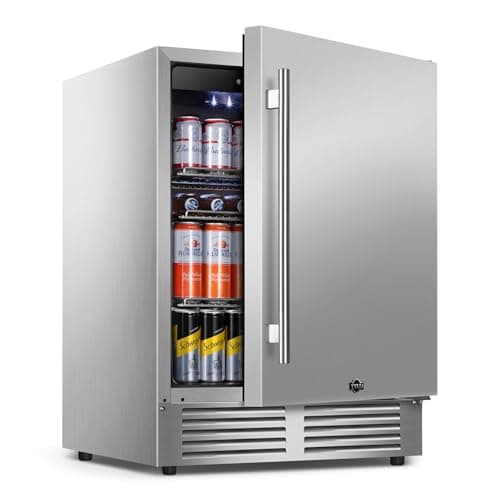
Tylza 24" Outdoor Beverage Refrigerator 176 Can Stainless Quick Chill | Stainless steel, IPX4 waterproof, undercounter or free, <38dB, temp memory, 37-65°F
$709.99
Check price on Amazon: Tylza 24" Outdoor Beverage Refrigerator 176 Can Stainless Quick Chill | Stainless steel, IPX4 waterproof, undercounter or free, <38dB, temp memory, 37-65°F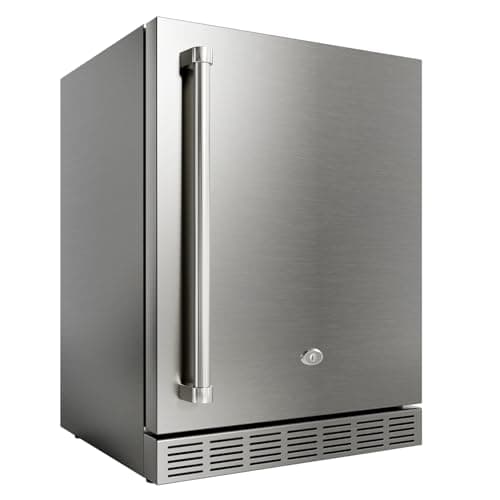
cureder 21 Inch Outdoor Refrigerator, Weather Proof Stainless Steel Beverage Beer Cooler Under Counter Fridge, Indoor/Outdoor Refrigerator with 3 Shelves for Patio Kitchen and Commercial Use
$639.99
Check price on Amazon: cureder 21 Inch Outdoor Refrigerator, Weather Proof Stainless Steel Beverage Beer Cooler Under Counter Fridge, Indoor/Outdoor Refrigerator with 3 Shelves for Patio Kitchen and Commercial Use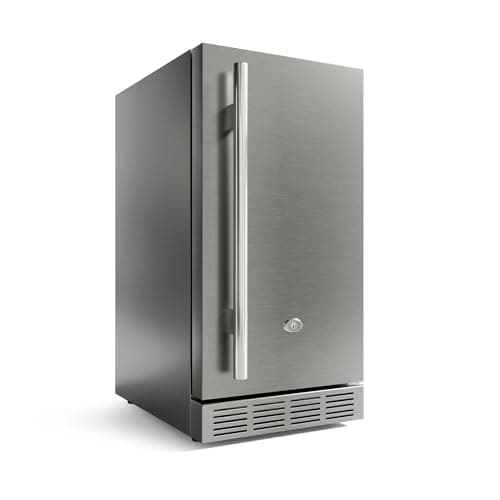
cureder 15 Inch Outdoor Refrigerator, Weather Proof Stainless Steel Beverage Beer Cooler Under Counter Fridge, Indoor/Outdoor Refrigerator with 3 Shelves for Patio Kitchen and Commercial Use
$369.99
Check price on Amazon: cureder 15 Inch Outdoor Refrigerator, Weather Proof Stainless Steel Beverage Beer Cooler Under Counter Fridge, Indoor/Outdoor Refrigerator with 3 Shelves for Patio Kitchen and Commercial Use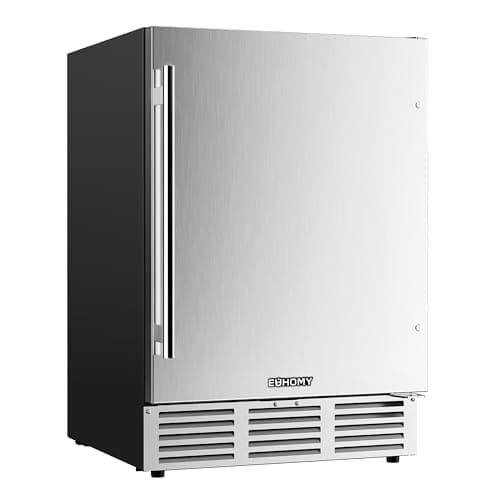
EUHOMY 24 Inch Beverage Refrigerator, 180 Can Outdoor Refrigerator | 37°F to 65°F, Compressor Cooling, Stainless Steel Door, Built-in or Freestanding, Removable Shelves, Temperature Control
$649.99
Check price on Amazon: EUHOMY 24 Inch Beverage Refrigerator, 180 Can Outdoor Refrigerator | 37°F to 65°F, Compressor Cooling, Stainless Steel Door, Built-in or Freestanding, Removable Shelves, Temperature Control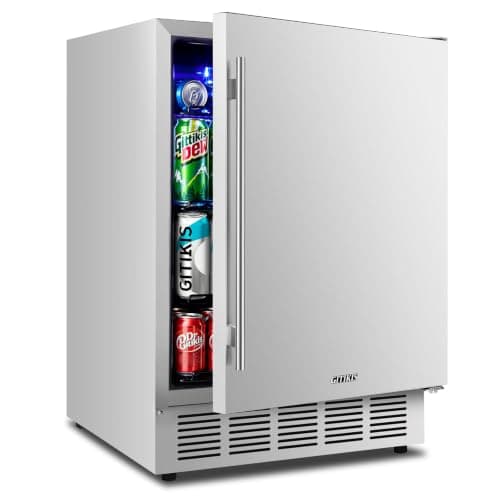
Gitikis 24 Inch Outdoor Beverage Refrigerator for Patio
$799.99
Check price on Amazon: Gitikis 24 Inch Outdoor Beverage Refrigerator for PatioVelieta 24 Inch Outdoor Beverage Refrigerator Cooler,Stainless Steel Wide Refrigerator for 210 Cans,Fit Perfectly for 24" Space Built-in Counter or Freestanding with powerful and quiet cooling system
$569.99
Check price on Amazon: Velieta 24 Inch Outdoor Beverage Refrigerator Cooler,Stainless Steel Wide Refrigerator for 210 Cans,Fit Perfectly for 24" Space Built-in Counter or Freestanding with powerful and quiet cooling systemAntarctic Star Outdoor Beverage Refrigerator 24 Inch Wide,Stainless Steel Mini Fridge 180 Can for Undercounter Built-in or Freestanding, Wine Cooler for Home and Patio,Fast Cooling, Low Noise, 32-50°F
See price on Amazon
Check price on Amazon: Antarctic Star Outdoor Beverage Refrigerator 24 Inch Wide,Stainless Steel Mini Fridge 180 Can for Undercounter Built-in or Freestanding, Wine Cooler for Home and Patio,Fast Cooling, Low Noise, 32-50°FFeelfunn 24 Inch Beverage Refrigerator,180 Cans Outdoor Refrigerator | 37-65°F,Stainless Steel Door,LED Light,<40dB,Freestanding Beverage Fridge for Beer Wine Soda in Home Office Kitchen or Bar
$549.99
Check price on Amazon: Feelfunn 24 Inch Beverage Refrigerator,180 Cans Outdoor Refrigerator | 37-65°F,Stainless Steel Door,LED Light,<40dB,Freestanding Beverage Fridge for Beer Wine Soda in Home Office Kitchen or BarTylza 24" Outdoor Beverage Refrigerator 176 Can Stainless Quick Chill | Stainless steel, IPX4 waterproof, undercounter or free, <38dB, temp memory, 37-65°F
$709.99
Check price on Amazon: Tylza 24" Outdoor Beverage Refrigerator 176 Can Stainless Quick Chill | Stainless steel, IPX4 waterproof, undercounter or free, <38dB, temp memory, 37-65°Fcureder 21 Inch Outdoor Refrigerator, Weather Proof Stainless Steel Beverage Beer Cooler Under Counter Fridge, Indoor/Outdoor Refrigerator with 3 Shelves for Patio Kitchen and Commercial Use
$639.99
Check price on Amazon: cureder 21 Inch Outdoor Refrigerator, Weather Proof Stainless Steel Beverage Beer Cooler Under Counter Fridge, Indoor/Outdoor Refrigerator with 3 Shelves for Patio Kitchen and Commercial Usecureder 15 Inch Outdoor Refrigerator, Weather Proof Stainless Steel Beverage Beer Cooler Under Counter Fridge, Indoor/Outdoor Refrigerator with 3 Shelves for Patio Kitchen and Commercial Use
$369.99
Check price on Amazon: cureder 15 Inch Outdoor Refrigerator, Weather Proof Stainless Steel Beverage Beer Cooler Under Counter Fridge, Indoor/Outdoor Refrigerator with 3 Shelves for Patio Kitchen and Commercial UseEUHOMY 24 Inch Beverage Refrigerator, 180 Can Outdoor Refrigerator | 37°F to 65°F, Compressor Cooling, Stainless Steel Door, Built-in or Freestanding, Removable Shelves, Temperature Control
$649.99
Check price on Amazon: EUHOMY 24 Inch Beverage Refrigerator, 180 Can Outdoor Refrigerator | 37°F to 65°F, Compressor Cooling, Stainless Steel Door, Built-in or Freestanding, Removable Shelves, Temperature ControlGitikis 24 Inch Outdoor Beverage Refrigerator for Patio
$799.99
Check price on Amazon: Gitikis 24 Inch Outdoor Beverage Refrigerator for PatioPrices and availability are accurate as of October 23, 2026, 11:32 AM UTC and are subject to change.
Seven Outdoor Fridges, Measured From Their Spec Sheets
Compiled 16 October 2026 from manufacturer documents. W × H × D in inches. “Body” is the appliance; “opening” is the cutout or rough opening the manufacturer publishes. Where a maker publishes no opening, the cell says so: we have not invented one.
| Model | Body W × H × D | Opening W × H × D | Source |
|---|---|---|---|
| Blaze 20″ compact, BLZ-SSRF-126 | 20½ × 32¾ × 20¾ | 22½ × 33¾ × 23¾ (catalog: 22¾ deep) | Blaze product page |
| Blaze 20″ 4.3 cu ft, BLZ-SSRF20-4.3 | 20½ × 33⅛ × 22⅝ | 22⅝ × 34⅛ × 24½ | Blaze user guide (body); product page (opening) |
| Blaze 24″ 5.5 cu ft, BLZ-SSRF-5.5 | 24 × 34⅛ × 25½ | 26 × 35⅛ × 24½ | Blaze product page |
| Bull Premium Series II, item 13700 | 23⅝ × 32½ × 23½ (excl. handle) | 24⅜ × 33¼ × 24¼ | Bull spec sheet v.2024.04.03 |
| Summit SPR627OS | 23.63 × 34.0 × 23.5 | None published | Summit brochure |
| True Residential TUR-24-R/L-SS-C | 23⅞ × 34¼ × 23⅞ | 24 × 34½ × 24 (minimum) | True spec sheet |
| Sub-Zero UC-24RO (legacy model) | 23⅞ × 34 × 24 | 24 × 34½ × 24 | Sub-Zero quick reference sheet |
Three things stand out once these outdoor refrigerator dimensions sit side by side. First, “24-inch” is a product class rather than a dimension: the bodies run from 23⅝ to 24 inches wide, and the openings from 24 to 26 inches. Second, the opening height ranges from 33¼ inches (Bull) to 35⅛ inches (Blaze 24″), which is the spread that decides whether a fridge slides under a standard counter. Third, two of the seven makers publish their opening as a minimum rough opening, and one, Summit, publishes no opening at all; its brochure only says the unit suits “24″ wide spaces” and its manual gives spacing figures instead.
The Sub-Zero sheet marks the UC-24RO as a legacy model, so treat its row as a reference point rather than something you can order today.
Why 34½ Inches Is the Number Under a 36-Inch Counter
Of all the outdoor refrigerator dimensions in that table, the one to memorise is 34½ inches. The NKBA Kitchen Planning Guidelines use 36 inches as the standard counter height (they were written for indoor kitchens, but outdoor builders work from the same figure, and our outdoor kitchen countertop height page explains why). Subtract a countertop 1½ inches thick and the clear height under it is 36 − 1½ = 34½ inches. Cabinet makers build to the same figure: Brown Jordan Outdoor Kitchens lists its cabinets at 34½ inches tall, and the Danver specification guide describes a 30-inch box on 4½-inch legs, which also comes to 34½.
Compare that with the opening heights in the table:
| Model | Opening height | Against a 34½ in space |
|---|---|---|
| Bull 13700 | 33¼ | 1¼ in to spare |
| Blaze BLZ-SSRF-126 | 33¾ | ¾ in to spare |
| Blaze BLZ-SSRF20-4.3 | 34⅛ | ⅜ in to spare |
| True TUR-24 | 34½ (minimum) | Exactly at the limit |
| Sub-Zero UC-24RO | 34½ | Exactly at the limit |
| Blaze BLZ-SSRF-5.5 (24″) | 35⅛ | ⅝ in too tall |
| Summit SPR627OS | Not published (body 34.0) | Check with Summit |
Worked example: the Blaze 24-inch under a stone top
Say you plan a 36-inch counter with a 1½-inch stone top and want the Blaze 24-inch, BLZ-SSRF-5.5. Blaze asks for a 35⅛-inch-tall opening. Your counter leaves 34½. You are ⅝ inch short, and no amount of shimming fixes a hole that is too low. There are three ways out, all simple arithmetic:
- Raise the counter. 35⅛ + 1½ = 36⅝ inches. A counter at 36⅝ inches gives the opening Blaze asks for with the same top.
- Use a thinner top at 36 inches. 36 − 35⅛ = ⅞ inch. Any top thicker than ⅞ inch, including the substrate under it, leaves too little height.
- Choose a fridge with a lower opening. Every other model in the table needs 34½ inches or less.
This is the case the fit checker above was built to catch: add the Blaze 24-inch fridge to a 36-inch counter and it warns you before you frame anything.
How Much Wider Than the Fridge Should the Opening Be?
Width is the next trap, and it is the part of outdoor refrigerator dimensions that product names hide. Most kitchen plans are drawn in whole cabinet widths, and a fridge called “24-inch” gets a 24-inch slot. Here is how much wider than the body each manufacturer’s opening is, using the figures in the first table:
| Model | Body width | Opening width | Opening minus body |
|---|---|---|---|
| Blaze BLZ-SSRF-5.5 | 24 | 26 | 2 in |
| Blaze BLZ-SSRF-126 | 20½ | 22½ | 2 in |
| Blaze BLZ-SSRF20-4.3 | 20½ | 22⅝ | 2⅛ in |
| Bull 13700 | 23⅝ | 24⅜ | ¾ in |
| True TUR-24 | 23⅞ | 24 | ⅛ in |
| Sub-Zero UC-24RO | 23⅞ | 24 | ⅛ in |
The practical effect: the Blaze 24-inch takes up 26 inches of island run, and the two Blaze 20-inch models take up more than 22. If your plan has a 24-inch gap between a sink cabinet and a drawer stack, the Blaze 24 will not go in it, while the True or the Sub-Zero will. Lay out the run with opening widths, not product names, and the totals at the end of the island will come out right. Our outdoor kitchen cabinet dimensions page lists the module widths the main cabinet lines use, so you can see what fills the leftover inches.
Two smaller details sit in the documents. Sub-Zero’s sheet notes that 3½-inch finished returns will be visible beside the unit and should be finished to match the cabinetry, so the faces either side of the opening are part of the look. Summit notes that its optional factory latch adds 1½ inches of width; if you order that option, ask Summit what opening it needs, since it does not publish one. True lists zero-clearance hinging for the TUR-24; if the fridge will sit at the end of a run, against a wall or beside a grill, confirm with True how close the hinge side can go.
Depth, Door Swing and the Outlet Behind It
Depth is the last of the outdoor refrigerator dimensions most people check, and it decides two things: whether the fridge sits flush with your cabinet faces, and whether its open door blocks the walkway. On the first, check the opening depth against the depth of the box you are building. The Blaze 24-inch needs 24½ inches; a Danver cabinet box is 24⅞ inches deep, according to the Danver guide linked above. The published opening depths in the table run from 23¾ to 24½ inches, so a box built to Danver’s 24⅞-inch depth has room for all of them, provided the back of the opening is clear of gas and water lines. Our counter depth page covers how far the top overhangs.
A quirk worth knowing: for the Blaze 24-inch, the published opening depth (24½) is less than the published body depth (25½). That is not a typo you should correct. The likely reading is that the door stands proud of the opening, so the cabinet goes in only part of the way. Measure your planned face line accordingly.
On the second point, the door. Only some makers publish the open-door depth, and here is what they give:
| Model | Depth including handle | Depth with door open 90° |
|---|---|---|
| True TUR-24 | 2513⁄16 | 46⅞ |
| Summit SPR627OS | 25.38 | 45.63 |
| Sub-Zero UC-24RO | Door clearance 25⅜ (quick reference sheet) | |
The NKBA guidelines ask for a 42-inch work aisle for one cook and 48 inches where several people work, measured between counters. A fridge door that swings open across that aisle is one more reason to stay at the larger figure. Our outdoor kitchen island dimensions guide shows how the aisle and seating space add up around an island.
Power is a dimension too
The opening has to leave space for the plug and the receptacle. Sub-Zero’s sheet calls for a 15-amp dedicated circuit and a GFCI receptacle for the UC-24RO. Check where your fridge’s manual wants that outlet, because a receptacle on the back wall of a 24-inch-deep opening reduces the depth the fridge can use. Circuit rules for outdoor kitchens are on our outdoor kitchen electrical requirements page.
Find Out Which Way Your Fridge Breathes
Built-in clearance is mostly about air, and it changes the outdoor refrigerator dimensions you actually build to. An outdoor fridge has to reject heat somewhere, and if it does that through the back or the top, a tight opening starves it. The documents for these seven units are explicit about which way the air goes, and they do not agree with each other, so read the one for your model:
- Bull 13700: the Bull refrigerator manual says that for proper ventilation the front of the unit must be completely unobstructed. It breathes from the front, which is why Bull can publish a cutout only about ¾ inch larger than the body.
- Summit SPR627OS: front-breathing, and the Summit user manual asks for at least ¼ inch on each side, 2 inches at the back and ⅛ inch at the top when built in. Used freestanding, it asks for 5 inches at the back and sides and 4 inches on top. The front vent must not be blocked.
- Blaze BLZ-SSRF20-4.3: the Blaze user guide says to allow at least 2 inches of clearance on the sides and top when recessing or building in.
- True TUR-24 and Sub-Zero UC-24RO: both publish a single opening size rather than separate clearances, which you build to as given. True’s spec sheet adds that all its undercounter models are UL rated for outdoor use.
One contradiction is worth flagging. The Blaze BLZ-SSRF20-4.3 user guide asks for at least 2 inches on the sides and top, but the opening on its product page is only 2⅛ inches wider and 1 inch taller than the body the guide describes. Read as written, 2 inches on each side would need a wider hole than Blaze lists. The documents do not explain the difference. If you are installing that model, ask Blaze which figure governs before you cut.
Outdoor rating is the other half of this. The Summit multi-model manual lists SPR627OSPNR among its outdoor-rated models and says all other models are for indoor use, while the SPR627OS brochure calls that unit designed for use outdoors. Model suffixes matter, so match the full number on the box to the document. The difference between indoor and outdoor units is covered in our outdoor kitchen with mini fridge guide. The beverage refrigerators listed below are sold as built-in or freestanding; their listings give a nominal width but not a cutout, so download the manual or ask the seller for the opening before you frame for one.
When Two Published Figures Disagree
Publishing two different figures for one appliance is more common than you would hope, even among outdoor refrigerator dimensions taken straight from the maker. Here are the conflicts we found while compiling the table, and how we handled each. They are the reason to check the document for your exact model number before cutting anything.
| Model | Figure | Source A | Source B | What we used |
|---|---|---|---|---|
| Blaze BLZ-SSRF-126 | Opening depth | 23¾ (product page) | 22¾ (Sept 2026 catalog) | Product page; the catalog says its dimensions are for information only and to check the owner’s manual, which gives no cutout |
| Blaze BLZ-SSRF20-4.3 | Body depth | 22⅝ (user guide) | 24½ (product page and catalog) | User guide; its drawing also shows 24⅝, which probably includes the door and handle |
| Bull 13700 | Body width | 23⅝ (spec sheet) | 23.5 (bullbbq.com product text) | Spec sheet; the product page’s “Product Dimensions” line repeats the cutout numbers |
| Summit SPR627OS | Opening | Not published | Not published | Nothing; we did not derive one from spacing figures |
For the SSRF-126 depth, the safer of the two figures is the larger one. If you frame 23¾ inches deep and the true requirement is 22¾, the fridge sits an inch further back than it needs to, which is harmless. Frame 22¾ and the true requirement turns out to be 23¾, and the door ends up proud of every other face on the island. Blaze’s own advice in the catalog points to the manual, and the manual is silent, so a call to Blaze before you build is the honest answer.
The general method is the same for any appliance: find the installation drawing for your exact model number, prefer the manual or spec sheet over a retailer listing or catalog, and when two documents from the same maker disagree, build to the one that leaves more space or ask. All the outdoor refrigerator dimensions above link straight to the document we read, so you can repeat the check yourself. For the island as a whole, start from the Outdoor Kitchen Setup home page, where the planning guides are grouped by stage.
Frequently Asked Questions
01What are the standard outdoor refrigerator dimensions?
02How tall is an undercounter outdoor refrigerator?
03What size opening does a 24-inch outdoor fridge need?
04Will a 24-inch outdoor refrigerator fit in a 24-inch cabinet space?
05How much clearance does a built-in outdoor refrigerator need?
06Can I build in a freestanding beverage fridge?
07How deep is an outdoor refrigerator with the door open?
08What are the dimensions of a 20-inch outdoor fridge?
09Does an outdoor refrigerator need a dedicated circuit?
10Why do the Blaze 24-inch fridge's opening depth and body depth not match?
This guide is part of Outdoor Kitchen Components: What Goes In, In What Order, and What to Skip — the hub covering every appliances guide on Outdoor Kitchen Setup.
Related Guides
Written and edited by Sukie
Sukie is the editor behind Outdoor Kitchen Setup. They compile manufacturer specification sheets, published building codes, and industry sizing standards into the measurement and planning guides on this site, and check every figure against its original source before it goes live. Where a number varies by brand or by local code, the guides say so rather than presenting a single figure as universal.